Showing posts with label Fear. Show all posts

Wednesday, November 19, 2008

Me? A Writer?

The confession -- or revelation -- that one writes, always prompts some kind of response from others. Is is a hobby? A career? A worthwhile pursuit? How can one know for certain?

Q) I have been writing on and off for most of my life. Nothing published, and frankly, nothing close to being published. Recent conversations with loved ones (read husband and parents) make me wonder if I am wasting my time; I spend at least three or four hours a week on my writing. How do I know if I'm just wasting my time or not?

A)

Lynne Griffin
Doing what you love is never a waste of time. Yet from your question, I’m not feeling the love. If you spend three or four hours a week writing in a journal or dabbling with a short story, and you enjoy it, great! If you’re writing with the goal of being published, I’m afraid I have to be honest. You’ve got more than an uphill battle.

The single most important character trait of successful writers is drive. Good old fashioned work ethic, coupled with passion to tell a good story. One you are certain only you can tell. Even if you’re driven, there will be times when your story has you by the throat. You will wrestle with it in your dreams, it will distract you from your day job, and you’ll find you willingly skip leisure time in favor of stealing just one more hour at the keyboard.

Writers write for all kinds of reasons, publication being only one. If you write solely for self-expression, go for it. If you want more from your writing, you’ll have to give it more of your time and energy. Some days you’ll be wrung out from giving, and still, whether it’s a day later or a week later you’ll go back to it. You won’t be able to stop yourself.

Amy MacKinnon
Wasting your time doing what? If you enjoy those three or four hours writing, then it's not a waste of time. I enjoy reading and baking, and even spend a fair amount of time doing so each week. Is that a waste? I take pleasure in each, a vastly underrated pursuit.

If, however, you're writing with the intention of getting a book published, then perhaps it's time to re-evaluate your commitment to your dream. Find your story and write it through to the end. Just that one story. Do so with intention (it will be published, it will be the best writing I'm capable of at this point, I will tell a great story with honest characters). Like everything else in life that matters -- relationships, education, career-- your writing demands a consistent investment of time and devotion.

As for your family and friends, think twice before sharing your writing life with them until you are published. In all likelihood, they perceive you as another person, not as a writer. And because they love you, they'll be quick to point out the many, many obstacles along your journey in an attempt to protect you. Your job as writer, as one who dares to dream big, is to see your way around all of the brick walls. Remember, publishing is persistence.

Lisa Marnell
You don't. End of story.

I can't tell you how many times I've had near panic attacks wondering that very same question. Although, I can almost guarantee that I've poured even more hours into my writing than you have. What helps me is to think of the alternative to writing: what else would I be doing with my time? I would spend my evenings watching either Stephen Colbert of Two and a Half-Men, or likely both (I could tape one as I watch the other).

For me writing is as much about who I am and what my dreams are than whether I will be published this year, next year, 2012 or 2020. Writing helps me love myself and I long to become. Simply put, I am a writer, published or not. If you feel at all like I do, than, frankly, do you have a choice?

Hannah Roveto
I have been a writer all my life, personally and professionally. The challenge of being a published author of fiction is its own unique beast. Ignore the others; listen only to yourself. If you want to be a published author, take writing as seriously as you have your professional career (workshops, books, network). Take it as seriously as you do your family (What to Expect, He Says She Says, playgroup wisdom, counseling). Take it as seriously as you do your garden, your decorating, your boat, your fishing, your skiiing, your tennis, your golf. There is a craft, skills that need to be acquired and practiced and polished. If you were to study for an MFA, your thesis would be "a book-length novel of publishable quality." That is your goal. The question is not when it will happen, but do you want to make it happen? If you answer yes, keep writing and revising and learning and moving ahead.

Tuesday, September 30, 2008

A Fool's Gambit


By Amy MacKinnon
Don't mess with success. Write what you know. Stay within your genre. Focus on one project at a time.

I am a fool. I'm a scared fool. A bit of a wreck even. I'm doing everything wrong, I know this, and yet I keep doing it.

Right now, I'm writing two books. One is so dark, I'm not sure there's a market for it, though Jon Clinch assures me there is, right there alongside him and Cormac McCarthy. Have you read Finn, Blood Meridian? Brilliant books written by brilliant writers. Already I'm being warned not to go too dark, to be careful.

The other I have no business writing at all. None. It is an homage to a classic, one I've read countless times over the years, a story I know in my bones because I've lived it firsthand. But the author of the classic is a literary titan. When I told a close friend what I was attempting, he was aghast. Be careful, he said.

But it's not my job to be careful, to play it safe and write the same book over and over again. It's my duty to myself and my writing to reach beyond whatever skillset I have today, to stretch, and then follow my instincts.

Last week at Writers Read for Twain, I was talking to one of my favorites, Stewart O'Nan. He's the author of many, many books including the little gem Last Night at the Lobster. I say little, not because of the story, it's bigger than the jacket can contain, but because I doubt it's more than 40,000 words. I asked if his publisher worried that it was too short, if people along the way urged him to flesh it out. He nodded vigorously.

But you refused, I said.

Yes, he said (and I'm paraphrasing here), I believed in it.

He was right to do so. Lobster represents a return to simple elegance in storytelling. Stewart O'Nan broke all the rules and won; his book was both a commercial and literary success. He took a magnificent risk.

I hope I'll be able to say the same some day.

Tuesday, September 16, 2008

Right or Wrong

By Amy MacKinnon

I saw him standing toward the back. It was Saturday afternoon and I was doing my first reading of the day at Barnes & Noble in Hingham. He shifted his weight from left foot to right, and then back again. One hand was on his hip and his expression was unfathomable. He never faltered when I stared back at him, though I did. He didn't smile, he didn't glower, he didn't appear pleased or displeased. But that fidgeting had me worried.

To be honest I wasn't certain it was him. I'd met him only once, about two years ago when it was clear my novel would be set in Brockton, Massachusetts, featuring Brockton cops. I called the police department to see if I could have a tour, I needed to know the layout of the building, smell it, feel the grit that coated every surface, and have a sense of the people who inhabited the place. I was patched through to Officer Al Gazerro.

He gave me hours of his time, showing me every nook and cranny, introducing me around to everyone from the dispatchers to the detectives to the chief. I took notes, I inhaled the place as best I could, and then went home to try to convey it all on the page.

Details matter. They matter to your readers, to the authenticity of your story, they should matter a great deal to you. I wanted desperately get it right. And there, toward the back, was Officer Gazerro who was about to tell me if I got it wrong.

He was last in line to have his book signed. As he got closer, I knew it was him.

"Do you remember me?" he asked.

"Al Gazerro," I said, waiting.

"I love your book." Finally he smiled.

He said his daughter got him a copy, that they now had three at home. He told me I got it exactly right, even the woman detective's shoes, the detective's unit, the homes he so often goes to while on duty. I got it right.

I hugged him, I had to. I so badly wanted to please him, to honor his vocation, and repay the faith he had in me. So far, it's been the highlight of my booktour.

All along there've been two people I've feared disappointing with this book: Al Gazerro and my uncle, the funeral director. I've waited on tenterhooks for their feedback, knowing I'd hear about it if I got it wrong. It's the sort of thing that gets under people's skin, isn't it? The relief is huge, knowing Officer Gazerro is pleased. Now I just need to hear from my uncle...

Monday, September 08, 2008

The Voices

Posted by Lisa Marnell

There are many voices that speak to me. They don't come from little creatures, sitting on my shoulders, helping me decide between good from evil. Besides, I don't have enough room on my shoulders to carry about the number of voices that speak to me. Perhaps I should explain.

One voice is gruff and deep like a rumble of thunder. It always says the same old thing: "Hey! Lisa! The stakes in your story aren't high enough." You, again? I complain, But I upped the stakes already! "More stakes! More!" It shouts to me day after day after day.

One voice is soothing, low-pitched female. She's less persistent. She doesn't talk to me as often and when she does, I tend to listen. "Excuse me," she whispers with the trace of a British accent. "What do you say to adding a more poignant detail in this description? And perhaps you should paint this setting more clearly." Her suggestions are fun; I could Word Paint until the cows come home.

The third voice is probably the most annoying. She speaks in a flat tone and only says five words, time and time again: "I don't get this story," she complains. What don't you get? I ask. The character's actions? The plot turns? "I don't get this story," she repeats ad nauseum. Oh, she's annoying, and she's the one that fills me with self-doubt. She's right, I tell myself. I need to change everything, absolutely everything. I must never pay attention to her.

Another voice I love. "Fantastic," it calls out to me in celebration. If this voice were a person, he'd look like Rafael Nadal. Strong. Confident. Awfully cute and definitely either Spanish like Rafael, or maybe Italian. He sings to me that it's time to celebrate! My novel is on track! It's working!

Every day, I hear these voices. Every day I must choose which voices to listen to, which to ignore. I will stay on track, tie my threads, get ready to send it to my writers' group in a few weeks time. In a way, I've won already.


Tuesday, May 27, 2008

Out There

By Amy MacKinnon

I wonder if it's too late.

Galleys have gone out for review, been sent to booksellers for ordering, to friends and family to read. I want to pull them all back, re-pack them in their cardboard boxes and hide them away from curious minds. People will talk. They'll have opinions and thoughts -- not all of them positive -- about the story, the writing, me. Soon, very soon, the book and I will be judged.

Not everyone will be kind, though some will fall to the other extreme. I won't know everyone's motives. Reviews on Amazon and other sites will be precipitated by friendship, animosity, or true conviction. I won't always be able to tell the difference. Labels of mediocrity will sting worst of all. I despise average.

It's never bothered me to be judged by the way I look, my actions, gender, politics, my parenting, address, or religion. I don't generally care. I've been regarded as fat, ugly, poor, stupid, and cruel, all of which have been true at different points in my life. That's fine, I can accept those critiques just fine. I have been laid bare in my most primal state before a room filled with curious residents and not blinked. Childbirth is humbling that way. But to have my book reviewed publicly will be the most disconcerting experience of all.

I want to be the person who walks into the wind upright and steadfast. I want to be Teflon. I want to be above the fray of the naysayers and uglies. I want to be fierce. And I am. Much like Achilles on the battlefield, I am strong and sure for the most part, but this book of mine is my sweet, soft heel.

So how to cope?

Wednesday, May 14, 2008

Maybe You're Just Molting

by Hannah Roveto

I might be identifying too closely with my son's hermit crabs. Why I shouldn't is clear: they are very low on the evolutionary scale, although I feel that way at times. They are scary looking; first thing in the morning I might come close to their appearance. Like today, for example, when I was woken up at 5:30 because one of the crabs was in the water dish naked.

The initial concern was that it was dead. No, quite the reverse. The crabs are molting. They've been sloughing off their exoskeletons, hiding for days down in the gravel with only their painted shells peeking up into the light. (Smaller Dean had Spiderman on his back, Crabby a more mature and elegant metallic green.)

During this time they peel themselves out and are at their most vulnerable. Thanks to Crabby's foray into the (empty) water dish to refresh himself with water held in the sponge, we now know their back ends look like oversized grubs with small claw-like legs sticking out, the better to hold onto their shells once they get back inside. Ugh. Their front ends look like miniature crabs, yes, but without those formidable and surprisingly strong pincers we have all come to respect. Our cat stared past the chicken wire screen longingly, inches away from a tender, defenseless treat. Why do the crabs put themselves at such risk? Simple: they will die if they don't.

I was going to blog today about why some writers take so darn long to become writers. I read something recently in which an author noted she came to the art of writing as an adult. In interviews for this blog's Author Spotlight series, Hallie Ephron said she took on fiction once her children were grown and she became unafraid of what her creative family might think of her efforts. Mameve Medwed said she was a short story writer until a good friend told her to write a novel; she said she was petrified, went at it "kicking and screaming."

Jonathan Franzen, speaking at Grub Street's Muse and the Marketplace, said he believes many great writers are women who come to it later in life, or at least, not straight out of college or grad school. He said women have other things in their lives that demand attention; once women start to focus more on themselves than on the external in their lives, they find their writers' voices. I think this is true -- and applies to some men, too.

Some writers need time, whether it is to experience enough to generate a full story, or to overcome the terror of putting ourselves out there. The transformation does not take place overnight; it takes time, agonizing months and years. We know what we are about to do, and that knowledge alone could stop us in our tracks. But it doesn't. Maybe we don't really have a choice. So we pick at our old selves, get uncomfortable with the shell we have wrapped around our soft cores. We burrow and peel that shell off, a dangerous, delicate operation. We develop the courage to walk around exposed, if need be, as we form a new way to present ourselves to the world: a bigger, stronger, better us. Molting is important to humans, but perhaps it is required of writers -- at any stage. It's scary and exciting and dangerous and essential to our beings.

(Update: Dean seems to be back in his original shell, although burrowing again, and Crabby is out of the water dish and checking out an upgrade to a larger soccer-motif number. The cat is sleeping in another room.)

Tuesday, March 11, 2008

Random Thoughts (Or Message to My Younger Self)


By Amy MacKinnon

Some of the best writing is done waiting in line.

Writing isn't brain surgery, no one will die if you don't do it. Well, some of us might.

"I have been through some terrible things in my life, some of which are true." -- Mark Twain.

Sometimes the only thing that gets me through the day is chocolate.

There's a difference between being a writer and being an author. Most days I prefer being a writer.

Labels belong on bookstore shelves. Not books.

A story is only as engaging as it characters.

Even Shakespeare had a plot. Yes, I'm talking to you.

We are writers, we avoid cliches like the plague, but, really, this writing life is a rollercoaster complete with highs and lows.

No one cares about your excuses, nor should you.

Be flexible.

When it comes to bringing your work into the world, you need to feel everything for it to come alive.

When it comes to sending your work out into the world, you need to feel nothing so as to survive.

It's not your baby. Really.

Virginia Woolf was right about a room of one's own.

Thomas Edison was right too.

Try.

Try again.

And again.

Harder this time.

You'll do it.

Some days, the words won't come, but the doubt cozies up, beds right down, and stays awhile.

This too shall pass.

Each day I try to be a better writer. Some days I succeed.

It's important to remember Lynne's sage advice: We each have our own journey. For better of worse, another's is not mine.

Bitterness is ugly. Jealousy too. Especially when it's staring you down in the mirror.

Be grateful.

Don't settle.

Have goals. Always.

Inspire.

Yeah, it's hard. But it's not life or death.

Sometimes, though, it really does feel that way.

Wednesday, March 05, 2008

And Then He Said

by Hannah Roveto

Funny, the reaction you get when your name appears in the paper. It's not like this was the first time; I'm somewhat active around town and I used to be a corporate spokesperson. The story on the Writers' Group was, however, the most personal story with my name attached. Funny, too, the reaction to the reactions.

People know I'm a writer. I don't usually get into the fiction thing because then there are so many questions I don't want to answer, don't know if I should answer. Do I tell them about the plot? Where I am? And the dreaded, "when will I be able to buy it?" Ummm...

Have to admit, however, when the only people who mentioned the story in the paper were my mother (to whom I'd emailed it), my husband and one neighbor, I was a little disappointed. The next day went to a show by comedienne Loretta LaRoche, where all of a sudden, everyone was mentioning it. I wanted to hug them all.

"So cool!" they said.

"No pressure now," I laughed back. "I'm the slow one on this curve. But I have a whole manuscript; I'm just finishing revisions. I'm close."

"You'll do it," they answered.

The third day I was sitting on the sidelines as large numbers of children ran around after a soccer ball. "Nice story," said one man.

"Thank you," I said, and I went into my slow-on-the-curve routine.

He was trying to be nice, I know. He smiled and said, "Well, that's the great thing about writing. As long as you're doing it, you're a writer. The publishing thing, well..."

I smiled back. And I promised myself to never, ever (after here, today) to get into the slow-on-the-curve routine again. From now on I say, simply, "thank you, I'm really excited."

The difference between writing and publishing is exactly why I found a writers' group. I had a lot to learn about writing and about getting something ready to be taken seriously. The manuscript on my screen behind this screen is the result of a lot of hard work and learning, and honest criticism and epiphanies. No matter where you are in the process, or whether you use a group, never damn your own hard work with faint praise. You know if you're serious. You know it's coming along. Just smile and write. And write. And write.

Wednesday, February 20, 2008

Laughing At The Funeral

by Hannah Roveto

Inappropriate in real life, sure, but in writing it can make sense. Yes? Or maybe not.

Humor is frustrating. Being funny is a matter of what? Timing, situation, conflict, character, all of that, sure. Gulp. Still, putting what I thought I knew of humor into practice has been quite the learning experience.

In my revision, no matter how confident I was as it flowed from my fingers, building on a neat stack of pages outlining each chapter, there was some hurdle I needed to leap that I couldn't quite put my finger on. It all came clear when I had to deal with the funeral.

In previous drafts, I avoided a funeral by making the timeline such that my protagonist went off to claim an inheritance post-death. The Group, however, noted this particular young man would not have missed the funeral of this particular beloved, aged relative. Can't do that. No how, no way.

Sigh. I had writerly reasons for avoiding the funeral and the reception afterward. Too many family members, more Scenes Where Everyone Eats, too many threads to weave just so without getting caught up in a knot. Oh, right, and I wanted to make people laugh, without being predictable. The biggest writerly reason? Deep down, I probably thought I couldn't do it.

In retrospect, the funeral scared me the most because it scared my character the most. He was easy to make amusing when he was full of bravado. How could I keep it rolling and still make him genuinely sympathetic and still funny in the depths of grief? I wanted to do it right, keep him real and not a caricature; I wanted suprise. It was a bit overwhelming.

Having narrowed my threads in this revision, focusing and strengthening each across the story, I was feeling fairly confident. Still, even with a clear story outline and details in mind as I sat down to write that particular scene, the results were not as I imagined.

I assumed the character might laugh during the funeral, yet when the moment came, he didn't do that at all. He was angry, sad, indignant at how the funeral was unfolding, and in the gap between the poor guy and what is going on around him, I found where the humor lay. Suddenly, in turn, the reception also became manageable. The rest of the world disappears as my character learns something that makes him fully understand what he is up against in his quest. The hordes vanish, the food disappears, the plot moves forward. Best of all, I "got" it, not just on a philosophical level, but in the mechanics of it.

The lessons I've learned? A trio of useful bits: First, the challenge you avoid is the one you most need to tackle. Two, credit to the Group, throw everything at your character. Easier to pull back in a future revision than to find out you needed to throw more at him or her in the first place. (And refer to lesson one when you do this!) Three, on a side note, you can write scenes with food without stuffing your readers. I promise.

Monday, January 21, 2008

Uncomfortable Places

Posted by Lisa MarnellThe writer in me is trapped between the ages of seven and seventeen. That time of my life represents such emotion, delight, frustration, discovery. It’s so real to me, I can’t help but love reading (and writing) YA and middle grade fiction.

Something bothers me, though. There’s a book I read when I was thirteen. Its topic was mental illness. I realize that now. At the time I just knew it frightened me. The writing and issues were powerful, too powerful for me at that particular time in my life. It affected me profoundly, but not in a good way. A friend recommended it. When I started it, I couldn’t put it down. Years beyond reading it, there were times when that book surfaced in my mind; it wasn't a help to me, ever. To this day, its title gives me chills.

As an adult, I’m particular about what books I read. Recently I read and loved Twilight by Stephenie Meyer and 13 Reasons Why by Jay Asher. On Lynne’s recommendation, I picked up Atonement by Ian McEwan. I want to write books of quality. Books I would love to read.

My work in progress has potential, but it has to address teen issues as well. The problem is that I make my characters' lives too cushy; I’m a wimp at heart. I keep extra blankets at the foot of my bed in case I get chilly at night. When I play ice hockey, I have a weakness: I back off when it comes to digging at the puck along the boards. I might get hurt, right?

The question I struggle with now is how do I balance timely teen issues without crossing the line where subject material is too inappropriate – gosh, can you tell I’m a mom? My writers group all had brilliant advice when we met over the weekend. I'm so grateful to them. They said, more or less: Give us more (than you do) and reel it in if it’s too much. Oh, how I need to toss that fishing line and see where it takes me. I’m in for the long haul: writing takes patience, and there’s no where I gotta be (no deadline).

Fiction has to be real, timely, exciting. But I have to love my product. It must be something I would want to read.

The bar stays high. Good thing I’m stubborn! If only I were more patient.

Friday, December 21, 2007

Making a Literary Life Friday: Reflect & Anticipate

The winter solstice is the shortest day of the year. Or perhaps it's the longest night of the year. Whatever your perspective, it has long been considered a day of consideration. Here at the Writers' Group, we're counting our many, many blessings and pondering the darker moments we've had throughout 2007. Consider this: We must stumble through the dark, lost and unsure, so as to truly appreciate the gift of a new dawn.

We won't be posting next week. To each and everyone of you, happy holidays and thanks for whistling along with us as we all find our way together.

Lisa
Lisa flew into Boston from California yesterday, welcomed back to New England by snow, icing and airport delays. Then again, she could be in Boise, waiting to get the rest of the way to Massachusetts. Until she finds a computer, wherever she may be, we are grateful to have the chance to see her in person again -- the best Group holiday gift of all!

Amy
Blessings? First and foremost, my family. And that adorable puppy I fell in love with back in May; he's brought pure joy to my life. Yes, oh, yes, the sale of TETHERED. The dark moments? Well, my mother's illness. The desperate days when I didn't think my book would be submitted never mind sell (have I mentioned how difficult the revision process is for me?). There were other times, too small to mention. I prefer to concentrate on the blessings. And right near the top are the women of the Writers' Group, as well as each and everyone of you who's stopped by here to share your stories. Together we've created a far-reaching community of support. You're all cherished.

Hannah
This has been a quiet year, which I appreciate as a very good thing. Tragedies in friends' lives made me realize even my worst days can still be a gift in some way. I am grateful to have a happy, healthy family and truly amazing family and friends in a circle that extended even further this year. I am grateful for opportunities to show off the wide world and all that lies in it to my children. I am grateful the Muse comes to me time and time again, and that the Writers' Group is patient with me as I learn to pick and choose what She offers. What more could one want? I'm hoping/thinking Grub Street's 2008 Muse and the Marketplace is going to be lucky for me. I'd say fingers crossed, but they're too busy on the keyboard!

Lynne
As I reflect on 2007, I don't know where to begin to count my blessings. Thank you, Tom for working by my side to spread my proactive parenting message, while helping me promote Negotiation Generation. Caitlin, my dear daughter, I'm so happy you found the college that will make your singer's dream come true. Stephen, my sweet son, I cherish the one-on-one time I have with you.

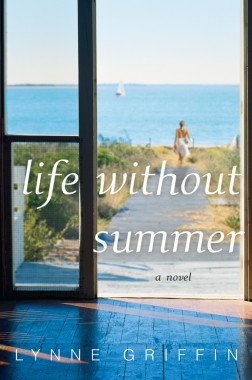
It's true that this year will go down in my life's history as remarkable, when eighteen days after the publication of my parenting book--nine days after submission--Life Without Summer sold to St Martin's Press. I won't say the year has been without its anxieties, its stress. I will say I got through it because the people who love me really love me, and they support what I'm trying to accomplish. I truly don't know where I'd be without my family and my dear writers' group--Lisa, Amy and Hannah, you are the best!

May 2008 hold an abundance of blessings for you and yours, and in the darker moments, I wish for you, light. Happy New Year!

Thursday, December 06, 2007

Never Say Never

Posted by Lynne

When my now eighteen-year-old daughter was a little girl, getting her face wet while playing in water was traumatic. Every summer, whether at the beach down the street or at the lake where we vacation, I'd play games with her aimed at getting her comfortable near water.

"No matter how big I get, I am never going to swim under water," she said.

I didn't tell her then what I knew, which was that some day she'd be completely comfortable with the idea. She would learn that there is little to fear when you trust that you can do it. And last summer she laughed when I reminded her of what she'd believed with every fiber of her being when she was five.

I reminded her after she did a hand stand off the dock--in her clothes.

"I'll never change my title." "I'll never kill off a character." "I'll never read my reviews."

It's fine to have convictions. In fact where would any writer be without them? Yet playing with the word never closes a mind. And a closed mind simply can't be open to new possibilities. Friend of our blog, Judy Merrill Larson wrote a wonderful blog entry about revision this week. She reminds us that every time we dip into our work truly open minded, we have an opportunity to re-vision our work in new and creative ways.

I've been thinking about this a lot during the last few weeks. My novel has been edited and submitted to my editor and I am deep into crafting my work-in-progress. I've come a long way over the last few years in terms of keeping an open mind about my work. I think we become more narrow minded when we're afraid. Fear of feedback. Fear of rejection. Fear of acceptance. These are the things that lock us on to our convictions. Arbitrary yet comfortable thinking that may or may not be in our best interest, or in the best interest of our work.

Now that I am entrenched in writing my second novel, I realize that the beauty of the first draft is its limitless possibilities. I'm not tied to any one conviction, because each day I put my characters in circumstances that allow their transformations to begin. I'm not married to any one situation or scenario, I just want to create scenes that show the reader what I know about a mother struggling to connect with her children because of the distant relationship she had with her own mother. I want readers to feel the breadth of another woman's love for one man, and why this love had the power to lock her in the past.

To show this, to truly convey it, I'll need to listen to my characters tell me their stories. I'll need to let them show me the way. Their journey, and mine, will have its twists and turns, there will be days when together we'll be lost and days when the way is made clear. Now that I've completed one novel, one that has changed along its way, I'll trust the process.

I've decided to leave the word never out of my vocabulary, and like my daughter take the plunge. I'm comfortable submerging myself in writing this story, letting it take me to places I've yet to imagine. It is with an open mind that I'll get to the end of the story.

Wednesday, December 05, 2007

Get Back!

by Hannah

The dilemma was this: As I waited for comments on Novel One, I took more than a step into the world of Novel Two. This was not a good thing to do. Then again... well, let me explain.

There didn't seem to be a conflict even as the Group shared reactions to Novel One; despite their concerns that they'd overloaded me, I was excited. They liked a great deal about the revision, yet wanted more. There were more layers to be revealed, opportunities to go deeper, richer yet, they said, and I agreed. I left the meeting in good spirits despite the work ahead.

When I got home, I started to think through the changes. I could add that character I'd debated from my female protagonist’s background. I can kill off someone, maybe two? ("Kill, kill, kill!” as said by Arlo Guthrie in Alice’s Restaurant reverberated in my head.) I could expand my main character in a particular way. There was only one hurdle, plot-wise, that needed to be gotten around in order to make these things happen. I let my mind go blank…

and in stepped Novel Two characters, who’d been pushing into my thoughts for some months, only to be told to remain on the doorstep. Until recently. With the draft on the Group’s laps, I’d welcomed them inside, chatted with them, one by one and sometimes as a group. They showed me flashes of moments and story arcs, dutifully transcribed on 3x5 cards.

Suddenly, so close to getting Novel One pushed to the Next Level, I found myself uninterested in it. The main character annoyed me, no longer dashing and intriguing. Why had I ever wanted to get to know him at all? Clearly, if I felt this way, readers would, too. Well, so what, then, if I moved on to Novel Two? These new people were so engaging. Tempting.

I became frustrated, impatient. Why had I spent so much time investing in this character, this story? What about it all would make me so willing to give up on it with the end in sight?

Epiphany moment.

I pushed the Novel Two gang out the front door to consider this. Why was the story not clicking for me, right now? What did I need from the story, from the characters? What would make me fall in love with them all over again, to reinvest myself in their lives? In the answer came the solution to the hurdle.

Despite their banging on the windows, their complaints about the drop in temperature outside, the Novel Two folks will need to amuse themselves without my attentions for a while longer. It will be worth their wait, I know, given everything I have learned from Novel One. It certainly will be worth my wait, and I don't think I'll be waiting all that long.

Monday, November 05, 2007

Thinking Big

Posted by Lisa

I’ve mentioned movies in blog entries before. A few weeks ago, the movie Seabiscuit taught me about character and its role in advancing plot. Perhaps I can blame my recent interest in movies to my relocation north of Los Angeles. Have I been bitten by the movie bug? After all, in my old home of Massachusetts, radio stations interview sports figures, local politicians. Now, I tune into a radio station that interviews movie stars.

My son and I watched Big last night, starring Tom Hanks. It’s about a boy who wishes he were big; his dream comes true. He wakes up the next morning, an eleven or twelve-year-old in Tom Hanks' body. He got his wish.

I made a wish, too. Many times. I wished I could be a published author. If that happens, things will change. These things, for instance:

I will finally have real money; I will contribute more than a small part of the mortgage.

I will not feel guilty writing in a café, spending money on fancy coffee that costs over three dollars a cup. I will indulge in the Cheesecake Factory slices they sell for $4.95 at Barnes & Noble.

My husband will look at me in awe. He’ll tell me he knew it would happen, and I will know that isn’t true.

I will walk into a bookstore and see someone buy my book – I will love that moment.

I will never feel guilty about writing time again.

My children will tell friends their mother writes books. I will nod, humbly, “Yes, I do,” I will acknowledge.

I will accept the Newbery Medal with pride. (Okay, that’s above and beyond, I know).

But, like the movie Big, I know I must be careful what I wish for. Will being published change my world?

I’ll get back to you on that…

Wednesday, October 31, 2007

There and Back

by Hannah

Parenting undid me, or at least, I undid me when I started to parent.

I have written ever since I can remember. Pen on paper, typewriter, Selectric (!), computer. My great-aunt wrote, as did a neighbor. Grade school friends wrote, and everyone in the journalism program at college did, of course. Even at the PR agency, while I was known around the office as "the writer," everyone could put together sentences, paragraphs, press releases. Every tributary of my life fed my writing.

Then I had my first child and moved out of the city. I kept working steadily, and my new friends knew I wrote. Yet parenting time expanded, not only directly with my children, but with their friends and those families. There's something about a baby on your lap and a four-year-old halfway up a ladder that bonds people who have nothing else in common. These other mothers and I explored our differences and found similarities. Opportunities to volunteer popped up more frequently, first in the community and then as the children headed off to school. "You write! We need a brochure, a release, a newsletter!" How can you turn down an opportunity to put your talents to use to help your community, your friends, your children?

I was writing all the time: paid work, volunteer work, and still, when I found the increasingly rare moment, fiction. Months passed; there were more meetings, more networking, less time to focus on the essence of writing. I started to drift, not away from writing, but I was not pushing it forward. I felt lonely, physically and emotionally unplugged, and didn't know why.

My turning point was dinner with two friends from grade school. One is a writer and the other a teacher; we talked and laughed all evening about what came of our dreams and goals, when we had turned from certain paths with purpose and where in our lives we found strength to forge ahead. In particular, we talked about how challenging it is to keep priorities in order and not let external influences shift them on you. We set new goals, and swore to check progress in a year's time. Mine was to write more, which meant I would have to back away from the community swirl. It sounded alienating; it proved completely liberating.

I did something I might not have otherwise. Thinking like a Writer, I noticed an author was to speak at my library, sponsored by a local writers' group. I called the contact listed at the bottom of the flyer. "I think I want to join a writers group. Do you have room?" They did. The group was different from the one you have come to know, but it was without doubt the seed of what would be.

The past ten years have taught me that writing may choose you, but if you choose the writing, you cannot be lonely. When writing is a life priority, karma starts to flow. You find a friend or two who believe in you. You write. Maybe you find a writers group, or you give reader friends a date by which you will send material. You write more, you find the craft of it. You join an organization like Grub Street. You take classes. You write better. The writing fills you up, and you're not lonely anymore.

Thursday, September 20, 2007

You Have to Care

Posted by Lynne

"Are you nervous?" the interviewer asked. "Of course, I'm nervous. Anyone who isn't should quit this business and go sell shoes. You have to care," she said.


I was just passing through the family room, clutching Water for Elephants and Falling Man to my chest, on my way to my bed, when I overheard Sally Field's chirpy voice, her words danced off the red carpet and lodged in my ears.

And in my heart.

Exactly right, I thought. If you care, it's a given you'd be nervous when you've finished revisions on your novel, or your book proposal, and submitted your work to your cherished agent. You want her to love your words as much as you do. And it makes complete sense that you'd have an instant panic attack when a dear friend, whose work you adore, tells you her work is out on submission.

You feel, because you care.

Whether you're new to writing or a veteran, there will be days when exquisite words appear on the page, with little effort your thoughts coalesce to create beautiful sentences and paragraphs. You'll love the feeling, no doubt. Other days, you'll be stuck. You'll chastise yourself for your bland setting, cliché characters and your lack of stakes and tension. You'll wonder how anyone will care about this story, if you can't manage to.

With that bum day behind you, you'll begin anew. Because you're a writer, and you write. The next day, or the next, you'll work out the kinks. You'll discover your character's wants and needs, and with every quirky personality trait visible, you'll like them, you'll really like them.

You've started to care.

The cycle will continue until you care so much it hurts. You'll worry like a mother sending her child off to college. Will other people like your baby? Will they cherish her, flaws and all--the way you do?

When your pages finally venture forth, you'll wonder how they're doing. Are they sitting high on that dreaded pile, catching the late summer rays? Or have they been placed haphazardly on a conference room table, vulnerable to coffee spills. Or worse, are they choking in their fed ex envelope?

Since you can't stop thinking about this extension of you, you'll force yourself to imagine a better day. The day when a smart, savvy editor dips into your prose, and is captured by your voice. And because you've cared so much, she cares. She clutches your book to her breast and she dashes out to share her find with other editors. She'll dismiss her plan to leave early to shop for shoes; she can buy those tomorrow.

Today she needs to buy a book.

Tuesday, September 18, 2007

The Story

By Amy

A reader of this blog, Jack Payne, once left a comment in one of my posts:

"Only part I disagree with is, 'I write for the story.' What does that mean exactly? It's unclear.To me, that would be like the design engineer of a refrigerator saying, "I do it for the refrigerator."Don't we all write for the reader? I always did. Over my long career--55 business books--I always regarded the customer as king. Same way when I came out of retirement to write my first novel, Six Hours Past Thursday. If I couldn't create something beneficial or entertaining for the reader, I had nothing to offer. The story is automatically taken care of when you "score" with customer (reader) satisfaction.--Jack Payne"

Now finished with my edits, I haven't stopped thinking about what Mr. Payne had to say. While writing this book and then revising, I've had four readers: the three savvy women of The Writers' Group and my agent (some months ago, in a fit of panic, I asked Hank Phillippi Ryan to read the last chapter and in exchange for my undying gratitude, she dropped everything to do so). Over these many months, I've glowed under their praise and sometimes took to my bed because of their constructive criticism; their approval means so much. But never did I write for them.

The beginning and ending of the story were always clear to me. As soon as I realized I was writing a novel, I understood what my protagonist's transformation had to be, how it would be. But that wouldn't come until the end. There were many dark days slogging through the middle. I'll never forget going to a reading of Carol Goodman's The Ghost Orchid with Hannah, Lynne, and another writer, Caitlin, and telling them I had made page 100! Certainly I was elated to have reached that milestone, but stumbling around the parking lot afterward, the truth was that I was lost in the manuscript with no compass to guide me toward the end.

Part of the problem was that my story was so very dark. Bad enough to explore the life of an undertaker and her work, but now the story was pulling me toward a young girl and thrusting her in harm's way. With the exception of Alice Sebold's The Lovely Bones (a novel that has a "forever spot" on my desk), I can't read books where children are threatened. If I were writing this book for the reader, the story would have been neatly told, and I could have rested well, knowing the little girl was safe. Instead, I had to give myself over to the story, trust it to reveal itself.

It was a terrifying process, one I struggled with until the very last revision. It was uncompromising, not always kind, but in the end, it was what I hoped it to be all along: unfailingly honest.

That's what I mean by writing for the story. It's the best explanation I can give you, Mr. Payne.

Tuesday, August 21, 2007

To What End?

By Amy

I met a woman once at a writers' conference, well, I sort of met her. She was a member of another writers' group and while both of our groups huddled near the back of the conference room waiting for Mako Yoshikawa (the hair!) to begin her workshop, we got to talking. The members of this woman's writing group were effusive and warm, funny; the kind of people who establish an immediate comraderie. The woman, however, was quiet, not reserved so much as withdrawn. She appeared to be observing our exchange as if she were not a partipant at all.

As the conversation progressed, each of us took turns explaining our WIP. When it was the woman's turn, she said a few words, we had to strain to hear her in that room humming with anticipation of Mako's arrival, and then her group spoke for her, something I've never forgotten. They said she had two completed manuscripts -- beautiful stories, gorgeous writing, compelling reads both -- that she declined to submit. Meaning, she wasn't seeking an agent, she didn't excerpt them for publication as short stories, she didn't intend to have them published at all. She didn't give a reason even when we asked.

I've often wondered about that woman. She spent several years on each book, expected to write another, she attended conferences, joined an active writers' group, revised, and revised again. To what end? I suspect it was less about the fear of rejection and more that this woman treasured the worlds she created and didn't want the fotoprints of the masses upon them.

Lately, I've been thinking about other people reading my manuscript and it doesn't feel as though I expected. As much as I want the opportunity to introduce my characters to vast audiences, once it's out there, even in a form I've created, it will be changed. If it is published (these caveats are important, aren't they?), others' opinions, insults, interpretations will mold it. Reality is simply a matter of perspective. If it's published, reviewers will call it a mystery or suspense or literary fiction. They will say it's evocative or drivel, inspired or overwrought and it will become what they say it is. I've read a hundred interviews with writers who've said readers find themes and interpret motivations the author never intended. Maybe it's there in the writer's subconscious, maybe the reader's, but it's become a part of the work once it's stated. When a reader takes up a book, it's as if they've staked out territory there, with full squatter's rights to make it their own. I'm afraid that so much of what I intended will be lost in translation.

I think about that woman a lot now. I wonder how often she goes back to those projects, reads them and loses herself in those worlds of hers. Maybe she's right to guard them. Still, I hope someday to be privvy to them, to be a reader and inhabit those characters. I'll try not claim too much if I do.

Thursday, July 12, 2007

Publicity and Door Steps

Posted by Lynne

When I found out I was pregnant with my first child, the joy was indescribable. Until I realized at the beginning of my ninth month I would have to deliver.

If you are a regular reader of my entries, you know I can't help but compare having a book to having a child. The emotional rollercoaster ride is eerily similar. The highs include pride and gratitude; the lows, apprehension and enormous amounts of hard work. So here I am seven weeks from the publication of Negotiation Generation, and it's just starting to don on me in a real way--I've got to deliver.

I'm over the moon because I'm scheduling events, planning travel; I've seen the galley and have been contacted for some interviews. I can't believe publication is right around the corner. Yet, twenty-four hours a day, (Yes, even while I'm sleeping) my mind is racing with all the other things I should be doing to make the book successful. Will I be able to do enough to get the attention of the media, other bloggers, and most importantly parents?

Years ago when I lamented how hard it was to get an agent and a publisher for my book, a dear friend of mine said to relax. She said, "If God wants to get your book out into the world, you could leave it on your front steps and he could make it happen."

I smiled at the time, wishing it were only that easy. Yet her sentiment stuck with me. Now that I have a wonderful agent, and my book is due out, her words come back into sharp focus. All I can control is what I can control.

Sure I'm busy, though there's a lot that can't be done quite yet. It's too early to announce the book in my fall newsletter, or book radio segments, or visit bookstores. School and community leaders are out on summer break, so trying to connect for possible speaking engagements is challenging. Once again in the journey from idea to published book, there's a whole lot of waiting going on. Something I admit is not my forte.

So how do I move forward with publicity while managing my emotions? I review my publicity plan so many times a day I could recite it like a favorite poem. (I imagine that's why it scrolls through my mind while I sleep) Each day, I choose a few tasks to be completed and do my best to close those circles. I reach out to old friends and colleagues to help me connect to parent groups that might be interested in an event. (If you are, please be in touch!)

Best of all--I'm going on vacation. I know the next few months will be thrilling and tiring, so I've decided to get away with my family for an uninterrupted week in a cabin on a lake in Maine. It will be just what I need to empty my mind, re-energize my body and renew my spirit. Not to mention give my full attention to the three people who have supported me for as long as it took to get this book out into the world.

When I come back refreshed and ready to tackle more book launch tasks, I imagine I'll still be filled with exhilaration tangled in self-doubt. I know I won't be able to do everything I want to do to publicize the book. But I know this--I will work hard because I believe in the message. The rest is in God's hands.

Monday, July 09, 2007

Words

Posted by Lisa

Andy Roddick cut to the chase when he described his feelings after losing to Gasquet in the Wimbledon quarter finals this week.
''It's another lost opportunity at Wimbledon,'' said Roddick, who lost to Federer in the finals in 2004 and 2005. ``I'd love to make you try to understand what it feels like in the pit of my stomach right now, but I don't know if I'm articulate enough to really put that into words.''

Andy stared at the reporters before him, his brown eyes intense. He's not one to beat around the bush. Something in his face told the story, the emotions inside him. But he's right. How could we possibly understand.

I've hit tennis balls but I couldn't tell you if the court was clay or grass; it was probably ashphalt littered with long cracks and a couple empty Gatorade containers. I've competed in road races and triathlons. But I never broken the top three. I'm not a champion. I don't know how he feels. The only problem, is that's our job as writers, you know. To portray how our character feels in their lowest of lows oftentimes.

Are we articulate enough to describe it? I doubt it actually. If someone, like Andy Roddick, as clearly intelligent and articulate as he is, can't describe it, then how can we? If he, in his depth of feeling and reaction to his loss, can't describe it, then we writers have little chance. If our work is not memoir, then we truly cannot feel what our characters feel.

... So we fudge it. It's true, we do. And this is how:

We fudge it with details: the sound of the ball catching on the net in that final point, the whoosh of the opponent's racket in the very moment when that last set is decided, the pounding in a player's temples as the presenter holds the Wimbledon trophy high before the opponent, moments before presenting. We must put ourselves in that moment and imagine the details that characterize the pain. Though it's all pretend, it leads the reader into a real scene.

The writer must ask questions the reader wants answered. This is good writing.

Have a wonderful writing week!