Monday, June 18, 2007

My Safety Net?

Posted by Lisa

I'm naive. A safety net is open beneath me - sometimes I truly believe that. I know it was there when I learned to stand. Of course, I don't remember teetering with my mother's hands poised an inch on either side of me. Must I remember details to know exactly how it happened?

I was seven when I learned to ride a bike without training wheels. My hair was loose - half an hour earlier I had pulled out the pompom hair bands my grandmother had painstakingly fixed onto my ponytails. It was my father, this time, who guarded me, running alongside my bicycle as I mastered my balance, until could make it the full way along the sidewalk - all the way to the Kosta's split level on the corner - and back.

Much of the time my world is a setting where characters are predictable - and safe. Husbands pour tea for their wives. Children are safe, tucked in at night in a world without tsunamis or earthquakes; no bombs explode at midnight. Even dogs live to a ripe old age, dying in their sleep, with dignity.

But sometimes, my world isn't, exactly, safe.

In my work as an occupational therapist I see parents face a child's disability and wonder why. That question haunts me long after I meet with them. Days after I work with a little girl with autism, her bright eyes are still fresh in my mind - how can her eyes be so blue?

I have never been drawn to more serious fiction. "Heavy" subjects terrify me. I've been reading Scott Heim's Mysterious Skin. It's brilliant and beautifully written. I am partway through it. As a writer, Scott makes me care about his characters. Care so so much. Only eight years old, Brian, the main character, is too like small boys I have known. You know the boys, the ones who needs baths at the end of every summer day since dirt is a second skin that coats them. The ones who toss a couple of Webkinz in the backseat of their Subarus, as their mothers check the seatbelt is tight over their carseats. Each night at their household, there are rules about eating vegetables and brushing teeth.

This is my reality. But it is not reality. Too many boys live a life, like Brian, where bad things happen to innocent small people.

I'm naive, but I'm not blind; my safety net could unravel. Perhaps a strong wind could send it flying, a tumbleweed across a Kansas plain. That security I feel each day is false. There is no safety net. I know that.

From a writing perspective, I love that Mysterious Skin is told from a first person point of view. In the spirit of the number one writing rule, show don't tell, Scott Heim, has taught me the effect the choice POV has on a work of fiction. The lesson? First person point of view brings you in, pulls you tight into a caring that takes firm hold before you knowingly allowed it to happen.

Writing is facing a subconcious haunting that has taken hold and has forced you to think. Reading is caring about characters, oftentimes in circumstances I can barely imagine. I don't liker darker fiction, but I do like falling in love with a child, a grandparent, a teenager who lives a life I can't imagine. Maybe reading about circumctances I can barely fathom will help me to see the real world, not block out issues that frighten me, but face them, address and deal with them, even.

Maybe.

Friday, June 15, 2007

Making a Literary Life Friday: Out & About


If you're a writer, make sure to frequent your local independently-owned bookstore where you're sure to find all kinds of exciting happenings. Our very own Buttonwood Books in Cohasset hosts many authors who write in a variety of genres. Here's Amy at a recent event where Hank Phillippi Ryan read from her mystery Prime Time, Claire Cook (author of the international bestseller Must Love Dogs) read from her latest commercial fiction Life's a Beach, and memoirist David Gessner read a passage of Soaring with Fidel.

Lisa
Chocolate and strawberries and almond pear torte, laughter, reflections, and suggestions, dinner with writers Scott Heim and Michael Lowenthal was lovely. Scott spent his childhood in Kansas, in a rural town, or barely a town is how he described it, I think. Michael grew up in DC though he dreamed one day of living in Boston, a magical place he visited as a child. Thank you, both, for sharing your stories, struggles, and approaches to task within this world of writing. We so enjoyed reading your work and loved spending time with you.

Amy
Thanks to all of you who sent along your best wishes and included my family in your prayers. I never expected to be so utterly touched by this online community of ours; it's comforting to have each of you there. And thanks to Lynne for hosting Michael Lowenthal and Scott Heim, and for the two of them for dropping in on our Writers' Group. Each are extraordinarily gifted writers, the kind Francise Prose wants you to read like a writer. Michael's Charity Girl (Houghton Mifflin 2007) is so perfectly crafted, so painstakingly plotted, you'll need to read it twice: once for pure pleasure, a second time to wonder at his precision. Though Scott's third book, We Disappear (Harper 2008) is due out in January, I urge you to start with his debut Mysterious Skin. On the first read, be prepared to have your heart ripped from your chest. On the second, pay attention to his craft. The words, pace, and beauty of it all is an important lesson for all writers.


Hannah

Dinner with Scott and Michael was wonderful. In addition to being hugely talented, they are funny, wise, relaxed and gracious; we talked about the revision process, the mystery of titles, high school reading lists and the ever-shifting landscape of agents and publishers, plus listened to stories from the book tour road, what comes next. Definitely keep your eyes open for We Disappear; it will be hard to put down even on re-reads! An evening like that helps refill that precious jar of energy several times over. A thousand thank you's to them for making the trip, and to Lynne and her entire lovely family for hosting us!


Lynne
This has been an exciting week for connecting with other writers. My husband and I went to Hank Phillippi Ryan’s book launch party in Boston and then last night Michael Lowenthal and Scott Heim joined us for writers’ group. The discussion was so thoughtful and insightful, I'll be reenergized for weeks, I'm sure. I have a writing weekend planned and I can’t wait to hit the keys.

Thursday, June 14, 2007

Truth and Revision

Posted by Lynne

He is cliches of beauty. Tall, dark and handsome. My soulmate; he understands me or least he's always willing to try. But those are not the reasons I adore my husband. It's because I can count on him to always tell the truth. In the beginning his truthfulness was applied to skirts that accentuated post-pregnancy hips. Or first attempts at complicated recipes gone wrong. Now he tells it like it is about my writing.

I would be blessed beyond measure if I only had Tom's honesty when it comes to my work, but I'm fortunate enough to have a cadre of trusted readers. Amy, Lisa and Hannah are the most generous--and forthright--writers I know. No sugar coating, no gratuitous compliments, though no critique for the sake of boosting their own egos, either. For them, it's all about making the work better, encouraging each of us to grow as a writer.

Along with Tom, Amy, Lisa and Hannah, I have another special reader, let's call her E.

Back in January, thrilled I'd been capable of polishing a first draft of my novel, I sent it off to E. I was naively hopeful. Her first words to me after reading it were, "You asked me to be honest, so I am going to be. It isn't there yet."

Yes, I'd asked for honesty. I honestly wanted you to love it, I thought. What in goodness name do I do with, it isn't there yet. Couldn't this person I trusted tell me where it was supposed to go; I would willingly take it there if only I knew. She gave minimal suggestions, some that felt true to the story, some that did not. With the support of my other trusted readers--chiefly Tom and my writers' group--I shouldered the blow, and got to the job of revising.

I submerged myself in classes, books on revision, and the chair I sit in to write. I'd often ask Tom if he was okay with me, going to that place. If you're a writer, you know the one I'm talking about. The place where you're connected to people you adore who don't exist, to places you love but can't touch. Whether I spent an hour there or twelve, Tom kept saying, "I believe you have to tell this story."

I'd love to end this post by telling you my revisions are complete and my manuscript will be published. The news I received this week was good, but not that good. The truth is I finished a third draft and sent it to my trusted reader E. Her first words to me this time were, "Revision is a wonderful thing." She said my story has come alive.

Her earlier honesty was hard to hear, though truly her words were a gift. My story wouldn't be the story it is now if she hadn't had the courage to tell me the truth. I wouldn't have pushed the story, or myself.

Like a ball of yarn, truth and revision are intertwined. Pull at the knot with honesty, free the tangle with revision, only to come upon a new knot. Anyone who's tackled it knows, it's by no means an easy thing to do--you need the truth to do it.

Wednesday, June 13, 2007

Fables of Determination and Love

By Hannah

Moments in a day are ours to interpret. Every one of us writes his or her own story.

A baby bird fell from its nest in our backyard while my husband and children played catch. My son watched it flutter-fall to the other side of our split-rail fence. The children wanted to pick it up, put it back in the nest; my husband explained that to touch it would mean the mother likely would no longer care for it. So we watched, worried about hawks from a stand of oaks across the street. The mother bird flew to a low-hanging branch, chattering at her wayward offspring. The baby bird hopped on the lawn, then in a burst, flew a brief arc toward her; he came so close. After encouraging him for several minutes, the mama drew him toward a large bush in our neighbor’s yard under which he would be safe. We waited, but they stayed quiet.

My children walked away talking of how the baby bird would soon fly, maybe within the hour. He came so close, surely with a few more attempts, he would make it to a low branch, then a middle branch, then home. He would try again, the mother would be there, he would make it.

My husband walked away with a meaningful look at me. The baby is too young. Will the mother be able to protect it and still guard any others in her nest? A lesson in Nature, her whims, that what happens is a practical matter.

I believe in my heart the baby was close to being able to fly. I hope that with some measure of determination within himself and with encouragement, he made it back.

For my children, this was an animal fable about determination and love. For my husband, a lesson postponed in the facts of nature. My first thought was of a parenting analogy, then an analogy for anyone with a dream.

Every person sees stories in the everyday world. Most people do share stories, chatting with a friend, keeping a journal. Why do writers go a step -- hundreds of steps -- beyond? Why are we compelled to take the time and energy to distill a moment's essence and recapture it within a perfect framework? Maybe it is our attempt to look beyond what is known and safe and expected. We want to experience what comes next, to see things from a new perspective, and carry it back in such a way that others can see, too.

Maybe we, as storytellers, are more acutely aware that each of us experiences our own fables of determination and love, that the facts of nature are indeed simultaneously cruel and beautiful, that we all have to leave the nest and help others to do it, as well. Maybe we are the among the lucky ones who get to show others that you cannot really live life until you are not afraid to fly.

Tuesday, June 12, 2007

Second Stall to the Right

By Amy

I go to the bathroom to cry, second stall to the right.

My mother had a “significant stroke” six days ago and all of my waking time has been spent with her at the hospital. The first three days, she lay mostly unconscious, her right side seized by a continuous spasm that left her blankets askew and IV lines vulnerable. One of the doctors said it was to compensate for the paralysis on the left. I’m not sure which doctor, though, there’ve been so many. When she did finally open her eyes, it was reassuring by degrees. Since then, she often doesn’t know where she is or even what stage of her life she’s living – childhood, young motherhood, a random tea party where she pours – other moments are bittersweet pockets of lucidity. To have her again, for only a few moments or even hours will have to do. When she’s aware, I want to burrow myself under her mound of blankets, have her tell me this too shall pass, but that’s my job now -- that and believing she will recover. I have to believe for my father, too, he needs that. Her team of doctors can’t say how much she’ll improve, but most are hopeful.

My father and I arrive early and leave late, meet with doctors on their early morning rounds, check her vitals with the night nurse, call the neighbors and family members throughout the day, reassure my brothers she’s making progress, no matter how small, remind them it’s a marathon, not a sprint. It’s killing them. I wait until my mother’s safely asleep before nudging my Dad to the cafeteria for a hot meal. He hates to leave her side. He’s relying on me now to help him navigate this uncharted course. It’s a terrible thing for a father to depend so much on his little girl, I know this. So I don’t let him see me cry.

A friend called me last night and asked what I was doing to help myself. I know someone you can talk to, she said. She is a lovely friend, one of the first people I called. But she knows I don’t talk, not to therapists anyway. Instead, what has seen me through this period has been writing this essay.

The first line came to me in the middle of the night while I sat in a chair watching the rise and fall of my mother’s chest. The rest has come in bits and pieces since. When I finally found the time – this precious time – to write, I flew to my desk. Thoughts of these moments, putting words to page have been my touchstone. I’ve always loved writing and each of you knows by now how important it is to me. But I suppose I didn’t realize that it's my essence; I am a writer. So many of us have wrestled with the notion of calling ourselves writers before publishing something, as if that title can be bestowed only by public acknowledgement. What I’ve learned this past week is that a writer isn’t a title at all, it’s who we are, what moves and sustains us. Writing is what we turn to in crisis, in joy, when we need to make right a world so fatally flawed with wrong. It’s our catharsis and euphoria and the marrow of our core. We are writers.

I don’t expect I’ll have much time to write in the weeks ahead. I’ll probably go days without it. When I can manage, it will help me through.

When I can’t, you can find me in the bathroom, second stall to the right.

Monday, June 11, 2007

Aching, Writing, and Life

Posted by Lisa

Stoic, or trying to be, I held in my tears until they were an ache that threatened to close my throat. I held a smile, closed-lipped, on my face. I told myself to breathe. I left the pre-school classroom where I worked this past year. I closed the door a final time.

This past Friday I said goodbye.

I work with children with autism. I have for years. I am an occupational therapist. Because I am moving, I had to leave my job.

"Why," I asked my husband that evening. "Why can I say goodbye so easily to teachers I work with, close friends I cherish. Yet saying goodbye to a three-year-old girl, a four-year-old boy, makes me feel like a part of me is dying."

The answer to him is simple. "Because they are children." And he's right. This is a snapshot of their lives that will fade in time. Sometime next winter, I can call my friend Holly. We can meet for lunch. My best friend at school, Kim, a fantastic teacher, made me promise to e-mail, and I will.

I write about loss, about emotional struggle. Late evenings, early mornings, I yearn to find the words to describe the way my current protagonist, Rose, feels when she faces her grandfather's physical failings. But do I truly understand Rose's pain? Have I adequately related the horrible emotional lows I make my characters face?

Today I picked up Scott Heim's novel, Mysterious Skin. I hear it is a bold work, beautifully written, with a challenging subject material. How, I wonder, did Scott manage to write this? Did he go to that awful place where his character finds himself?

Each day, I know, is precious. Here today, gone tomorrow. Cliche, but true. In last Friday's blog entry, I questioned what came first for me, the writing or the need to write. Writing, in part, is my way to process that which confuses me, to frame and make sense of the things that confound me, frustrate me, torment me. If writing helps me to make it through my days and to negotiate this world with some semblance of mastery, then I must write. If writing helps me to be calm and centered and focused on understanding myself and, in turn, achieving my own potential as a human being, then I should write.

Now, I am sad. I am empty. I miss my small pre-school friends, each of whom will face challenges as they try to make sense of this world. I have set them free, trusting that others will guide them.

Those children, my innocent friends, have left me with subconcious hauntings that have taken firm hold. Because I must, I will write about them some day. Their names, their faces, their circumstances will change. I will turn them into characters I love deeply. Maybe that will help me make sense of this sadness.

Friday, June 08, 2007

Making a Literary Life Friday: Raising the Bar

A few months back, we in our writers group agreed to raise the expectations we set for each other. Having established trust, we knew we were in a place where honest and very comprehensive feedback would push us to the next level. This decision has movitated each of us to double check our prose, re-think a character's motivation. In short, raise the bar for our own writing.

Lisa
Passages from favorite writers...I couldn't live without them. Reading a polished paragraph from Michael Lowenthal's Charity Girl, or a few words from Jerry Spinelli's Star Girl, is what I need to jumpstart my writing. I need that prose switch to be turned from idle to on.

Amy
This Friday, Amy won't be posting herself, but she reminds us about the Debs party at Grub Street Writers this evening (see below).

Hannah
That one can not only deplete but misplace one's precious jar of energy made total sense to me this week. (Thank you, Lynne!) I noticed yesterday that not only have I been running on fumes of frantic energy, but everyone around me seems to be as well. Somehow that was what I needed to pull back. First things first. Smile at the children. Prepare a good dinner. Curl up in the wide leather chair with one of the many Roald Dahl books that seem to be magnetically attracted to my coffee table from two school libraries and the town library as well. Remember Matilda? Work on the fiction even if it's only for a half hour before Everything Else begins, and sneak in another half hour here, another hour there. I have not slowed, but that mysterious energy source seems more substantial as I repeat these steps. And you?

Lynne
I raised the bar on revisions to my novel, and even I'm impressed. My characters had sooooo much more to say. My tip of the week is not to close off conversations with them too early in the process. The richness in my story was found when I waited and listened patiently.

Literary Events:
If traffic isn't an issue, then mark your calendars because the Debs are coming to Boston! Friday, June 8th at Grub Street world headquarters we'll toast Jennifer McMahon, Tish Cohen, and Patry Francis while they read from their debut novels. This event will also feature a fun contest: each author will pick one name from a hat, and the winner will receive a free consultation with the author on their query letter and first manuscript page. RSVP: 617.695.0075 or sonya@grubstreet.org.

Thursday, June 07, 2007

Energy Crisis

Posted by Lynne

Parenting takes time, but it also takes plenty of another valuable resource— your energy. In order to be the authority your child needs, you need determination, patience, stamina, resilience and sometimes courage. Parenting takes energy.

Above is an excerpt from Negotiation Generation in which I set the stage for a discussion of what I call the precious jar of energy. Imagine your body contains a special place where the energy you need to parent is stored--picture a precious jar of energy. All day every day, you decide how to use it and how and when to replenish the energy you store in your precious jar.

Whether you're talking about parenting or writing, this precious jar analogy is apropos. And today, not only is mine empty, but I forgot where I left it. I spent the last week engrossed in an intensive edit of my novel, while trying to schedule events for my fall book tour. I started a freelance magazine writing class and I'm preparing to teach a graduate course that starts in three weeks. That's just my work life. On the home front, my son is studying for finals and (insert the sound of me weeping) my daughter graduates from high school this Friday night.

I'm in the midst of an energy crisis.

What do I usually do to refill my precious jar? I write. I read. I imagine myself writing and reading.

Since each of the twenty-four hours per day I'm allotted is filled to the brim with must-dos, I can't do what I usually do to refill my precious jar. Sure I can imagine writing and reading, but it turns out that just isn't enough to re-energize me right now. Until my schedule settles out a bit--one week ought to do it--I'm going to have to run on empty.

What do you do to refill your precious jar? Any tips you have to help me through the graduation of my best girl would be greatly appreciated.

Wednesday, June 06, 2007

The Muse on Line One

by Hannah

I had my head in the dryer when the answer came to me. The dryer thing was not an act of desperation, although reaching for a white sock with pink flowers that has to be worn immediately is crisis resolution of a type. There we were, the sock and I, inside the white barrel of my dryer when I knew what would make Aunt Bets pop.

As you know from the profile on the side of the blog, I have been revising my novel for some weeks. Months, technically, but we're not going to get too technical.

Some of the changes needed were screamingly loud, and as I sat down and organized the rewrite, those slid right into place. Don't be afraid. Push it. I soon had enough to start to rewrite, so was able to ignore small pieces still missing from the puzzle. For example, Aunt Bets. She was rather blah, extremely minor, and yet I was certain she couldn't be cut. This bothered me a great deal.

Margot Livesey says that even brief, two-dimensional characters should have the potential to become three-dimensional. They need not actually pop into life at any point, but the reader should have the sense they could.

I twisted Aunt Bets every which way, but she refused to tell me what about her sweet nothingness was important. She didn't want to be mean, or snippy, or competitive, all things the plot certainly would have allowed. She didn't want a vice, hard as I tried to put a smoke or a glass in her hand.

As I stretched to reach that silly sock, it occurred to me that Bets' insistence on being perfect is precisely what rounds her out. A touch of the holier than thou makes her the perfect tool, then, through which the antagonist will reveal himself publicly, much to my protagonist's delight. I held that sock high with a huge grin.

The Muse chooses strange means of communication. It's understandable that I should receive part of my answer by sitting at the feet of Margot Livesey. That the Muse should use my dryer as a telephone, well, she's more creative than I'd imagined.

Tuesday, June 05, 2007

Critique Me

By Amy

A lot of folks check in here each day, read what we have to say, some leave comments (thanks, we really do appreciate them), while others email their thoughts. All who stop by here have been unfailingly gracious, many have linked this blog and/or various posts.

One thing worries me, though: I’ve read the completed manuscripts of each of my writers’ group members, I’m certain of their abilities, but none of you know if I can write well. Yes, you’ve read my posts – none of which have been properly edited. Some of you may have Googled me and found a few of my op-eds available there. But fiction is something else altogether.

So today, I’m going to serve myself up for you to critique. This is a Writers' Group blog, after all. It’s a small excerpt from my manuscript, there are space constraints. The set-up is my protag , an undertaker, has arrived to remove a body. As you know, when giving feedback it’s almost more important to describe what doesn’t work than what does. Have at it, rip it apart. Go on, I’m strong. I can take it:

From the hearse, I remove two pairs of gloves, one small, the other large, along with the gurney, body bag, and my case. Walking back to the triple-decker, I see a middle-aged woman on the deck of her third floor apartment, her hair in curlers, her squat body encased in a bulky robe. Her mouth filled with clothespins. She’s hanging underthings from a makeshift line strung between her doorframe and the single dying oak in her postage-stamp yard. She sees me watching her and freezes, big white underpants billowing in her left hand. She yanks the pins from her mouth, spits twice off of the deck, and then crosses herself. When the breeze picks up, the oak’s forgotten leaves swirl around its trunk, and the woman turns her attention back to the laundry.

Steve-o keeps his back to me as I struggle up the stairs. His teeth nimbly work over his cuticles, reminding me of a man I once saw eating chicken wings; the way he splayed the tip from the drum, snapping them apart and then gnawing each bone until it gleamed white. This time Steve-o doesn’t hold the door for me.

Actually, I'm not feeling terribly strong right now, a little vulnerable if truth be told, so try not to be too harsh. Okay?

Monday, June 04, 2007

Odd Man Out

Posted by Lisa

Wearing a cast makes other people, well, annoying.

As some of you know, I broke my foot April Fool's Day (fool that I am), and I was on crutches for six weeks. During that time, there were four or five instances when I nearly injured myself again. The scenario was the same each time:

Hopping quite capably on crutches, I approach a doorway. Bracing myself solidly on my good leg, I reach forward and pull on the door. It swings open, then WOOSH. Someone, most good-meaningly, has pulled the door open the full way, helping me, of course - helping me lose my balance and nearly plummet face-first to the ground. I catch my breath because I was startled. I smile. I say, "Whoops, you surprised me there. " I hobble through the now-held door and I mutter a disgruntled "Thank you" because I know I should.

On crutches I have been the odd man out when I pick up my kids from school. At our school, moms and dads rush into the cafeteria where kids are waiting, they collect their cherubs, and hurry on their way. Each day in my cast, people stared. I'm truly not much of a person who worries or even notices what others think, but why do I feel I must smile, and explain, telling them the same soccer story, day after day when they ask me what happened.

It's oh-too-much the same when people find out I'm a writer. They ask me about my writing. I give the same old answer, the same forced smile. Truth be told, I want to talk about writing, with writers. Because they understand. I have lived with this broken foot for weeks. I live with my writing day after day, year after year. I don't want to make idle conversation about either. Each is too close to home, too all-consuming in my life. Too important to me to summarize in a smiling sentence.

So, I am the odd man out. I write. If you're reading this so do you, most likely. We live different lives. My daydreams are centered on my characters. Non-writers don't get it. It's hard to be the odd man out.

Friday, June 01, 2007

Making A Literary Life Friday: Waxing Philosophic


This week merged the practical and the philosophical, preparing for summer's distractions and rationalizing them away in favor of writing. There are many wonderful reasons to stay focused as Mother Nature (sister of the Muse?) turns up the heat.

Grub Street is posting photos from the Muse and the Marketplace conference soon, and announcing new seasonal offerings. Parties are scheduled to support debuts (Hank Phillippi Ryan, writers from the Debs, Patry Francis, and the list goes on -- anything from those of you beyond our New England borders?).

Amy and Lynne had the pleasure of hearing Hank Phillippi Ryan speak about her experiences with editing her soon-to-be released novel, Prime Time. She nipped, tucked, tweaked and polished--and she showed other writers how to do the same.

For those who wonder if all these new reads and events are distractions, we say a good book and banter serve to inspire!

Lisa
The nourishment for my creative side is my job. Spend a day with me and I'm sure you'd agree that employment in an elementary school is the most valuable class in character; teachers and parents are never dull. But it's the day to day emotion of dealing with people's lives, frustrations, longings, worries that builds my pent up craving to write: watching a parent come to terms with a child's diagnosis of autism, hearing that a wonderful third grade teacher lost her battle with cancer two days ago. What came first? The writing or the need to write?

Amy
Speaking of Camus, do you writers out there ever wonder if the world you've created on the page is somehow more real than one you inhabit? If your characters live more fully than you? For me, I think it's safe to say even the corpses in my novel don't have quite the stunted social life I've had lately. Cooped in my office, intent on revisions, I'm losing track of the world around me, too focused on the one within. I think it's time for a little fresh air.

Hannah
Revisions proceed at their own pace, plus I got Margot Livesey's The Missing World out of the library. My daughter has a new homework sheet to mark off two assignments each week for math and literacy. One is simply to "take a book out of the library." Her eyes lit up as she decided she had taken out enough books the last visit to check off her homework for the rest of the year.

Lynne
I spent hours and days revising my novel. I took a well-deserved day off to shop for my daughter's graduation gift. The bag contained a few good summer reads for her and I to share. On my list--The Things They Carried by Tim O'Brien and The Keep by Jennifer Egan.

Literary Events:
Tuesday, June 5 Buttonwood Books Coffee with the Authors featuring Claire Cook, David Gessner, and Hank Phillippi Ryan. Contact Buttonwood for tickets and reservations.

If Boston traffic makes you dizzy, come to Buttonwood Books on Thursday, June 7 at 7:00 pm to hear Books and Bloggers at Buttonwood Books featuring Patry Francis, Tish Cohen, and Jennifer McMahon.

If traffic isn't an issue, then mark your calendars because the Debs are coming to Boston! Friday, June 8th at Grub Street world headquarters we'll toast Jennifer McMahon, Tish Cohen, and Patry Francis while they read from their debut novels. This event will also feature a fun contest: each author will pick one name from a hat, and the winner will receive a free consultation with the author on their query letter and first manuscript page. RSVP: 617.695.0075 or sonya@grubstreet.org.

Thursday, May 31, 2007

The Mountain

Posted by Lynne

Amy's reference to The Myth of Sisyphus is the inspiration for my post this morning. I've loved and leaned on Albert Camus's famous essay all my life. For those unfamiliar with it, or in need of a refresher, the essay is about a man's search for meaning, his struggle to understand absurdity. It's a primer on existentialism.

It's rich on many levels, so I do suggest reading it in it's entirety. The most known portion of it involves a man pushing a boulder up a hill, only to have it roll down again. His fate is to continue to do this forever without ever seeing different results.

After spending several days deep in revision three of my novel, I can relate to Sisyphus. Without changing a single character or plotline, I have expanded and fine-tuned my story. I changed some scene locations, added deeper motives for certain characters' actions, and included more backstory. Unlike Sisyphus, in this attempt to move my efforts up the mountain, I'm getting somewhere.

From the outside looking in, the process of writing a novel is absurd. Read about writers and their process and you'll find these universal truths. A writer spends incalculable hours thinking about the story, writing the story, revising the story, editing the story. To say nothing of what's required to gain representation for the story, or find a home and readers for the story.

I have spent more time with my characters than with some real people I truly enjoy spending time with. I've forfeited beach time, shopping trips and lunches, in favor of hanging out on an imaginary dock and in a child's bedroom. I've written, rewritten and rewritten again a scene on a boat, in a police station, and in a garage. If my little darling ever sells to a publisher and I take my advance and divide it by the hours I've spent writing, I'm certain to be in the red.

Examining writing a novel from the inside out, is a different matter. What some see as absurdity is full of meaning to the writer. For me, each revision strengthens my faith. I'm more certain than ever that I have an important story to tell. I'm the person to tell it, and someday a reader or two will enjoy the concrete reality of my sisyphusian efforts.

At the end of Camus's essay, he sums up the search for meaning beautifully. He concludes that the struggle itself is enough to fill a man's heart. One must imagine Sisyphus happy.

When I'm writing, I'm happy. Though I admit, getting to the top of the mountain would be nice.

Wednesday, May 30, 2007

A Sign From Above

by Hannah

Our group is nothing if not practical. We set rules, meet regularly, maintain constant contact. We are serious students of this craft and business. Yet we all openly admit to a belief in the otherwordly when it comes to writing. There are days when the Muse is scarce, and those when she zaps us with what Therese Fowler calls writing magic.

Our practical little group believes in signs with all our hearts. Lisa, Amy and Lynne all have received tangible encouragement from the powers that be, the most amazing of which was a letter found in an antique shop inscribed with a character's name. For the longest time, I was disappointed. No signs for me. Oh, sure, the Muse would appear with a blast of (much appreciated!) writing magic, but there was nothing I could hold onto as a talisman of hope. Then, overwhelmed for several days by paying work and family schedules and not writing, I received this at the end of a Chinese restaurant meal:

"Take the chance while you still have the choice."

I started to make time, here and there, dribs and drabs. A week or so later, I received this:

"Chance favors those in motion."

More writing, every day, and I earned this:

"You're transforming yourself into someone who is certain to succeed."

I taped the three fortunes on the plastic bookmark in my schedule book, the one I look at every day when figuring out where the kids have to be and what my boss needs. I started to touch the story again -- think, write, edit -- every day, and that excitement began to bubble, when you know, just know, you're doing something well. The Muse took notice.

I had finagled my daughter out the door for a second time after much drama. I had cleared my morning to write. I knew what I wanted to do, how the words would flow. As I stood at the end of the driveway, watching the approach of the yellow bus with eager anticipation, ready to Be A Writer, a bird pooped on my head.

So here's one last thought on signs. They exist, and you can make of them what you wish. Amy, Lisa and Lynne say that it's good luck to be pooped upon, especially if you haven't yet taken your morning shower. I choose to believe them. Next time, though, I'd rather get a message in a cookie.

Tuesday, May 29, 2007

We Shall See

By Amy

We shall see.

It’s a phrase I repeat ad nauseum to my writer friends. Any time one of us is convinced a situation is hopeless – the words won’t come, the agent doesn’t respond, an editor hasn’t yet read the material – I encourage her with the one true hope: we shall see.

When a friend is convinced, absolutely certain, that the tide has turned and Fate is clutching her to Her bosom, whenever an agent is excited by the prospect of reading her work or an editor expresses interest in an exclusive, I warn my friend: we shall see.

It’s not that I’ve undertaken a Quixotic journey (more Sisyphean, I think) when I encourage my writer friends -- or that I doubt their talents when I heed caution, we shall see. It’s simply that this business is capricious by nature, with stunted attention spans and an insatiable hunger for the latest darling. It’s true of any business, I suppose.

As writers, we have control over just so much: the stories we choose to write, whom we choose to share it with, how -- if at all -- we promote it. Beyond that, it doesn’t matter. Timing, luck, politics, kismet all come into play. There are thousands of talented writers who may never see their words published, midlist authors whose names you’ll never know, all of whose writing is far superior to many of the bestsellers. I don’t know why.

We shall see tempers everything. It brings into focus my responsibility to write the best I can because that’s the purpose here, to write well, to prove myself to myself by telling an honest story. There are no deadlines for that, no bar by which to measure it. It’s incredibly reassuring to know I can’t manage everything, only the words.

Anytime the doubt creeps or the euphoria threatens to overtake reason, reassure yourself that nothing in life is ever certain. A book deal isn’t a guarantee. I know a man whose book landed in the draw, the term used for when the advance is paid, but the book is never published based on the publisher’s discretion. I know of several people who continued to work on their books for near a decade even when all of their beta readers gave up on them after critiquing the umpteenth draft. Each created award-winning novels, backlist successes. I know a woman who advised many, many writer friends with their novels, watched as they got published, hit the New York Times’ bestseller list while she wrote book after unpublished book. How it must have pained her. But she did what she could, she faced the page each day and created her own truth. I read her deal on Publishers Marketplace recently.

For all of you out there wondering about your place, do what you can to create it and in time we shall all see.

Grub Street South at Buttonwood Books: Join us tonight at Buttonwood Books in Cohasset at 7:00 pm for Hank Phillippi Ryan's workshop, "Nip, Tuck, Tweak and Polish-the Joys of Editing." Hank’s debut book, Prime Time will publish in early June.

Monday, May 28, 2007

Summer Resolutions

Posted by Lisa

On this lovely Memorial Day Monday, it's an ideal time to make Summer Resolutions. I know I need to impose some structure on these three upcoming hot and hazy months.

Maybe looking at my resolutions will help you draft yours. Here they are:

My Resolutions:

1- Schedule writing time for writing each day.

2- Sit down with hubby and schedule longer writing sessions on one weekend day each and every weekend.

3- Finish revising YA novel and send it to my writer's group for review by June 26 (when, incidentally, we will be presenting at 7:00 PM at Buttonwoods Books in Cohasset, MA).

4- Start researching the historical elements of my next novel on June 27 (we must simply embrace the obsessive aspects of our personalities that drive us).

5- Exercise each day (unwrap that Yoga video and get on that spin bike).

6- Accept that vacation IS vacation and don't bring laptop (but bringing a good book is encouraged).

7- Write sitting under a tree.

8- Read sitting under a tree.

9- Take a Grub Street course or seminar.

10- Continue to weekly network with writers.

Happy Summer! AND Happy Writing!

Friday, May 25, 2007

Making a Literary Life Friday: Plethora

Plethora is one of those words that spills pleasantly from the tongue. Plethora. This week, we have a plethora of happenings in and around literary circles, something for everyone -- no matter your interests. And if you know of any we missed, share it with us in the comments.

Lisa
How wonderful to discover a new writer! Shannon Hale's novel Princess Academy is a delight. I noticed this Newbury Honor book at a local bookstore, read the first page, read the second page, bought it, and love it.

Amy
Did you happen to notice the new link to Grub Street's blog? All of their posts have been great, as expected, but I think best title goes to Sonya. Congratulations to Mameve Medwed on the Massachusetts Book Award Honor and Claire Messud for receiving the award. Both are accomplished writers who are generous with their time. I like it when good people and their work are recognized. Also, my daughter and I wrote a note to Lauren Barnholdt, author of The Secret Identity of Devon Delaney. Guess how excited my little girl was when she received a note back? I can't stress it enough, charming notes work both ways and now my daughter is looking forward to reading all of Lauren's books.

Hannah
Could there be any silver lining for devoted column readers in the news from Gail Konop Baker that she will no longer be writing for - ed Mama, given her forthcoming memoir from Da Capo Press, Cancer is a Bitch? Well, not only can we hold Gail's work in our hands and read it whenever and wherever we wish, but Ona Gritz, Jennifer Margulis, Libby Gruner and all the others are still there with their own words of wisdom and insights!

Lynne
This week my publicist and I sent out a galley mailing. Now, once again I wait; this time to hear if there are any media bites for coverage of Negotiation Generation. I spent the rest of the week querying for magazine assignments and reading Michael Lowenthal's amazing book, Avoidance.

Literary Happenings:
This Tuesday, May 29, our own Emmy award-winning investigative reporter and now author Hank Phillippi Ryan will be at Grub Street South hosting a workshop ""Nip, Tuck, Tweak and Polish-the Joys of Editing." Hank’s debut book, Prime Time will publish in early June. This labor of love took her two years to “write, nip, tuck, tweak and polish.”

If you're anywhere near San Jose, Carolyn See wants you to know that Book Group Expo is June 8 - 10 at San Jose Convention Center. Is it too late to get a cheap airfare?

And who's going to Book Expo America? If you'll be there, let us know so we can let our readers know to stop by and say hello. Email us and tell all!

Thursday, May 24, 2007

Managing Expectations

Posted by Lynne

If you think planting a rose bush will take thirty minutes, plan on at least an hour. If you think writing a research paper about the heart will take four hours, plan on eight. Managing expectations is a theme in the Griffin household this week, and I most certainly could have added in a sentence or two about my hopes and dreams for my forthcoming book.

Whether you're optimistic, full of hope or you simply wish to dream big, being positive is a critical ingredient to living a literary life. Believing good things are around the corner, or that you can write the great American novel or a bestselling parenting book is at times all you've got to sustain you amidst all the waiting, to say nothing of all the rejection. You wait for your revised novel to sing; to know you are done. You wait for an agent to read your manuscript, an editor to make an offer. Rejection slips come in the form of impersonal sentences, complimentary no-thank-yous and blatant encouragement--though just as a kiss is still a kiss, a no is still a no. The job description for writer should include a line in bold letters: Pessimists need not apply.

For some writers, the emotional work involved in maintaining a healthy outlook involves the daily exercise of pulling negative self-talk from the brain and dumping it in the recycle bin. I can't do it must be replaced with, yes I can. This is impossible, must become all things are possible.

While I've had my share of gloomy moments and faithless days, I'm a positive person by nature. I do feel blessed in this way, since I've had to pick myself up, dust myself off and keep persevering in the face of my share of obstacles. The trick for me, when it comes to managing my expectations though, is to sprinkle my dreams with a dash of reality and a pinch of practicality.

Maybe you're a writer who's too hard on your abilities and accomplishments, struggling with being positive enough to stay the course. Or perhaps like me, you dream big and hope large leaving yourself in the path of disappointment. For example, I know my book will gain the attention of some media, but if I envision myself situated on a comfy couch at Harpo Studios, I'm likely to think Good Morning Chicago is a let down. When in fact I would love to shout out, good morning Chicago.

The impressionist painter Henry Matisse said, "What I dream of is an art of balance."

If this is true--and I believe it is--then managing expectations is holding on to enough positivity so that you can persevere, and love the process, and be energized by all the possibilities. And yet, with enough realism to protect your heart, so you can get up another day to face the page.

What do you do to fear less and hope more, to doubt less and believe more? How do you manage expectations?

Wednesday, May 23, 2007

A Perfect Gift

by Hannah

I stared at my book shelves, inspired by Martha Southgate’s Muse and the Marketplace talk on Guardian Angel novels we turn to for guidance as we improve craft. Noticing a non-fiction title hiding in my fiction section, and ever the librarian’s daughter, I removed it: Frederick Busch’s Letters to a Fiction Writer. Hadn’t read it for years. I paged through and before long was cross-legged on the floor, laughing and nodding.

Busch’s introduction wraps around a single line letter he received from an agent: “Ah, if only you wrote fiction as well as you write letters of inquiry.” This book was his eventual response: letters of encouragement from writers to writers. Beattie, Bradbury, Carver, Oates, Updike, O’Connor, Delbanco. Malcolm Cowley’s letter to John Cheever.

Given his connection to the Muse as its keynote speaker, I started with a letter by Charles Baxter. It is bittersweet and funny, titled Full of It, addressing the self-indulgence, misery and obsession that is writing and the search for acknowledgement. A self-described slow starter, Baxter remembers the reaction to his first novel by his first agent. He notes this agent was obtained by “a bizarre set of circumstances,” and Baxter secretly expected her to identify him as a genius.

“'I hate it,' she said with what seemed to be an odd satisfaction… 'Tell me why I hate your novel… Give a try. Help me out here… I just don’t get it. I don’t get any of it.'”

Baxter went into shock. Having churned out a second novel already, he started and finished a third. All never published. Still he wrote. Finally, in a fit of desperation, he produced “one last piece,” which was picked up by the Michigan Quarterly Review. In his letter, Baxter then talks of ongoing apprenticeship to the craft. He ends with this:

“I have been watching the words, each letter and phrase, as they appeared on the screen, and I’ve been changing them and correcting them minute by minute, hour by hour, day by day, because that is who I am, and that is what I do.”

That’s what it comes down to, isn’t it? To read it on the page is self-affirming, and every letter in Busch's book is a similar gift to a writer seeking encouragement, sympathy and inspiration. Whether you're on a roll or stuck in the mire, I encourage you to find Letters to a Fiction Writer on a shelf somewhere, dust it off if you need to, and enjoy!

Tuesday, May 22, 2007

Astonishing

By Amy

Karen Fisher is an astonishing writer. It wasn’t always that way -- at least it didn’t appear so.

Shortly after marrying, Karen quit her teaching job to write a book, a novel based on a journal one of her forebears kept while crossing the Oregon Trail. Karen wrote a first draft, a second, a third, fourth, fifth. Along the way, she and her husband had three children, settled in Puget Sound and she continued to write. Life wasn’t easy, though Karen said she loved her family and her modest one-room home, agents weren’t interested in her manuscript. Money was tight, of course, with three children and a single income. One Christmas, Karen went to the mall with her kids and saw Charles Frazier’s “Cold Mountain” in the bookstore window, a book so much like her own, only his was published and hers not. She said she cried then.

It wasn’t long after that Karen's husband sat her down at their kitchen table and told her it might be time to give up. It was years after she’d started writing the book, and she needed to move on. Just then the phone rang. It was an agent, Kit Ward of the Christina Ward Literary Agency, wanting to represent Karen’s manuscript. Together they worked on revisions and some months later, Kit submitted Karen’s novel. Every editor turned it done, every editor but Laura Ford at Random House. More revisions and then – 10 years after its inception -- “A Sudden Country” was released in August 2005. It received a starred review from Publishers Weekly, glowing reviews from the New York Times, Washington Post, on all the pages a writer dreams of while laboring over each and every sentence.

It is without a doubt one of the most gorgeous books I’ve read.

Since then, Karen’s won several awards and was a finalist for the PEN/Faulkner 2006. Not long ago, I read on Publishers Marketplace Kit negotiated a two-book for Karen, again with Random House.

Why am I telling you all this? Perhaps because the past few weeks and months, I’ve spoken with countless authors, yes authors, who were on the brink of despair, but refused to give up on the stories they loved. Now their books are recently published, days away, or they've just sold their manuscripts.

So if you’re laboring over your sentences, somedays wondering if your manuscript is dybbuks, don’t give up. If your manuscript is out on submission now to agents or editors and it’s been what seems forever, don’t despair. If your book is about to be or is recently published and your Amazon ranking/book reviews/Bookscan numbers are not what you dreamed, chin up.

Think of Karen Fisher and take charge of your dreams.

Monday, May 21, 2007

Quirks

Posted by Lisa

If you don't happen to read Therese Fowler's blog, you should. Not only is it entertaining (American Idol prophesizing, indeed!), it's also like an online writing seminar - a nearly daily dose of what works/what doesn't.

In Thursday's blog, Therese talked about some of her own quirks, and frankly, they're pretty darn quirky. I won't repeat them - you'll have to check out her blog for yourself. But she got me thinking. About writing. About characters. About what we love about our characters. About how we fall in love with them.

Writing 101: A reader must care about a character.

Otherwise, why bother?

You, a writer, are the first reader who will ever see your story. Do you care? Why? Let's see...Think of this as a writing exercise:

Take one character from something you are working on, and say one quirk you love about that character. (If you can't think of a quirk, think of a characteristic or gesture). The character from my writing that jumps to mind is Laura, a girl from a short story I wrote last year. I love that she hates pop-tarts. Hates their smell, their taste, their cardboard consistency.

Next, ask yourself why you love that quirk. I love that Laura hates pop-tarts because her best friend's mom makes them every morning. And, Laura hates this lazy woman for many reasons.

You see, I love that Laura will hate pop-tarts the rest of her life. I love Laura. I love my quirky character.

And I wonder, Therese, if any of your characters love chasing lobsters on the beach, or mix grape jelly with various meat products, because a lobster-chasing character who's got a thing for grape jelly, now that's a character I could fall in love with. She's quirky. She's human.

Friday, May 18, 2007

Making a Literary Life Friday: Cover Girl

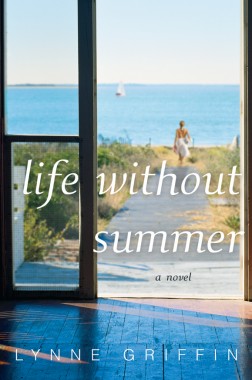
No, not Caridee, our very own Lynne Griffin. Isn't her book cover gorgeous? We're so proud of Lynne and all of her many varied achievements. It's an exciting day when all that you've labored over for months and years is realized in the form of pulp and cover art. Congratulations, Lynne, it's well-deserved!

Lisa
I love when I read fiction and I reach those AHA moments. When the plot comes together in a way you didn't expect, when a character acts in a way that is a surprise, but makes such sense based on what you know of her and her past actions. I like AHA moments in non-fiction too. That's why I'm so lucky to have Lynne Griffin, a parenting expert in our writers group. Parenting tips AND constructive help on my writing when we meet? What more could I ask for? Do I have to wait until September to read "Negotiation Generation?"

Amy
I've been busy finalizing readings and press for various writers who plan a Boston stop while on book tour. It's something I enjoy doing; getting a yes from a literary venue to host a writer is almost on par with writing a good page. You may have noticed Sue Williams is a new name to our blog roll. She's someone I heard at a Grub Street reading and I requested she submit the story to Post Road. I fully expect a savvy agent to pick her up very soon and then I'll get to read her WIP. Check her out. In other news, I walked into my local Borders and there, on the staff picks shelf, was Jennifer McMahon's "Promise Not to Tell." In another store, Allison Winn Scotch's "The Department of Lost & Found" on the front table (publishers have to love your book to pay for that real estate), and over to right, Tish Cohen's "Town House." When I picked it up, one of the booksellers said, "Huh, that looks good," and wandered off with her own copy. I love that. I can't wait to visit every bookstore in Massachusetts when Lynne's book is out in September. I'll be handselling them!

Hannah
The three R's: reading, 'riting and revision. Or is that research? The week was full of reading what thus far is a wonderful revision of a novel, writing to revise, and making sure small details that will fill one sentence somewhere among 75,000 words are accurate. Lynne also let us each hold Negotiation Generation in its current format this week. Yeah! This is a book to pre-order for yourself, your friends, as gifts. Like Lisa, I cannot wait!

Lynne
Well, here it is! My cover. When the final cover art was sent to me, before I opened the file, my sweet son took my hand and said, "I hope you like it, Mom." And I do. As for my wonderful friends at The Writers' Group, I can't thank you enough for all the support and encouragement. I am a very lucky woman.

Thursday, May 17, 2007

Page Proof Perfect

Posted by Lynne

Deciding what is and what isn,t negotiable along with making expectations clear is the very heart of parenting. The child who doesn't learn to respect that which is not negotiable will have great difficulty behaving; first, perhaps just at home, later in the neighborhood and in the community. I can give you this guarantee: The more you shy away from creatiing clear boundaries, the more discipline issues you will face.


Typos. Errors. Mistakes. Above is an excerpt from the page proofs of my book, Negotiation Generation. I've spent the last several days reading my book word for word, comma to comma. And guess what? There are still inconsistencies in the appearance of words like non-negotiable (we settled on nonnegotiable) and skill building (we settled on skill-building). There are still sentences that stop me cold to ask, "Huh?" And this is after countless people have read it, including me. I won't even wager a guess as to how many times I've read this baby of mine.

Over coffee yesterday, I told my husband my fear. No matter how many times I go through it, I might miss a typo. The first email I get from a reader will say, "Nice book, did you know there's a mistake on page 78?"

My wise and supportive husband told me to think of my book as if it were a Persian rug. Made by hand, each rug is perfectly imperfect, precisely imprecise. Even if a rug is made and it appears perfect, the weaver takes his or her time to create a slight inconsistency or irregularity within it. These artists, in deference to God, believe only He can create something perfect. They have no desire to compete with Him, as they share the gifts He's given them.

Whether I'm writing non-fiction parenting books or working on my novel, I strive to write well. I believe in the mantra, submit only your best work to agents and editors. In writing, as is the case with all art, there is no place for perfection. It doesn't exist. It is in the imperfections of a painting or the dissonance of a song where humanity is found. And I believe strongly that when it comes to child rearing, there is no perfect child, no perfect parent.

So when you pick up a copy of my book, should you choose to scour the text, I'm certain you will find a mistake or two. You'll be left to wonder, did I place them there intentionally or is that where you found my humanity.

Wednesday, May 16, 2007

Sitzfleisch

by Hannah

Amy called it "chair glue." My dad called it sitzfleisch. As in, "you need to develop some sitzfleisch."

My mother is an artist and in addition to paid work and parenting and gardening, she closeted herself away weaving, then working on jewelry, learning new techniques, producing beautiful pieces. She had -- has -- sitzfleisch, which translates literally as sit-flesh, and figuratively as the ability sit for hours doing one thing when you really could be up and about doing a million others. I don't know what I was not doing at the time, but the poor man -- who himself finds spare time to make furniture and take gorgeous photographs -- got quite frustrated and told me what I needed most was, yes, sitzfleisch.

Fast forward twenty or thirty years. I did manage to accumulate sit-flesh, of both the literal and figurative varieties. The latter I discovered somewhat in college, and honed in my early professional years. I have spent decades of hours in front of my computer writing speeches, press releases, making phone calls, organizing.

What took me so long to apply the sitzfleisch to creative writing? I have written fiction and poetry since I was seven or so. I never really thought it was a career choice. Like millions of others who put away guitars, leotards, pottery wheels, baseball bats and yes, pens, when faced with the Big World, maybe I didn't give myself credit. Sure, I told myself I was good enough to pay the bills with writing, but I couldn't quite let go of the corporate safety net. I told myself the ideas that bubbled up weekends and evenings (and during long meetings) were "just for fun."

Three or so years ago, after being hounded yet again by a set of characters and plot ideas, I decided to get them all out. Really out, on paper, and most important, all of them and all of it. I found a writers' group, which helped me begin to set deadlines. I learned a great deal, the group shifted, and it got serious. So did I. I put away the drawer novel, for many good reasons, and started another story. Finished that story, am revising that story. Like my parents, I (finally!) make time, between it all, for my art, closeting myself away. I make better, conscious choices on how to spend my time, take writing seriously, work to make it part of my Big World. I proudly expand my back-end, month by month, year by year, adding layers of lovely sitzfleisch.

Tuesday, May 15, 2007

Mind Over Babe


By Amy

Look at this guy. His name is Babe. Wouldn't you love to wrap your fingers around his fat little belly and squish the stuffing out of him? Go for a walk and show him off to the neighbors? Sit quietly while he snores in your arms? Me, too.

We adopted him over the weekend. Completely impulsive. My family went out for a bike ride, saw him in a neighbor's yard rolling around with his litter mates, and my husband, inspired, bought a lottery ticket. When they arrived home, my husband told me we had to adopt one. Too much money, I said, but if you scratch that ticket and we win, sure. We won. If you've been reading this blog long enough, you know how I feel about signs. Just look at the little guy.

So what does Babe have to do with writing? Chair glue. I wanted nothing more than to wallow in puppy heaven yesterday, but I forced myself to work on my manuscript. There are always reasons to not write. Life -- and let's be honest here, especially a woman's life -- is filled with demands on our time: family, work, volunteering, squishy puppies. If you're a writer, if you want to create something meaningful with the intent of getting it published, you had better find time each day and glue yourself in that chair. No excuses, because no one cares if you have one anyway.

Why? Few in your life expect you to finish writing that first draft and, trust me, no one cares to hear about your months-long revision process (that's nice, but did you hear about...) Your phone won't ring with friends calling to see how that query letter is coming along (write tomorrow, let's go out for a drink now). Friends outside of writing have no idea literary agents even exist (why don't you just self-publish like my friend?). When you get an agent, s/he won't badger you to finish revising that manuscript s/he was gushing about when s/he signed you (your name is? and you're calling regarding?), s/he'll just move on to the newer, more promising client. Really, no one cares if your manuscript ever becomes a book -- no one cares but you. So why do it?

I asked myself that same question over the weekend. While sitting in the bleachers at my son's baseball game, a foul ball headed for the stands. I made a joke to the other parents about the parallels between it and John Irving's "A Prayer for Owen Meany." They all stared back with blank expressions. Not one person had ever heard of the book or even John Irving. *Sigh*

That chair glue is for me, it has to be. I want to write a book, a good book. I want it bound by a publishing house in New York and held in the hands of the few readers who care about words. I want to evoke a connection with my reader. If it doesn't happen, those around me won't care particularly. They'll offer an ear, listen for a day or two, and then forget. But I'll care. I'll care for a lifetime.

I glue myself to my chair each day because I have expections of myself -- and I plan to exceed them. Not even Babe can compete with that. Well, maybe just a little.

Monday, May 14, 2007

From Point A to Point B

Posted by Lisa

I used to drive to get somewhere. To the doctor's office. To the store. To the hockey rink. I drove to get from Point A to Point B. When did driving become my vehicle for plotting?

I've got an idea. You know what that's like. I know you know. You're a writer like me.

It feels like a craving, doesn't it? Like a word you can almost taste on the tip of your tongue. But I'm taking my time. I'm letting it simmer. I'm thinking about the ingredients to add. It needs a good base of setting. Montreal. Definitely. Spoonfuls of magic realism must be stirred in. Along with longing, there has to be longing.

So I sit behind the steering wheel, and I pay attention to traffic lights, to cars changing lanes around me. But I talk, out loud. I ask questions. Generally I find the answers. I can plot in my Ford Explorer. In my husband's Toyota Tacoma. The make, the model, the year doesn't matter. Maybe it's the alone time. It could be the sense of journey.

I find that same place of discovery in a hotel room, any hotel room. I've paced and plotted in the Holiday Inn in Concord, New Hampshire, in the Hilton in New York City. Sometimes I take a field trip, down the hall, to the ice machine. When I arrive back in my room, a character suddenly has a new dimension, a sub-plot is now afforded an "AHA" moment.

It's YA, my new idea. It's promise and shame and wonder and hope. It's me when I was twenty years old, living in Montreal. It's that teenager - was she homeless? - who stared at me one day near the Berri Bus Depot in the East end of Montreal.

I drive, I plot, I plan, I think. We are writers, dreamers, hard, hard workers. Obsessive compulsive too, of course.

How was my trip to the store, my husband asks.

"Fine," I answer.

It was excellent, really. From Point A to Point B. It might be a story. It might not.

Friday, May 11, 2007

Making a Literary Life Friday: Perspective

Perspective isn't simply a matter of point-of-view, first or third, a way to tell a story within our writing, we must also carefully consider whose perspective matters when it's time to share pages. Whose opinion matters most: your writers' group, agent's, editor's, or do you listen to that voice that's been whispering to you all along? We'd like to hear.

Lisa
To me, what's most important is that voice inside me. Funny how outsiders are sometimes the ones to remind us to listen to that voice. This past weekend, I had the honor of interviewing Gregory Maguire, a truly brilliant but gentle and genuinely kind person. His body of work speaks for itself: Wicked, Son of a Witch, Lost, Mirror Mirror, True Confessions of an Ugly Stepsister. Fantastic children's books. The list goes on.
That writer's voice inside me was singing after I spoke with Gregory. It chimed out and for once I was listening. "Let go and write! Write Sad. Write Happy. Write Magic. Write Odd.
Write!"
The article will be published in the summer quarterly issue of The Grub Street Rag.

Amy
The most important lesson I've learned over these past months is to trust that inner voice. The part of the writing process I expected to be the most difficult has indeed turned out to be the most frustrating: revising. This week, however, a break through, thanks in large part to Scott Heim. His advice was - and I'm paraphrasing -- to revise around the original idea, not away from it. It may sound convulted, he probably said it better, but it makes perfect sense to me. Also, HH LeCraw had invaluable advice about POV: make sure your reader isn't skimming through one character's chapters to get to another's. Obvious, perhaps, but how many writers have fallen victim to choosing favorites? Thanks to both of them, and most of all my amazing Writers' Group who always have the answers, I'm no longer lost.

Hannah
The inner voice is most important. Other voices can be helpful; I find considered assessment useful because my inner voice also tends to have sudden, wonderful ideas that lead me astray. Jennifer Haigh prefers to work in solitude, she says, without a writers group's offerings. There are as many approaches as there are writers. Still, even when you produce a draft worth handing off to trusted readers or an agent, the question is whether you did stay true to that original vision. Is whatever prompted you to spend hours at the keyboard or with pen woven into the final pages? Only the inner voice can make that decision.

Lynne
I traveled to NY this week to meet with my publicity team at Penguin. Like a job interview, I had the task of shining a light on why my book would stand out among others on the bookstore shelves and why I’m the person to represent my ideas. Enthusiasm filled the room, and since Tuesday my head and heart. Looking back on this whole process, I’m so grateful that I believed in my book through the search for my brilliant agent and through the angst filled days I waited for word of the sale. It all came together on a sunny day in the city, where I sat around a conference table in a room that has heard the fate of many books, and I heard bright eager professionals discuss endless possibilities for mine. My perspective: that moment was worth waiting for.

Debuts: If you didn't pre-order, run to your nearest independent bookstore and get your copy of Tish Cohen's just released novel, "Town House." Don't wait for the movie. Did we mention rights were bought by Fox 2000 and Pulitzer-Tony-Golden Globe Award winner Doug Wright (Quills, Memoirs of a Geisha) wrote the screen play? Congratulations, Tish!

Upcoming Literary Events: Tickets are on sale now for Post Road Magazine's fundraiser. Join us on Thursday, May 17 at the Radcliffe Gymnasium in Cambridge as bestselling author Dennis Lehane reads from his latest book of short stories "Coronado." Hit the link for more information.

On Wednesday, May 23 Buttonwood Books in Cohasett is hosting New York Times bestselling author William Martin as he reads from his latest thriller, "The Lost Constitution" at the Hingham Public Library. Look for this, and the rest of the Buttonwood series, at their web site.

Thursday, May 10, 2007

One Step Up

Posted by Lynne

The conference was wonderful for so many reasons. Like Hannah, I reveled in each sophisticated word uttered by Margot Livesey. I will treasure her response to a question I mustered the courage to ask.

I feel so lucky I had the chance to attend Michael Lowenthal's class called Astonish Me. In less than two hours, he showed the audience how writers in charge of their work can do daring things with characterization, point-of-view, setting, dialogue and even punctuation to astonish readers.

Like Amy, I unknowingly plunked myself down at the same brunch table as our illustrious keynote speaker, Charles Baxter. It wasn't until he leaned over to pour me a cup of coffee that I realized. As if he were a movie star, I said, "Thank you, but since you are the guest of honor, perhaps I should be pouring you a cup." To which he replied, "See if you feel the same way after my talk."

Days later, words absorbed over the weekend still come into sharp focus as I drive, or prepare a workshop, or make a lunch for my children. If pressed to answer the question, "What did you learn that will have the greatest impact on your writing career," it is simply this. I want and need to be surrounded by lovers of language.

If you follow this blog, you can understand why spending two consecutive days with Amy, Lisa and Hannah would be a delight under any circumstances. And I had the pleasure of spending time with my niece, Stephanie, a journalist and emerging fiction writer, too. Everywhere I turned, I saw writers whose work I treasure. Sue Miller. Suzanne Berne. Or agents or editors who represent writers I admire and read faithfully.

At the Saturday afternoon cocktail party, I realized that this room of people--novice to expert--knows what it's like to love writing above almost all other things. On a morning set aside for writing, they too, feel the cautious optimism that goes with hoping this will be a day to produce wonderful sentences, paragraphs, pages.

In his keynote, Charles Baxter told his spellbound audience that each of us is on a step. Even if we are standing on the first step, we have done something glorious. I'm a writer. I love being surrounded by writers. And after this year's Muse and the Marketplace conference, I am content to stand on my step, until it's time to lift a foot to take my place on the next one. It feels glorious.

Wednesday, May 09, 2007

Magic

By Hannah

The magic has always eluded me.

I can write; people tell me it is true. But I never wanted to write a book just to have something I could hold in my hands, point to on a bookstore or library shelf. I wanted to write a book that had magic. I think, after this year's Grub Street Muse and the Marketplace, I can do it.

I've been to the classes. I've read the books. I've written. All the while, I felt like my final product, even if considered for publication, would be okay. Just okay, in my estimation, at least. I was missing something, some synergy of everything I knew. For some reason, this past weekend, it all came together.

Margot Livesey, talking about character, was everything I'd anticipated and more. She was funny and wise in addressing descriptive details that bring characters to life. She spoke, for example, of making one of her antagonists a beekeeper, an occupation the reader perceives as interesting, having depth, thus creating a level of sympathy. My own antagonist was swinging from two-dimensional to too nice, and now I know what to do about it.

As she continued, she extended her insights into how to use detail to not just describe one person or place or event, but to structure an entire story more effectively. Another light started to dawn for me, as I realized I could redirect reader focus to my character's hands section by section across the manuscript, and the depth I could achieve in doing so. The change is more than a repetitive action, more than a familiar behavior for the character. The shift works -- aha! -- on multiple levels.

The importance of synergy between the smallest details and structure came up again in Martha Southgate’s enthusiastic “Guardian Angels” presentation on masterful books from which we learn bits about craft, device, character, and courage in writing. Examples from Michael Chabon’s The Amazing Adventures of Kavalier and Clay to Charles Baxter’s Feast of Love reinforced the point as to why we consider books like those masterworks.

Which brings me to Philip Weinstein. He was humble before us, making clear that he had not written fiction, that he studies it, analyzes it, teaches it. As he made his opening remarks, I wondered whether I should have taken another craft class instead of his. I made the right choice; Weinstein brought everything I learned that day, and everything I have been learning as write, full circle.

In his talk on why fiction is important, Philip Weinstein said that fiction is magical in its manipulation of time. When a writer achieves a mastery of craft –in the details of how the pages come together -- a piece of fiction creates an alternate experience of time for the reader. We are transported, we lose track of reality, we venture outside ourselves. In short, the story’s message, if any, and even characters and situations are secondary to the architecture of a story in creating fiction’s magic.

I am perhaps minimizing what I understood before this weekend about the synergy required to create the magic. Still, I think I do understand fiction writing at a deeper, stronger level: to be honest, at a level that will satisfy my expectations. Draft two of my novel will prove or disprove this, but it will be long strides farther down the road than the baby steps I would have taken before. I feel like the real magic, at least a spark of it, is finally in me.

Tuesday, May 08, 2007

Lost

I admit to feeling a bit lost this past weekend.

On Saturday at the Muse, several friends told me of their experiences with the Manuscript Mart. Weeks in advance they’d sent in 20 pages of their manuscripts to either an agent or editor from some of the most exclusive agencies and publishing houses – 20 pages to be vetted by the best in the business. The reports back from my friends were glowing: each had a request (though not everyone does), one of whom I overheard being talked about later by editors paired off in a corner. Oh, the buzz.

Later that morning, I ran into a woman, Liz Kahrs, who’s regularly attended our Grub Street South workshops. She’s the kind of woman who makes an impression – the good kind – laid-back with an easy-going charm. She had news. An excerpt of her novel was picked up by Huffington Post. Naturally I read it once I arrived home. It’s good, something to be proud of, with clever phrasing that immediately calls to mind crisp imagery. Quite a coup.

Oh, and you should have seen Lynne shine on the marketing panel! Sitting alongside author Hank Phillippi Ryan, as well as the director of publicity at Da Capo Press and PR goddess Lissa Warren, assistant director of publicity at Houghton Mifflin Taryn Roeder, and president of Newman Communications David Ratner, Lynne offered the perspective of an author’s responsibility to both her in-house publicist and to her book. It was a side of her, the masterful public persona, I’d not yet seen. Gracious and utterly impressive.

Sunday was much of the same. Scott Heim told me he’d made it over the hump with his revisions – I’d been worried since we last spoke in October. He appeared despondent then, as if he couldn’t live up to the expectations that follow an astonishing debut. But this past weekend, his face was clear, nearly serene, he was pleased with the work he’d done. “We Disappear” is due out in February. Another success, no doubt.

Along the way, everyone asked the same dreaded question of me, “How’s the book coming?” To be sure, they were simply being polite, but I had no answers for them. Worse, none for myself.

When we sat down to brunch on Sunday, despondency swelled within me. How could it not? Over there was Michael Lowenthal, right there Pauline Chen, Michael Mezzo straight ahead, and oh dear God, I’d sat at the wrong table, because across from me was the conference keynote speaker, Charles Baxter. I was indeed lost.

After a second cup of coffee, Charles Baxter took to the podium and gripping either side, announced the title of his speech, "Losers." When he began to speak, sharing his own sense of inadequacy and alienation, I realized it’s impossible to be lost when so many others are on the same journey, stumbling over the same obstacles of doubt and desire. Here was the master, and now he was reducing himself to comparisons of the likes of me.

When he finished, I waited until the others had their say and then approached. The only words that could find their way past the catch in my throat were thank you, as if I were a child who’d been separated from the hand that guided me through the crowd of unknowns and he the kind man who steered me back.

So today, and hopefully for a while yet, I’m found again.

Monday, May 07, 2007

Being Alone

Posted by Lisa

Being Alone. That’s one of the things that draws me to writing. Some of the time, anyways.

This past weekend, we in our writers' group enjoyed spending time at Grub Street's Muse & the Marketplace Conference. The comraderie, the sense of togetherness. The tangible evidence that this pursuit is not truly an alone journey. That was nice. Meeting, seeing, chatting with the talented writers who spoke at the Muse. It’s inspiring. It’s humbling. It makes it seem possible. That could be me. That could be you.

But when we leave, as we drive home alone or with a friend. We go back to our quiet, or not so quiet worlds. To the spaces where we work, where we plot, where we gather our thoughts and expend our energies.

Being alone is easier when you carry with you an understanding of Gregory Maguire’s approach to plotting which is so like your own. Or when you hear Michael Lowenthal’s deep voice resonate in your memory, sharing his insights, his inspirations.

Being alone is easier when you aren’t alone. When you have met great writers, who have shared their journeys, you’re no longer alone. They are with you, completely, on some level as you work. So there you are, working at home, where you can write in your jammies, or bicycle shorts even. And you can’t do that at a writer’s conference. Or can you?

Friday, May 04, 2007

Making a Literary Life Friday: The Muse

It's here! This weekend is Grub Street's Muse and the Marketplace writers' conference. In addition to the plethora of workshops hosted by brilliant writers (Michael Lowentahl, Pauline Chen, Charles Baxter), our Writers' Group will have two entire days to spend together immersing ourselves in the writer's life. No doubt, Lynne's panel on marketing (3E) will be the best part of all. Next week, look forward to the photos and epiphanies we'll share.

Lisa
I'm finalizing questions for an interview with a favorite author this weekend while I'm at the Muse. There's so much really to ask someone you respect, admire. The Muse is certain to be a wonderful event this weekend.

Amy
Where to start? First I get the news from Gail Konop Baker that her memoir "CANCER IS A BITCH, Reflections on Midlife, Mortality, Motherhood and Marriage" sold to Da Capo and will be published in October 2008, then I hear that the multi-talented Hank Phillippi Ryan received 4 1/2 stars from Romantic Times -- the highest possible rating -- for her novel "PRIME TIME" (Harlequin, June 2007) and she's been awarded an Edward R. Murrow for best investigative reporting, AND she and her producer Mary Schwager have been nominated for 4 Emmys. Tears and cheers all around!

Hannah
The Muse is the certainly the focus this week. Am looking forward to seeing familiar faces and meeting new people, and of course, absorbing all I can from the speakers. The conference comes at a wonderful point in my process to influence revisions!

Lynne
It's been publicity city for me this week. I spent time planning a publicity meeting with my publicist at Penguin. Wish me luck, I head off to New York next week to meet her in person. I planned my portion of the panel presentation on book publicity for Saturday's session at The Muse and the Marketplace. Details to follow in next week's posts.

Thursday, May 03, 2007

What if?

Posted by Lynne

On Monday, I picked
up my fourteen-year-old son after jazz band practice. He off-handedly asked if I would drive a friend home. "No big deal, hop in," I said. I'd planned on returning books to the library, but I could certainly do that after the drop off.

Taking the long way around to the library, my son and I missed a head on collision, by one car. Both drivers were okay-- shook up for sure-- but fine. My son, on the other hand, was bothered by the accident for an hour after witnessing it.

"What if we didn't drop Mike off and we just went straight to the library? We wouldn't have even seen it. What if you hadn't waited for him to get inside his house, then we might have been the car that was hit?"

The human mind has an amazing capacity for coping. My son tried to make sense of his near brush with an accident by playing the scenario out in different ways. Ways where things go well, and ways where things do not.

What if I'd chosen a different agent? What if my novel never sells to a publisher? What if critics don't care for my writing?

I've spent countless hours wondering what if. When I'm fully engaged in the sport of what ifing, I convince myself that I'm merely setting appropriate expectations. I'm preparing myself for the inevitable rejection that is part and parcel of this publishing world, cushioning potential blows.

Or am I afraid? Dare I say wallowing in self-doubt?

Playing the what if game serves a purpose, it's true. Some decisions are made with painstaking thoughtfulness. Others made in a blink. I never really know which of the decisions I've made will play out in a good way or in a disappointing way. I what if before I make decisions; afterward, I may second guess. I confess, I usually what if in the negative.

Rarely if ever do I allow myself to what if about positive things, such as what if my parenting book brings peace to otherwise conflict ridden homes? What if reviewers like my writing?

But what if instead of coping with the uncertainty of writing for readers by sinking into fear of the unknown, I embraced the notion that I am exactly where I am meant to be. The good days and the not-so-good days are filled with infinite possibilities born of faith.

Today, I choose to trust.

Wednesday, May 02, 2007

Going to Soak My Head

by Hannah

To refresh and revitalize, some love a long soak in a tub. Personally, I am easily distracted and soon find myself calculating the height of a wave that will just miss lapping onto the floor. I prefer a good writers' conference. Luckily for me, The Writers’ Group heads to Boston this weekend for Grub Street’s The Muse and the Marketplace, to soak in the presence, perspectives and wisdom of writers and authors, agents and editors.

(Has anyone mentioned a certain Lynne Reeves Griffin will be on the publicity panel hosted by Ms. Hank Phillippi Ryan, reporter and author of Prime Time?)

As my literary soak will be limited to one day, I will miss Sunday’s sessions with the likes of Sue Miller, Scott Heim, Michael Lowenthal, Ellen Litman, and the keynote speaker, Charles Baxter. So it is Saturday that is making me edgy with anticipation as I long for its arrival, readying for the day on which I will head into the depths.

Each session has so many wonderful choices, it's almost painful to choose. As with a day at a spa, I want to walk out feeling relaxed, yet invigorated. Thus, I am looking forward to Swarthmore College’s Philip Weinstein talking about how to “use” fiction. Christopher Castellani, artistic director of Grub Street, heard this lecture a few months ago and promoted it as inspiring. I am ready for every drop. I chose Martha Southgate, too, looking forward to what I am sure will be an entertaining discussion on serendipity and openness.

(Did I mention that Lynne's panel is one of the alternatives to Southgate, Sheri Joseph, Suzanne Berne and Carlo Rotella? How cool is that?)

Still, the single session that makes all of this year’s Muse worth it for me is the first. Margot Livesey will give a presentation entitled, “Mrs. Turpin Reads the Stars.” One of my very favorite authors is going to tell me (okay, plus fifty or so others) “what brings characters to life, the degree to which they are made by art, and how we can get better at practicing that art.” I was happy reading an interview with her in The Kenyon Review; now the author of Banishing Verona is going to dive into the topic in person, with me (okay, plus the others), three short days from now. This makes me happier than a week at Canyon Ranch. Really.

So if you will be at the Muse, look for us. If not, I suspect we will layer future entries with splashes of insight gleaned from this amazing get-together, and looking forward to your own thoughts and responses after long soaks in the literary!

Tuesday, May 01, 2007

On the Path

By Amy

As an unpublished writer, there’s the tendency to look around and mourn for other peoples’ successes.

There was a time many years ago when a woman I knew was awash in international sales, over-the-top reviews, big dollar movie deals. Everywhere I turned her face was plastered on some media. A lonely Friday at Blockbuster was made worse when an ad for her movie simultaneously screamed from each of the six televisions – such a bouncy soundtrack! -- and the video-case display took up an entire wall. There were even posters with the words, “based on the novel by…” Sigh.

I’m a better writer, I fumed. Her book is predictable, how hard could it have been to write? Mine were the thoughts of a green-eyed fool.

I remember later this woman telling me how she’d been afraid she would change with success and how utterly unprepared she was to find the people around her had changed more.
As I choked down my slice of humble pie, I began to understand that her success wasn’t my failure. It’s said that we learn more from our mistakes than our accomplishments, and it’s true. I’m glad to have had the experience of being the bad guy in my own silly drama.

Know this: We writers are not competing against one another. Even within the same genre, even while jockeying for position on the same bestseller list, it doesn’t matter how our writing compares to another’s, what his advance was and yours wasn’t. What matters is how our writing compares with our own best effort. I’m satisfied that today I wrote as well as I could. Tomorrow, I expect to do better. It doesn’t matter how poorly written or inexplicably brilliant another’s book is, how much attention it receives from the New York Times Review of Books and Oprah herself. The awards don’t much matter. Frankly, it doesn’t matter anymore how well-regarded my own work is by any critic, any where. I must first satisfy my own standards: write well, write often, write with intention and joy. Isn’t that the ultimate goal?

It’s a relief to be rid of the horrifying creep of envy. I’m ecstatic when I get a call or email from a friend telling me of her significant deal or glowing review or third printing. Their successes wholly belong to them, I understand that, but as a writer, I find myself basking along with them, knowing they’ve just scored one for the team. For me, though, I don’t expect to find an abiding sense of accomplishment once I’ve published a book, done the tour, glowed under some imagined set of klieg lights.

It’s the getting there I find dazzling.