Monday, February 04, 2008

Angst Ridden

Posted by Lisa Marnell

Inner conflict rocks – in our characters, that is, not in ourselves.

I’ve been re-reading one of my first “craft” fiction books: How to Write a Damn Good Novel, by James Frey. It’s one of the best writing books I own. It has simple common sense rules for good writing!

The latest chapter I reviewed talks about inner conflict:

“When a reader experiences profound empathy with a character, it is because the character is in the throes of intense inner conflict. A character may be in the most pathetic straights in the history of literature, but if he has no inner conflict, the only emotional response the writer can expect from the reader is pity”

Think about these scenarios...

Should religious convictions prevent an MC (main character) from courting the woman he loves?

Does an MC’s own personal experience with alcoholism conflict with his decision to fire an employee caught drinking?

Should loyalty to the New England Patriots stop you from heading to a Superbowl party hosted by Giants fans (of course, not much inner conflict there, actually).

Inner conflict, angst in characters, brings them to life. In a way, it’s because we’ve all been there. We know how all consuming that inner turmoil can be. The decisions a character comes to and why, are stakes themselves, a reason to keep turning pages.

The most beautiful, sensual, and powerful example of inner turmoil in current fiction is found in Edward, the vampire in the NYT bestseller, Twilight; he both longs for Isabella and loves her.

I’ve been asking myself how my characters stack up. Inner conflict is there, but not fully front and center, yet.

Friday, February 01, 2008

Making a Literary Life Friday: Here's to the Community

More than ever this week, with participation in promotion of Patry Francis' Liar's Diary paperback release, in anticipation of Grub Street's 2008 Muse and the Marketplace, and simply in launching and continuing conversations with each other -- including all of you -- we are reminded of the width and wonder of the writers' community. Hallie Ephron, whom we have interviewed and whose conversation we will share soon, noted that nobody writes solely for the money. More is nice, but the writer's life is a choice about how one spends one's time and with whom one spends time, and on both those counts, we are all blessed. How true!

Lisa
Hollywood Agent? My new writer friend here in California dropped by with a flyer for a Q & A with an esteemed Hollywood script agent who's speaking Wednesday. "You've got to come. I've met her before. She's brilliant." I hope it works out. It will be tight for me to pull it off. Doesn't there often seem to be a writer right around the corner, a friend, an inspiration you haven't met yet? Sometimes I think we're secret agents on a dangerous mission: we're following a dream.

Amy
Amy is out of town, but we all know how much she appreciates and gives back to our writing community!

Hannah
I've been thinking, of late, that this writers community has contributed to a new level of fearlessness in my behavior out in the world at large. You reinforce that it is possible to be caring and honest, serious and frivolous, all at the same time and I have no time for people who offer less than that any longer. Maybe I'm just getting old (gasp), but there are too many things I want to do and too many good people, even if I haven't met them face-to-face, whom I'd rather hang out with any day!

Lynne
I've always thought true generosity comes, not from the things you are handed or the money you're given, but from the emotional support you offer and are offered. Maintaining a blog, at first blush, seemed like a fun endeavor for us, what we didn't realize was the power of the online writing community we would be joining. We are humbled by the generosity of spirit offered to Patry this week; we're honored to have been a part of it.

As is fitting this post, I think I can speak for all of us at the Writers' Group when I extend a heartfelt thanks to all our readers and commenters. We are grateful for the support you offer us each week.

Thursday, January 31, 2008

Likable Characters

Posted by Lynne Griffin

There's an intangible something, the proverbial it factor, that endears characters to me. It doesn't have anything to do with the set of physical traits the author chooses, though those can help. I don't like certain characters because they're nice, either. In fact, whether I'm reading or writing, I like my characters deeply flawed. To be honest, the more flawed, the more I seem to like them. Certainly in real life, some of my best friends don't have movie star looks or flawless moral character and I like them just fine.

So if character traits don't equal likability, and being positive, kind, or even admirable don't always up the it factor, then what does?

For me, character likability comes from two things. First, good characters are interesting. They say and do things that keep me reading. I don't need quirky, though quirky can be good. I don't need the carefully planned bizarre. Though bizarre can be good. It's the delicate balance between being offered enough to engage me, without being flogged with character details that are overly contrived. I don't like unusually usual names or hobbies I've never heard of--unless of course each is the perfect detail for the perfect character.

How's that for tangible.

Most of the time the less is more rule applies. I don't like writers who go overboard on so-called interesting details. More to the point, I want characters to react in interesting ways. To convey attention-getting thoughts, and to engage in note worthy actions.

Last week at a three day book event for Negotiation Generation, I met a woman who stood out from the rest because of her unusual fashion sense. Her distinctive look drew comments from those of us introduced to her. She became more memorable as she explained how she designs and markets the clothes that so fascinated us. Knowing she would be there the next day, I looked for her. And she didn't disappoint. Her overcoat with hand sewed designs embroidered into the fabric, held tiny flowers emblematic of her native country. The coat and her talent drew me in. At first it was the observable that enthralled me, then her back story sealed the deal. Why did she have the power to engage me, while the others she'd come to the workshop with, did not? Could it all have been because of a simple coat? Or was it because the very whole of her intrigued me?

The second likability factor that has the power to grab me, is the tight connection between plausibility of behavior and empathy. When a character acts in a way I personally object to, moral or spiritually, I can cast judgment aside if I can identify with him or her. In a previous post, I wrote about Ian McEwen's Brionny, and what a wonderful example she is of a character with the power to create empathy. Believability of plot rests on whether or not a character would actually do what she's done. When I don't believe in a character's actions or feel he would've made certain choices, that's usually the end of that book for me. But put intrigue, and curiosity, and plausibility, and empathy together and I'm hooked.

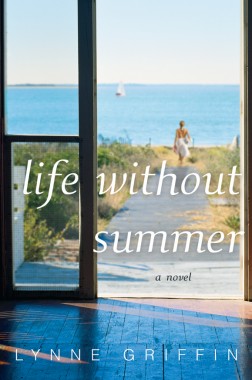
It's one thing as a reader to find characters likable; I love it. It's another thing entirely to capture likability on the page. As a writer, I'm committed to this element of craft and I rely on The Writers' Group to tell me when a character hasn't quite hit the mark. I will relentlessly edit until I've achieved likability, it's that important to me. I can honestly say that I like all of my characters in Life Without Summer. The next question is, will readers?

Wednesday, January 30, 2008

All In Good Time

by Hannah Roveto

I am an author. I do not put these words out there lightly. My work-in-progress is almost – not quite – in agents’ hands, and I am acutely aware of the steps from here toward publication, the uncertainty, the dangers, the challenges. Some day, though, someone will ask, “When did you know you were an author?” and this is what I will say:

The school system in my town is under huge pressure to prepare each and every child for Ivy League colleges, because children who fail in the universal quest to become professional athletes then have a back-up plan. This is what I tell other parents as a joke, although some do take a moment to realize I am kidding. Parents check other people’s kids status on Honor Roll, ask how many A’s were earned, in what subjects. Where they get A’s reflects talent, skill, arenas of future success.

Thus, you can imagine the reaction when I said something along the lines of the following aloud: “Just because a child gets an A doesn’t mean it’s a talent, and the one who doesn’t get an A might be destined to do something great in that subject. There are other factors. Like just plain time.”

Heresy. So I asked them to consider my own journey. I was going to be a veterinarian when I was young. But A’s in math and science did not lead me there. I started college with a major in Soviet Studies and International Relations, and A’s did not get me to the United Nations, either. I ended up in the journalism school, and took my first job in public relations because they would pay me to write. I realized I’d been a writer all my life.

Since I was able to spell, I filled notebooks with stories and story fragments, but fiction is without a doubt its own unique alchemy. I mastered business writing, and finally five years ago sat down to try my hand at fiction with serious intent. It was something I’d dreamed of, played with, but never really committed myself to at that level. (You know what I mean!) Then I put myself out there for a writers group, looking for people whom I trusted enough to push me, and I found them. Two years later, I am finishing revisions on a novel that I believe in. Better yet, my Writers Group believes, too.

“So,” I concluded, “it took me this long to become an Author.” The word slipped by everyone else, but to me, it hung in the air. Now that it is out there, aloud, I own it in a way I never have before. I felt it. Not only a Writer, an Author. Right now. It's time.

Tuesday, January 29, 2008

Author Spotlight: Patry Francis


By Amy MacKinnon

This photo was taken on February 27, 2007 at Grub Street South at Buttonwood Books. To be perfectly honest, I can't remember if it was taken before or after I hosted a Liar's Party for Patry Francis, though I believe it was before. What I do remember clearly was the night of the party.

On an Aries-like whim, I offered to invite 50 of my closest friends and have Patry as my guest for a book signing after reading this post in January of 2007. I identified with her immediately, adored her even. But then, oh dear Lord, I remembered I don't have parties. I don't enjoy gathering people in my home serving them food and drink and pithy conversation. The pressure! In the days and weeks before, I was terribly anxious about the cleanliness of my home, the decor, what food I'd prepare, and drinks too. I decided on a simple menu of desserts only and baked them all the day before. That calmed me some.

The night of the party, Patry arrived first and was just as you've probably imagined: cerebral, calm, warm, and funny, the kind of person who becomes an instant friend. Soon the guests began arriving, and then it dawned on me why I was especially anxious to host this gathering. In my home, among my friends, was a writer, a published author. Most of the people there knew how long I'd been tilting at that windmill. A few of them even knew of the book I had hidden away, the one that was declined by 73 agents. Only a handful knew I was working on another. I wasn't in a good place with my revisions. I wasn't hopeful.

After mixing some, it was time for Patry to read from The Liar's Diary. We were all under her spell, her voice was steady and utterly charming. She sold a lot of books that night. When she finished, she asked if anyone had any questions and many did. Then a woman asked how difficult the writing process is and what it felt like to finally triumph. I was as taken as the rest, waiting on Patry's answer. I desperately wanted to know. Patry said what you might expect and then she turned to me and said something along the lines of, you could ask Amy.

I was flummoxed and stammered my reply, "But I've never published a book."

"You will," said Patry, nodding. "I know you will."

I was astonished, relieved even: She had faith in me.

I can tell you to pre-order The Liar's Diary because you will love this book that begs the eternal question of how well do we know those closest to us -- even ourselves. I could tell you to pre-order The Liar's Diary because you've worked hard and deserve to treat yourself. I could quote from the review in Ladies Home Journal -- “The new questions and revelations just keep coming…Readers will be heartily rewarded." But I won't. What I will tell you is that it takes a special person, one of compassion and wit and fortitude to write a novel that delves into its characters as completely as The Liar's Diary. As writers, as readers you will learn from this book. More important, you will enjoy it.

So for Patry who can't promote the paperback release of her book, we here at the Writers' Group are honored to do so. Because you're a favorite writer, because you're a generous soul, but most of all because we have faith in you, Patry Francis.

Monday, January 28, 2008

Choices

Posted by Lisa Marnell


Recently I was offered an opportunity to do something fun two mornings during the week. These hours are set aside for writing, most days, but oh, was I tempted!

I’ll give you a moment to speculate just what that “fun” thing may be…
…
…
…
...
I wanted to say “yes!” Instead, I sighed, “Thanks, but I can’t.”

I made the right choice, I know. In a way it was disappointing, but it also filled me with pride: it was a re-commitment to getting a strong manuscript out in the world. If I don’t spend that time writing, then when will I write? I’ve worked too hard, too long, on my fiction; I have two YA manuscripts that are close to being done.

If I take on too much, other parts of my life will suffer. I love a neat and clean house - when will I tidy or empty the dishwasher? I love a happy dog by my feet - Maggie will be depressed if I'm gone having such fun without her. If I had accepted that offer, would I even have enjoyed it? No, I wouldn’t have. I know that. Too much on one’s plate leads to lots of messy leftovers. I’ll have a simple dish, finish my dinner, and leave the kitchen clean.

Last week, I interviewed Jay Asher, author of the recently released and wildly successful YA novel, 13 Reasons Why. Though I plan to post that interview soon, I’ve spent time reflecting on our conversation.

Jay loves to brainstorm. For him, that part of writing is wholly engaging; he spends a long time thinking before he starts to write. He's been writing twelve years; he mainly did humor - his dark and edgy first book published is certainly a switch. He's been working in a writer's group for years. It takes time. It takes comittment...

So I'll make do with hockey and tennis once weekly. My main characters will thank me; I want them to be published and to see the world beyond my study. And when I'm done, I can see more of the world, too.

Friday, January 25, 2008

Making a Literary Life: Patry Francis


As many of you know, our good friend Patry Francis will not be able to promote the trade paperback release of her novel, The Liar's Diary. We are delighted to do so on her behalf on Tuesday, January 29 when we join over 300 writers and agents in celebrating both an accomplished debut novel and an inspirational writer-woman-friend.

Here's to bliss.

Lisa Marnell
Bliss is hearing a nine-year-old boy with autism call my name at school today for the first time. Next, it's having him follow his shout with out-of-control laughter as he looks me in the eye. (The laughing's not new, that started in December).
Writing is, of course, bliss as well. I only wished time moved slower when writing, but that is asking the impossible.

Amy MacKinnon
My bliss can be found in simplicity. The sound of a house filled with children, the smell of congo bars baking, scratching my Babe's ears, having a cup of coffee with my husband, and writing. Always writing. Almost as heavenly is finding a gem of book. I urge you all to buy a copy of Castle Freeman's Go With Me. It is bliss in black, white and beyond.

Hannah Roveto
Bliss is the sound of my children giddy with laughter. It's pushing my WIP forward, whether it took five minutes or fifty, or more, to get the bit just right. It's a family reunion, when we sit on the back porch and talk into the next day. It's feeling connected to the entire world in small ways: the roar of the ocean, taking in a pet, helping a friend, planning a trip to see where other people live and the beautiful things surrounding them. One of the three books I am reading is the Dalai Lama's How to Practice, which is calming, wise, real and strengthening. Highly recommended.

Lynne Griffin
My perfect day starts with prayer and silent reflection. A mix of reading and writing, with a dash of exercise splashed in and I feel alive. Hearing about my children's and my husband's days over a home cooked family meal, and I am fulfilled. Taking a lesson from Patry, simple is best. Grateful is better. Here's to Patry, and everything she is trying to teach us.

Thursday, January 24, 2008

Author Spotlight: Carolyn Parkhurst

Posted by Lynne Griffin

Every writer hopes her journey toward publication will be a magical one. And who doesn’t dream critics will hail her debut, “brilliant” and “inventive,” and proclaim her second novel, “a deeply affecting page turner.” For Carolyn Parkhurst, author of The Dogs of Babel and Lost and Found, dreams do come true.

In the first of The Writers’ Group 2008 author interview series, Carolyn Parkhurst shares an inside look at her literary life.

Lynne Griffin: Can you share with our readers the highlights of your writing life?
Carolyn Parkhurst: I’ve always wanted to be a writer. In the beginning, I wrote and worked at a book store, though it was hard to get a lot done. I decided to get an MFA, and while it’s not for everyone, I really thrived in a place where everyone was focused on writing.

I wrote my first novel, The Dogs of Babel in about two and one half years. I finished just before I had my son. A few months after he was born, I put together a list of five or six agents to query. I used books, read other authors’ acknowledgment pages, and talked with friends. I signed with an agent relatively quickly, from that first round of querying, and he sold my novel in about two weeks. I think it’s important to submit work that is as good as you can possibly make it.

LG: I’ve read stories about your editor reading your book and making a middle of the night phone call to your agent to make an offer.
CP: Yes, it’s fun to have a good story. The whole process was very exciting. Submission of Lost and Found was different in that I submitted to my editor at Little, Brown with fifty pages. With some back and forth, it ultimately was placed there.

In some ways it was better to be writing with the certainty it would be published. On the other hand, it was hard at times to write under pressure. It worked out fine, though.

LG: Do you have a writing routine? What’s your process?
CP: In the early stages, I do a lot of brainstorming. For the novel I’m working on now, I thought through the idea for about a year and half and now it’s been just months that I’ve been writing it. I brainstorm, jotting down ideas. Writing little pieces. I don’t journal, but I often write things that don’t end up in any books. I think in the early stages, it’s important not to edit yourself too much.

I typically write every week day, but not always. And not on weekends, holidays or vacations. I like to really be there for my children and the other people in my life. I don’t write at home. I leave the house, go to Starbucks or a place like that. With my first book, I wrote a page a day. I could do more, but tried not to do less. I haven’t done that since. My writing now has to fit into a schedule, because I’m a parent. I can write for a couple of hours—two or three at a time—that seems to work for me.

LG: In a blog post earlier this month, I wrote about knowing your novel’s theme before you write. Do you know your novel’s themes or do they present to you along the way?
CP: I often don’t know what my novels’ themes are until closer to the end. I think it’s probably a mistake to start there. To me it’s more organic to know the story or the characters first.

LG: Another post this month explored a novel’s seeds. What were the seeds for your novels?
CP: I always start with a couple of different ones. I usually start with a situation and then a character. In The Dogs of Babel, I had this idea of a man whose wife has died. He needs to know what happened, yet there needed to be something off balance in the way he handles his grief. So situation, then character, and then comes the character’s voice.

In Lost and Found, I wondered about those stories you hear about teenage girls’ hiding their pregnancies. And then I thought about how reality shows might change people. Those two things came together for me.

LG: What’s different about writing a second or third novel, when you’re already agented and published?
CP: The way I manage time is different. I have a family now and I didn’t with book one. It is harder to focus sometimes because my mind is occupied, there are more distractions. But I have more confidence that I can do it, because I have. While there is something new with each book, and you can’t just rest on the idea that you’ve done it before, I have a different kind of confidence. It’s of course easier to be agented and published, I feel lucky. I’d say overall it’s mostly good, but I still have realistic concerns.

LG: How do you balance writing with promoting?
CP: Well of course its part of my job to do both. In truth, promoting is distracting from writing a new book. It’s time consuming and requires you to put yourself out there, be a more public person. But I’m always happy to do the promotional work I’m asked to do. There’s a flurry of opportunity in the beginning, when a new novel comes out. And then later, as little things come up, I do that. Interviews, book groups.

LG: Do lulls in publicity worry you?
CP: Like anyone I like it when there’s interest in my work, but then it’s not my most productive writing period. Then when things aren’t going on, I wonder if people are still reading my work. There’s a typical cycle to it.

LG: Our readers will be happy to know you work with a writers’ group. How does yours work? Who are your early/late readers?
CP: There are six members, and once a month three writers submit work. Most are working on novels, though there was one person working on a memoir and occasionally someone submits short stories. Everyone at the moment is published, but it wasn’t always that way. It is important though that we’re all at roughly the same level and that we generally like each others work. My first readers are my husband, my agent, and my writers’ group. I really value the feedback. It’s easy to lose perspective if you’re entirely on your own.

One of the important things you need to learn is how to sift through feedback. When one loves something and one hates it, you need to listen. You need to see if you can do something with that feedback. But you shouldn’t make changes that aren’t true to your vision.

LG: Are you working on a novel now? What’s next for you?
CP: I’m working on a third book; it was submitted on sixty pages. I just accepted a two book deal with Doubleday.

LG: What’s your most important advice related to craft?
CP: In terms of getting published, without a doubt it’s persistence. You have to learn how to accept rejection; every author has drawers of rejection letters. You have to trust you will find your audience, or that they will find you. Don’t aim for an audience, writing what you think is the next big thing. Trust that your work will choose you, and that readers will find you.

Huge thanks to Carolyn for taking the time to stop by The Writer’s Group. I’m sure I speak for all of us when I say we can’t wait to read her next novel.

Wednesday, January 23, 2008

Web Wonders

by Hannah Roveto

When the background noise in my house reaches certain levels, ("Stop singing!" "It's homework!" "If you play Ironman one more time I'm going to scream!" "Wanna see what a kid on the bus showed me?"), I hope that if I wait five minutes, calm will return. Okay, so I'm dreaming, in more ways than one. That becomes my time to surf Web sites for fun and ideas.

As you know, we have several links to your lower right, a cross-section of valuable resources and places to interact with wonderful people who share the literary life. Many of them, generally author sites as opposed to industry ones, are gorgeously designed, with elements I hope to incorporate when I, too, have thick, rich sheaves of bound paper on bookstore shelves and need a spot on the World Wide Web of my own. It's your face, your voice to the outside world. What should it say?

I confess when the World's Greatest Guitar Riffs compete with Children's Chorus concert practice in my eardrums, I tend to explore author sites that push at some boundary and that incorporate a sense of play. These are three that stand out for me of late, and why:

Mark Haddon. Pow! If you haven’t read A Spot of Bother yet, please do. You will laugh out loud at one or more of many characters, at more than one of the many crazy and yet somehow completely possible situations. After his going two for two, as far as I was concerned, on a literary front, I decided to check out his site. This is a style not every author could get away with, but boy, do I love it. The colors and layout are vibrant, simple yet powerful. The virtual tour is recommended for those of you looking for marketing ideas (and who isn't?), and Dog TV makes a great visual you have external audio more than covered.

Joe Hill. Joe Hill’s stories make your cool and thicken, then surge toward your heart. Dark, elegant and unique. What I love about his Web site is that carries a lot of traditional format and elements, yet the result is distinctly Hill, with the gray-blue coloring and photographic background, and quite a volume of information presented in a clean, clear way. Plus, you've got to try the game that lets you match quotes with famous pontificators.

J.K. Rowling. If you have written not one but seven books that reverberated worldwide, you appeal to YA and s with a little YA in their souls, and you're going to pull out all the stops, this is the result. From a budget standpoint, it would be impossible for me. However, I love the desk that pops up at the start, for the feeling that this is, indeed, what her desk looks like and as an invitation to start exploring. Second, the fact that she posts her character lists, early notes and all those other details appeal to me both as a fan and as a writer. Then, of course, there is the interactivity: the game (eraser), the telephone, and the movement of the elements.

So that's where I'm at now. A fresh graphic look, a simplicity and clear tone, a picture or device that invites the visitor in to explore. The challenge, of course, is that all this must reflect me, the author, and not a specific book. My work-in-progress ties in heavily to the game of baseball, and how much fun to develop elements of a Web site built on baseball? Yet my second novel-to-be has nothing to do with the sport (maybe I’ll mention it for the heck of it). So what would my dream interactive Web site look like? I'm taking notes. If you have any thoughts on more fun author sites, please do share!

Tuesday, January 22, 2008

Count on Change

By Amy MacKinnon

Many of you may have read award-winning author Jenny Crusie's post last summer, one that left the industry gasping just a bit. In it, she detailed the luncheon when her agent "broke-up" with her. I know, the mere mention of such a thing is verboten in writing circles, but there it is.

And did you read about the cancellation of various imprints? Imagine if your book, the one you spent months, if not years, writing and revising, was plucked from the slush pile by your dream agent -- oh, happy day! -- sold to an enthusiastic editor -- life is good! -- only to have the publishing house shutter the imprint? Oh dear dog.

Then there are the books publishers expect to be blockbusters, usually the works of untested debut novelists. The writer enjoys a ginormous advance that's widely publicized; the marketing team at the publishing house is eager to push the book out into the world with a six figure campaign; and every one in the industry is certain this is the break-out book of the season -- even the reviews are good. But for some reason the book doesn't quite take off and no one knows why exactly. The poor writer thought he was on path only to learn his journey was terribly off course. It happens.

Last week, though it seems much longer ago, my editor, my beloved editor, called to tell me she'd taken a position with another house. I was devastated -- though not entirely surprised.

Welcome to publishing where life can turn on a dime. Expect change. Never say never. There is no arriving in this business. And that's okay. That's just how it is. Have you read Jenny Crusie's post yet? She took the news with aplomb because she knows getting a book published isn't about happily-ever-after-the-end. It's more an erratic continum.

Enough sob stories. Are you ready for a happy "change" story now? Well, there's this author who sold a novel, trade paperback, to a great publisher. Her book earned a starred review and was well-received by readers. She wrote another, but the editor outright rejected it, asked for a sequel to the first. The sequel, also trade paperback, did well, too. The writer was building a solid career. But that writer couldn't stop thinking about her second book. She took it out, worked on it some more, and tried again. Her agent believed in the book, too. Months and months later, that book her first editor rejected is still on the New York Times' bestseller list.

One more? The day after my editor broke the news, my publisher called. Shaye Areheart is a woman whose career I've followed for years, not with any expectation that I would ever be on her list, but because I so admired the writers whose careers she personally guided. I even managed to interview her once for story I was preparing on the publishing industry. I was giddy when she agreed and utterly charmed by our conversation. She was gracious, funny, generous with her insights, and told me some of the most memorable stories about her career in publishing. Well, I'm thrilled to say Shaye will personally be taking on my book.

So remember, don't be surprised when everything changes. It will. But be assured that there's one thing that never has to and that's your joy for writing. Love your words, stay true to your story. Don't waver in your desire for writing the best book you're capable of. Be passionate.

Never allow that to change.

Monday, January 21, 2008

Uncomfortable Places

Posted by Lisa MarnellThe writer in me is trapped between the ages of seven and seventeen. That time of my life represents such emotion, delight, frustration, discovery. It’s so real to me, I can’t help but love reading (and writing) YA and middle grade fiction.

Something bothers me, though. There’s a book I read when I was thirteen. Its topic was mental illness. I realize that now. At the time I just knew it frightened me. The writing and issues were powerful, too powerful for me at that particular time in my life. It affected me profoundly, but not in a good way. A friend recommended it. When I started it, I couldn’t put it down. Years beyond reading it, there were times when that book surfaced in my mind; it wasn't a help to me, ever. To this day, its title gives me chills.

As an adult, I’m particular about what books I read. Recently I read and loved Twilight by Stephenie Meyer and 13 Reasons Why by Jay Asher. On Lynne’s recommendation, I picked up Atonement by Ian McEwan. I want to write books of quality. Books I would love to read.

My work in progress has potential, but it has to address teen issues as well. The problem is that I make my characters' lives too cushy; I’m a wimp at heart. I keep extra blankets at the foot of my bed in case I get chilly at night. When I play ice hockey, I have a weakness: I back off when it comes to digging at the puck along the boards. I might get hurt, right?

The question I struggle with now is how do I balance timely teen issues without crossing the line where subject material is too inappropriate – gosh, can you tell I’m a mom? My writers group all had brilliant advice when we met over the weekend. I'm so grateful to them. They said, more or less: Give us more (than you do) and reel it in if it’s too much. Oh, how I need to toss that fishing line and see where it takes me. I’m in for the long haul: writing takes patience, and there’s no where I gotta be (no deadline).

Fiction has to be real, timely, exciting. But I have to love my product. It must be something I would want to read.

The bar stays high. Good thing I’m stubborn! If only I were more patient.

Friday, January 18, 2008

Making a Literary Life Friday: Watch This Space!

We had an idea to make our blog a little extra special. There are so many fabulous people living this literary life whom we quote and from whom we seek inspiration, that we thought it would be fun to interview them, get their tips and thoughts and experiences. We'll focus on what we and you most want to hear. So, say we were to interview the likes of Carolyn Parkhurst, Dr. Pauline Chen, Hallie Ephron, Chris Bohjalian, Tom Perrotta, Castle Freeman, Nathaniel Fick -- and yes, we will talk with them all! -- what do you most want to know? Who else would you like to hear from? Agents, publishers? We are just as interested as you!

Lisa Marnell
Gregory Maguire said he was lucky, that he knows numerous writers who can put together a more beautiful sentence than he can. I still have a hard time believing that. When I met him last spring and interviewed him for the Grub Street Rag, I did realize, however, he has his writing strengths and weaknesses. THE GREGORY MAGUIRE, of Wicked fame and brilliance, has worked to become the writer he is.

I look forward to interviewing a few people. I'll keep them up my sleeve for now, but if you have any interest in YA and Middle Grade Fiction, stay tuned!

Amy MacKinnon
I feel blessed living in a community rich with literary figures. I attend as many readings as possible at Buttonwood Books, all the literary events sponsored by Grub Street and PEN New England. Each time, I leave reassured, inspired even, when the writer tells the audience just how daunting getting a book published seemed in the beginning. They share stories of overwhelming odds, feelings of desperation, dark days, and then -- finally -- the light came and they were on their way.

Hearing famous writers share their stories over the years helped get me through the hopeless times, a vicarious triumph. It's an embarrassment of literary riches living near Boston, something not all of you are privy to and so we want to share by interviewing amazing people. We're starting with writers, but we'll be sure to include agents, editors, reviewers as well as the unsung heroes: foreign rights directors, publicists, and cover designers. It's our hope that those vicarious triumphs will help light your way.

Hannah Roveto
Things I want to know include process and revision tips, including ones that sounded good and didn't make sense. What comes easy, what's hardest? What's the funniest experience you've had from a career perspective -- authors, agents and publishers -- and what was the most valuable? What's the most real moment to make it into fiction -- and be told was implausible? Is there any way to define "you know it when you see it" more clearly than that? And... and... and...!

Lynne Griffin
I enjoy author readings and conference networking for all the reasons Amy mentioned, and I've always tapped into the thinking--go where the successful people are. What I mean is, if I can put my finger on the ingredients that make a writer an author and an author successful, then I really have something. Learning craft is vital to growing as a writer, so too is knowing the industry, becoming aware of obstacles and learning appropriate etiquette.

This week I interviewed Carolyn Parkhurst, author of The Dogs of Babel and Lost and Found. She was generous with her time and insights into living her literary life. You'll want to read her interview, which will be posted next week. We can all learn so much from her story.

Thursday, January 17, 2008

Novel Problems

Posted by Lynne Griffin

How do you feel when you hear the words problem, conflict, argument or confrontation? To some, thems fightin words, to the writer they are part and parcel of writing a strong story.

Rarely in my roles as wife, mother, business woman and teacher do I shy away from problems. I'm not one to think problems are bad things, merely situations that need a closer look and a creative plan for resolution. With clear and kind confrontation, my husband and I grow closer after we solve a home maintenance problem, or a disagreement about our stance on a parenting issue, or a difference of opinion over a business decision. Once the problem is identified, only then can we develop a strong, well thought out plan of attack for working things out.

Like any relationship, readers can have problems with novels too. And for the writer, to know them in advance is to solve them. Turning the other way, thinking you can avoid facing the fact that something doesn't work is as unwise a thing to do with your story, as it is to look the other way when a friend is upset with you.

In the magnificent novel Atonement, by Ian McEwan, the novel lives and dies on the strength of the character, Brionny. The central potential problem of this novel, in my opinion, is that it rests on whether or not readers will have empathy for this lonely girl, with a vivid imagination and a crush on an older boy, who propels the story forward by altering lives. Trust me, McEwan delivered.

As did Donna Tartt, in her wonderful novel, A Secret History. One potential problem in this novel related to stakes and tension. Because the author tells the reader in the first chapter who murdered a major character, Tartt had to work hard to keep the stakes and tension high enough to keep readers reading.

From the very beginning, writing Life Without Summer, I was given feedback that the structure I chose was a potential problem, as was my novel's theme. I looked at this as a gift, and I actively used readers' concerns in crafting and revising the novel. Without a doubt it is a better book because I took the challenges on. I think it's better to know the potential problems of your novel, facing them head on as you write, then to be blindsided by them later when the novel potentially falls apart. Likely there will be enough minor details and/or plot elements to contend with later on.

I've come up with a few examples of potential novel problems, ones I believe are important for writers to be aware of, right from the start. Feel free to add others in the comment section of this blog post.

  • If you're writing a voicey piece, how will you sustain it throughout the novel so readers won't tire of it?
  • If you're writing a novel over a long period of time (Think London, by Edward Rutherford) how will you transition the work to move time forward and still keep readers interested?
  • If you're writing in multiple points of view, how will you help the reader keep characters straight? A confused reader will put your book aside in favor of one that takes the reader by the hand.
  • Again, if you're writing from multiple points of view, how do you avoid having readers like one character better than another. You don't want them sighing when the next scene or chapter involves the less likable one.
  • If you're writing a period piece, how do you make it relevant to today so that readers can relate?
  • If setting is central to your novel, how will you vary it enough to keep readers from skipping descriptive passages?
  • If you've come up with a wild idea for a plot line, is it believable? Is the reader pulled into the fictional world so deep they'll buy your explanations for how plot unfolds?
  • In the crowded marketplace, you've got the first page or two to hook readers, does your beginning reach out and grab?
  • With any work, how do you make the middle of your novel interesting enough to keep readers hooked until the end?
  • Does your ending satisfy?
When it comes to potential novel problems, I suggest a bring it on philosophy, rather than turn the other way tactic. That's one of the many reasons I treasure my friends at The Writers' Group. In knowledgeable and compassionate ways, they tell me like it is. And I know my work is better as a result.

Wednesday, January 16, 2008

At Work in the Post Office


by Hannah Roveto

The woman is suspended from the post office counter by her elbows, which rest a good foot or two across the surface. Ugg boots dangle an inch or two off the floor. An inch-wide line of skin shows between her jeans and her fleece.

"Ooh! That one! What's that one?"

The postal clerk says something about cars.

"Yes! Cars! I need two sheets of those."

The clerk looks at me and the woman turns, still in mid-air with a grin.

"I hate being behind people like me at the post office." With that she points at another page to which the man turns. "What are those? Kwanzaa? No. Muslim? Oh, no. Christmas? Now, how come they can't make good Christian stamps? Those aren't pretty at all."

The clerk is a neutral party, offering only the tidbit that the Madonna of the Carnation is an old painting. The factoid is greeted with a grunt.

The post office is a two-room building circa 1880 or so. In the front half, fifteen-foot-long walls of brass mail boxes in three sizes with dial combinations are centered by this counter and this woman. Her long, curly hair is topped by a cap similar to Eastern bloc sailor hats. With a slight shift in angle, one can see postal logos on it.

By the time the woman is done, she has asked for all the sheets of stamps for the North American Pollinator Protection Campaign, featuring birds and bees, bats and butterflies near gorgeous blooms. Dozens of them. "A bat! Look, it's all the animals in my backyard! I have that exact bird!" She wants the cars, passes over the princesses, returns the Liberty Bells, waves away all holiday leftovers.

As the clerk rings her up, she proceeds to put twenty or so individual stamps from the hundreds before her onto envelopes. Where I assumed she was buying sheets for younger relatives who collect stamps, no, apparently she is known in her family for using fabulous stamps on her mailings. She proceeds to put each stamp where the return address should go.

The two women behind me are agitated, with thin smiles that reinforce exactly how pleasant they are being at great effort. Maybe it is because I have a front row seat, but I am enjoying this all greatly despite the fact that I should have been home by now.

"Sorry for the wait," the clerk says without expression when the woman leaves, waving her sheets at us and giggling at how she never knew the post office could process mail with the stamp in the upper left hand corner.

"I'm good," I tell him. "I'm a writer. You'll be reading a novel some day, and there will be a scene that seems eerily familiar."

Not a single muscle in his face twitches or shifts, up or down. He hands me my change and takes my single, small package. The woman directly behind me laughs and winks at him.

"John, this is your big chance." She takes her turn at the counter. "Make sure the postal clerk is very handsome and charming."

And so he will be.

Tuesday, January 15, 2008

It Takes Heart to Write a Book


By Amy MacKinnon

These are rats' hearts. Stunning, aren't they? Four complex chambers; an intricate array of capillaries, arteries; layer upon layer of tissue and -- life. What's truly fascinating about all of this is how a heart is created in the first place.

There is the initial structure upon which cells grow; every healthy heart must adhere to this "scaffold" or there will be fatal consequences. As cells multiple, they take shape, layers of tissue build, veins are threaded throughout, the chambers that propel blood -- life-- into and out of the heart expand.

This is timely because researcher Doris Taylor, director of the Center for Cardiovascular Repair at the University of Minnesota in Minneapolis, and her colleagues published a paper in the journal Nature Medicine sharing their success in growing a heart. Here's the link to the NPR story, the same place I found the image. Amazing.

In the feature, Dr. Harald Ott describes the many trials and errors of finding his way to successfully growing a heart on an existing structure. He tried many different chemicals; he had failure after magnificent failure. One time, he even dissolved the heart completely. It happens. He tried again. Then something they never dared hope, only dreamed of, occurred. Ott used a common detergent that turned the heart transparent, then -- an epiphany! -- he infused cells from another heart and something began to grow. It fleshed out, become a healthy red, then with the assistance of an outside influence, it started to beat. The heart was alive.

Perhaps you're beginning to wonder what this has to do with writing, but I think you already know.

There is a narrative structure to any book. Build on that using varying sized threads, flesh it out, imbue life into your characters and then rip it away from them with conflict. As you're building your book, know you'll fail stupendously along the way and then try again. And again. Dare to dream. Find an agent, an editor, a publisher who will assist you with bringing your book to readers. Give it life.

It can't be harder than building a heart, but it will take all of yours to do it.

Monday, January 14, 2008

Tacos and Enchiladas

Posted by Lisa Marnell

I claim ownership: Hockey is a Canadian game. It was invented in Montreal. I’ve been, many times, to the Montreal Amateur Athletic Association where the forbearers to the legendary Montreal Canadians started a team. Hockey is ice and cold and Maurice Richard and Guy Lafleur and tortiere and poutine and Molson.

But, now I play ice hockey in (gulp) Southern California????? I joined a women’s team and played last night, but something didn’t seem right (a lot didn’t seem right) at the rink North of Los Angeles last night.

The details of the scene were off, way, way off. Details, of course, make a scene come alive. This rink is a converted bowling alley, first of all. It’s chopped to bits; locker rooms are spread about in three different parts of the rink. One locker room is down along a hallway I walked past three times. Next, leaving the rink last night, sweaty and spent, the first thing I saw was a looming palm tree. The second thing I saw was a restaurant sign across the street that read: Tacos, Enchiladas, and something about a bull. Palm trees and Tacos? Talk about unique details.

What is memorable when we write, when we develop a scene? I know in my own writing and in other author’s writing, scenes fall flat for me when I don’t have a sense of setting. Or worse, when the setting is dull______(yawn). As I write this week, I will think of those details, those differences in my hockey experience that changed the scene and brought it alive in an enchanting way. For fifteen years, I’ve played in rinks in numerous towns in Massachusetts: Falmouth, Hingham, Kingston, Notheastern, Quincy, Rockland, Roxbury, South Boston, But what rink do you think will pop into my head when I’m eighty years old and I have a craving for Mexican food? You guessed it! The Panorama City rink north of LA.

Unique is memorable. Memorable is good writing.

By the way, my hockey team is an awesome, awesome bunch of women; our Captain brought a cooler full of ice cream sandwiches for after the game. Los Angeles ain’t so bad. In fact, go LA Kings (just kidding).

Friday, January 11, 2008

Making a Literary Life Friday: AHA! Moments

They're a gift, of course. One you weren't expecting. When you make a sudden realization about your writing or your work in progress (WIP), the fog lifts, you see clearly. There are times when you suddenly perceive a character's motivation or understand why a certain plot point is missing (wasn't it obvious?) Each of us has had an AHA! moment about our work. What's yours?

Lisa
Mine came last week. In a blog entry a couple weeks back, Lynne mentioned a book, The Anatomy of a Story by John Truby. I bought it a few days back and started reading it last week. Well, thanks Lynne (and author John Truby). My AHA moment came when I read these lines in chapter 2:

"Determine your best character in your idea: 'Best' doesn't mean 'nicest.' It means the 'most fascinating, challenging and complex,' ... The reason you want to tell a story about your best character is that this is where your interest, and the audience's interest, will inevitably go."

Well, my best character in my WIP isn't my main character. Sad, but true. My New Hampshire girl has been changing in the past twenty-four hours in my mind. That was an AHA! moment.

Amy
Well, my Aha! came in the mail. Line edits by my editor, Sally Kim. At first I was staggered by the amount of ink, and then by the care she took with each and every word, comma, graf break. I so appreciate her efforts and trust her instincts. Who said editors no longer edit? My second Aha! came when I realized TETHERED was actually going to be published and read by people. Oh my goodness, I never really considered how high-profile this is and just how vulnerable it feels. 1-2-3, breathe...

Another Aha! (not really, I always knew she was the agent I most wanted) was when I opened my copy of Poets & Writers and found my agent Emma Sweeney named Twenty-one Agents You Should Know. She's someone who reads through her slush pile and I'm a perfect example of one of her many clients found that way. Congratulations, Emma, I couldn't agree more!

Hannah
My "aha" came in spelling out my "retroactive outline" (love that, thank you!), the far more detailed, character-by-character and thread-by-thread outline done as I re-re-revised looking for more action. I could not have done it earlier, but I can bring it into my process sooner next time, and am so better prepared and greased for the next effort. Marilyn (protagonist number two) thanks Russell (protagonist number one) from the bottom of her heart.

Lynne
One of my Aha! moments this week was captured in my post yesterday. Another came from my editor at St Martin's, Hilary Teeman. After carefully going over my revision, she pointed out the need for a line or two about a particular character's evolution, and though her suggestion is subtle, to me it carries an important message I want to convey. My final Aha! this week came to me like a hit on the head. A major plot point knocked me off my feet, and will be the bridge I need to get from the beginning to the end of my work-in-progress. The muse has been very kind to me as I journey toward the middle of my second novel.

Thursday, January 10, 2008

The Heart of a Seed

Posted by Lynne


The faith waiting in the heart of a seed promises a miracle of life which it cannot prove at once.

~ Rabindranath Tagore

In 2000, my mother was flattened by a stroke and in her suffering she handed me the seed that would become my second novel. The character she inspired is not her in most ways. Nor are any of the other characters, found in my work-in-progress inspired by people I've known, real people. Or the plot points I’ve chosen, real events. Yes, I’ve taken details—other seeds—from my life and placed them in my protagonist’s home or let them slip from the lips of my supporting characters’ mouths. They are merely seeds. The dictionary definition of which is: that from which anything springs; a first principle; the original source.

My protagonist and her husband meet in a museum. My husband and I met in a bar, but the idea for my fictional couple’s meeting place stems from the little known fact that I told my grandmother I met my husband in a museum because our reality would have been unseemly to her back then. She later told me she knew the truth, but liked my fib much better. “It’s more romantic,” she said. Seed.

A major symbol in my work-in-progress is curtains. Swag, tab and pinch pleat. With their names as unique as pets, one of my characters adores designing and sewing them. Though my own mother never designed anything, and could barely thread a needle to sew a button on, she did love to change the curtains in our home. I remember she once said to me, “You wouldn’t wear the same clothes for six months, why would you want to look at the same curtains.” Seed.

Last fall when Life Without Summer sold to St Martin’s, my enormous delight was tinged with a spot of regret for not pursuing my fiction career sooner; I will be forty-nine when my debut novel hits shelves. Through the years I’ve looked in many places to find my personal form of artistic expression. Then came raising my children, launching my business, and writing my nonfiction. Still I wonder why I didn’t pursue this creative passion years ago.

Then last week, fully into writing a first draft of my second novel, it hit me that my age is actually a gift I couldn’t exchange now. I was reminded that I have no shortage of seeds to inform and give authenticity to my work. As I write, details spring from my life experience. Right there just underground, is a memory that is exactly what I need to round out a scene, the particulars act as motivation for a character. Digging deeper, I pull out a fabulous name from my childhood for a key character, and I unearth from a family vacation, the perfect setting for a cliffhanger. My days and nights working in an intensive care unit as a nurse, while putting myself through grad school, give me the fine points I'll need for two high stakes pivotal scenes. These details are organic, and though borrowed from another life, I have faith they will give genuineness to this one I am creating.

The seeds are there; planted over many years, they wait for all of us. Mature writers, like experienced gardeners, know when the time is right for harvest.

Postscript—The opening quote was a seed for this blog entry.

Wednesday, January 09, 2008

Millefeuille

by Hannah

Can you tell I haven't had breakfast yet? I was trying to think of something with lots of layers, and pastry popped into my head. You know, Napoleons and those other yummies with the thousands of sheets of pastry and cream (or fruit) and icing... but I digress, a bit.

My own challenge in writing also has been plot. Not so much in creating one, but in creating a full set of events that together make it richer, stronger, worthwhile. I could take a thread and stretch it one end to the other. A second thread, fine. A third, even. In the past, however, I found it easy to get lost. I might start with a firm beginning, and follow my primary thread to hit key points along the way, but in between it would wander.

I learned to manage that to a greater degree, and my last draft was close. The unanimous opinion, still, was that it needed more action. There were already so many characters, so many pieces, how could it need more? As I reviewed and played with it in my mind, the answer (as usual) was that everything I needed was really already sitting in front of me. What I have discovered in this last revision is precisely how many threads I'm really working from end to end; that number is far more than I ever realized.

Before it seemed thin, and suddenly it felt rich, excessive. At first I panicked. How presumptuous to assume I could take so many elements and truly craft them start to finish! Do I really have it in me to pull the right ones at the right times, to make sure the heavier ones march solidly along and the delicate ones add depth by popping up gently here and there? How do I interlace them so they happen in the right order, like dominoes with intersecting paths?

What I have learned with this revision is that more threads are not necessarily harder. In fact, like a narrow writing prompt, it makes the work easier. I set out the main character's thread and the basic plot, writing it step by step with lots of space in between on 8 1/2 by 11 sheets of paper. I added in the secondary character's bits between. Then the third most important person. Then I made a list of all the elements: relationship with father, funny unconscious habit, details on backstory that main character is unaware of but that he -- and we -- need to put together along the way. Layers and layers and layers on sheets across my dining room table.

This was different from the outlines I had done before, different in that every aspect of every character was on the sheet somewhere, not only in my head. In doing so, it was suddenly far clearer what was important, what drove the whole thing forward, what could be eliminated. Who could be eliminated. Who had drifted into lesser importance and was waiting patiently to return to greater prominence. Best of all, I was able to find the action that was so dearly needed.

Like a baker, I am taking those layers that stretched across my table and am folding them not once, not twice, but what seems like a thousand times into something new. A confection that I hope will be as impressive in the tasting as it is in the presentation. A thousand layers in nearly that many pages? Not quite, but close enough. And now, off for breakfast!

Tuesday, January 08, 2008

Mapping It

By Amy

I've learned a thing or two since the last novel. Mostly about craft, some about faith. It's my hope that this assuredness will help the process move along a bit faster this time. You may recall the first chapter in TETHERED took me six months. Yes, that's right, six months.

So what have I learned? It's important to listen to my protagonist for months before I commit a single word to paper. Like any other relationship, it takes time to learn about the person. The protag from my current WIP introduced himself months ago. We exchanged pleasantries and as we became more familiar with each other, he started sharing aspects of his life. I knew this time around not to rush him, that he'd just pull back, afraid of my urgency. He's a lifelong birder; he has a congenital syndrome that he almost never speaks of (I noticed it the first time he introduced himself, but was too polite to say anything); and people tend to underestimate just how bright and capable he is, him most of all.

Does this sound strange? It is. But there's a point to be made. Before a word is on the page, a writer needs to know the main theme of her work and she must know her protagonist well enough at the outset to design the threads to showcase that theme. His hobbies, fears, his greatest desire are all catalysts for the main -- and some of the minor -- themes.

Okay, something less elusive now. Setting. I love to create setting. There are times when it's necessary to be direct when describing place and time: "Inside the efficiency apartment, it’s the expected scene: scraps of paper and unopened bills littering every surface; half-eaten plates and cartons of food forming a banquet across the one counter; tattered furniture and a filthy white sheet tacked over a pair of windows." Other times, it works better to slip it in, give the readers enough hints, but leave them to wonder a bit: "It was a mid-September blue sky – cerulean Principal McDaniels might have called it – ripe with the sort of clouds the children would have wondered at during recess..." This sentence tells you right off the bat that the protagonist is at a school though without saying so. Setting can do something else. What do those sentences tell you about characters? The first hints broadly that the person who lives in that apartment is probably poor, damaged in some way, desperate. The second sentence tells you that the character is probably someone who enjoys the simple things in life -- sunny days, a child's laughter -- but feels that Principal McDaniels is a bit pretentious. It also tells the reader the protag knows the uncommon word cerulean. Hmmmm...

Another lesson I learned is the value of having a map. Reading the comments section of Lisa's post yesterday made me realize just how many people wing it. Absolutely terrifying. I do to a certain extent, but I must know where to begin and end; those first and last sentences never change no matter the number of drafts. I also have to know the crucial plot points along the way. Think of them as landmarks on a map. I may not know the names of the streets, how many miles in-between, but I do know to take a right at the pink doughnut shop and that the exterminator's office (you know the one with the giant cockroach on the roof?) will be just past the bridge. I think plotting comes back to the main theme. If you know what that is, you know what message you're trying to convey and the impression you're trying to leave your readers.

Probably the most important lesson I've learned is to trust my characters. Whenever I panic, say page 100 and then again at 150, I let them lead me. They know where to go and how to get me there. It is their story.