Friday, April 18, 2008

Making a Literary Life: Potpourri

The cacophonous sound of birdsong, the dizzying brilliance of sunshine, the scent of greens bursting forth. A riot of sensory overload.

Speaking of creative chaos, here's a peek at our thoughts from this week as they bounced and collided inside of our heads. Can you keep up? Lisa Marnell
Though my pages weren't critiqued this week, I feel as though they were. Discussions with Amy, Hannah, and Lynne resonated with me. You see, I changed the setting of where a PARTY takes place in my novel, and in changing location, the story became more real, more unique, it seems to me. Also, I embraced the idea our group often ponders: write for the story (not for the market, the intended audience, etc). That too, has made my novel more true and I hope, more intriguing.

Amy MacKinnon

This is hands down the most magnificent memoir I've read. Ever. She's going to be a bestseller, I know it, I just know it. How does one learn to write like that? Patricia Wood shortlisted for the Orange Prize. Brava, Pat, but honestly, I'm not surprised; I still remember reading the deal on Publishers Marketplace and knowing I had to have that book. I wonder what's happening at London Book Fair. TETHERED's cover is out there. Has anyone seen it? I love the American Fiction blog. It provides the best links. I can't wait to go to NYC next week, it's my favorite place in the world. And then next weekend all of my Writers' Group friends and I will finally be together -- with other writers. What could be better?

Hannah Roveto
Elinor Lipman is on the road; watch for her at events next week, as well! Another tidbit from the movie, Then She Found Me: cast includes (director and script co-writer) Helen Hunt, Colin Firth, Bette Midler, Matthew Broderick and yes, Salman Rushdie. In other news, this revision of mine is flowing toward The End. A whole chapter cleaned up Monday, half on Tuesday, a whopping paragraph yesterday, then most of another today. How many inconsistencies have I cut from these pages? Too many to count; this round feels good, not worrisome in the least. Someday I will visit Wrigley Field, where one of my last scenes takes place, and it will be a familiar, lovely, sensory overload of hot dogs and summer heat. Ahhh...

Lynne Griffin
I took a risk writing a story within a story, and last Monday presented it to my writers' group. The verdict? It was unanimous--they loved it! I am flying high. I'm tied to my calendar for the next few weeks. My goal is to finish another chapter of my WIP before copy edits for LIFE WITHOUT SUMMER arrive, the first of May. I'm prepping for my panels at the Muse, buying shoes, looking forward to schmooze. And my husband and I are taking a trip, sans children, to celebrate our twentieth wedding anniversary. Back just in time to pick up my daughter at college. Imagine May 9th constituting the beginning of summer.

As you can see our moods here at the writers' group are full of anticipation and celebration. No matter your mood, there's a book out there for you. Just check out Hallie Ephron's latest tome, 1001 Books for Every Mood. It's available online now. I can't wait to see her picks. To learn more about Hallie and her process for selecting titles, visit her website.

Thursday, April 17, 2008

Journals


Posted by Lynne Griffin

I have a thing for journals. I love quality stationery, mechanical pencils and pens that glide across the page. Right now if you were to go into my office closet or peek in a desk drawer, you'd find more cloth bound books and brightly colored pads of paper than I'll need for some time. These are my tools, and I can't write without them.

The stationery is for charming notes, the pens and pencils to enhance the writing experience. The journals are my most versatile tool used to capture the journey toward completing a novel. I don't use my journal in the traditional sense, a daily entry highlighting the day's activities and feelings associated with my life. I keep one for each book I write and in each I keep tidbits of ideas for my work-in-progress. In it I have vital information that will never find its way directly into the novel, but details that are essential to a tight, well-crafted work.

Here are a few of things I write down.

  • Each character's age and the month of their birthday, along with their relationships with other characters. (For example, I don't want a character to be an older sister at the beginning of the novel, and later claim she's the younger of the two.)
  • The names of all my minor characters and where they fit into the story (Boy can these people get lost in the shuffle.)
  • The book's timeline (If it's Tuesday in Chapter one, what day is it in Chapter twenty? I fear I'll write a story where it's always Friday. Keep in mind, readers love to find these glitches in a novel, but they remove the reader from the story and thus interrupt flow.)
  • Page counts of chapters (While it's fine to have chapters of varying length, I like to know how my story's structure is falling into place. Later I can decide to combine or expand certain chapters to fit the overall structure.)
  • Lists of resources--print, web, and people-- that I can go to for story details (Authenticity of details is a post in and of itself)
  • Interviews completed (For my work-in-progress, I've completed several interviews that have added incredible information I'm using to inform plot, character and setting. I don't know when I need this info until I'm writing and suddenly I need it, and I want to have it handy.)
  • Notes related to revisions that will need to be layered into a subsequent draft (While I revise the writing from the day before each morning before I write again, I don't go back to the beginning, even if something is revealed to me in say the middle of the novel. I capture the notes in my journal and then in revision I'll know to add details or make changes. For example, a minor character in my work-in-progress had children in chapter three, but by chapter twenty-eight it was clear it was better if he didn't. Note to self--remove his children from chapter three)
The most significant use of my journal is during writers' group. During critique of my pages, sitting quiet, unable to speak, I write. I write down the positive things Amy, Lisa and Hannah say, as well as the constructive feedback. I do this for many reasons. For practical reasons, I have to know what's working and what's not. If I don't have the feedback to review later, I won't recall specifically what was discussed. I might think I'll remember, but likely I'll miss something. It also provides me with the ability to review the notes for themes. Is one character inconsistently relating to another character? Do a number of chapter beginnings overdue exposition? Is a particular subplot missing the mark in places? Taking accountability for the things that consistently emerge, absolutely makes for a stronger novel. Thanks to my journal, I won't miss any of these.

The process of capturing feedback is in itself a means of making positive change. Remember I'm a teacher, and teachers know that the act of writing down what you need to change is the first step toward embracing the change. The process of writing it down raises awareness and centers new thinking in a place of conscious thought. And it doesn't hurt to have the details that made your writers' group gasp, cry, or smile written down either. The positive feedback is a source of comfort on days when the writing is hard.

So how do you capture the nuances and tidbits for pulling together a strong work? We've written a number of entries about the art of writing, but I strongly believe in the science of it too. Work habits can either enhance or interfere with the process of writing a novel. Care to share some of the habits that work for you?

Wednesday, April 16, 2008

When Bloggers Panic

by Hannah Roveto

You'd think sharing a blog with three other people would be easy. Once a week, plus an answer to a prompt on Friday. We're writers, we can do that, no problem. After all, it's about writing, too, so what could be easier, really?

Tuesday, 5:30 p.m. Think about blog post for next day. Something scintillating, although how to match Lisa and Amy's? "Close to done revising" won't cut it. So what? Distracted by child needing ride.

Tuesday 9:00 p.m. Drag to bed. Shoot. Didn't even think of what to post.

Tuesday 9:15 p.m. Once thought about posting my paid writing as comparison to the literary side of me. "Do you dream of sitting by the seaside, on a villa patio, or in a tropical paradise, yet think you can't justify such a splurge?" This lead sentence continues, one graph later, into five tips for creating a fabulous outdoor area, layering in Furniture as a Focal Point, Tabletop Touches, Details That Create a Difference, Don't Forget Fabrics, and Give It A Glow. All in under 400 words. I'm so convincing I want to decorate my own patio, which is saying something as my whole house, nevermind the bricks outside, suffers from being highly "underdecorated."

Wednesday 6:00 a.m. While riding the exercise bike, think of letting the cat out of the bag. Elinor Lipman agreed to be interviewed for this blog! Am so excited. Start to finalize my question list for her and stop thinking about the blog. Did you know Then She Found Me is coming out as a movie? It is being screened outside of Boston tomorrow night, with Elinor doing an intro, then Q&A afterward. Helen Hunt, who directs and co-stars, was told Salman Rushdie wanted to read for a small part and responded with the following: "Shut up!" Yes, he got the part.

Wednesday 7:00 a.m. One child out the door, the other lumbering down the stairs. Spy the book I've been reading on the coffee table: Waiting for Teddy Williams by Frank Mosher. Fun read, by the way. My library had a whole section of baseball fiction, which will be great when my own book comes out. I've thought of posting about dream blurbs; I scan Mosher's for people I might approach: Ken Burns, Dan Shaughnessy, Bill "Spaceman" Lee, Jodi Picoult, Chris Bohjalian, Richard Russo. Gulp.

Wednesday 7:45 a.m. Two children out the door. What to write? What about how I can't decide what to post? Too boring. What about my outdoor entertaining patter? That'll scare everyone. Elinor Lipman? I haven't interviewed her yet, and she's got that screening tomorrow. Blurbs? Not yet. All of them together? Maybe, maybe, although then I've used up multiple ideas in one shot. Then again, I've got time.

Tuesday, April 15, 2008

Being Critiqued

By Amy MacKinnon

It didn't go well.

Weeks ago, I submitted the first two chapters of my WIP to my writers' group. It was my turn to be critiqued, and truth be told, I was a wreck. I was at a crossroads and badly needed these pages to be good. Having my first book, Tethered, well-received by publishing types should have been all the reassurance I needed. But we are writers and we are required to prove our merit anew (to the world, but more important to ourselves) with each subsequent story.

The other issue at hand was I'd just finished reading the sophmore effort of a writer whose first book was brilliant. This second book was a disappointment. It read too much like his debut, even the characters had the same voice, inflections, physicality. I didn't want to write another version of Tethered so I stetched beyond my abilities. This work-in-progess of mine could not be first person, there would be no present tense, there would be multiple points-of-view and even an omniscient narrator. It was a struggle.

My writers' group was kind, of course. First, they spoke of the good contained within my pages and then told me all that wasn't working: too much backstory plunked in here; slow down the action there; be careful to tread lightly with the visuals in this section; and, no, that nickname doesn't work at all. They were kind and they were honest.

Afterward, I thought I had shown them too much too soon. For me. I was feeling fragile and uncertain, I should have waited. Perhaps this story wasn't what I should be writing. It was hard.

From time to time, I'd open up the document and re-read what I had. Should I proceed? I started another. I liked it very much, it would be a joy to write. Almost easy because I'm so close to it. The research will be a cinch. There is no ease to the research with my WIP. My book is based on actual events, a horror the world turned its back to, but one I can't forget. Reading, and oh my God watching, what mothers and fathers, what young children had to endure left me devastated. I should let go of the story, I thought.

But it wouldn't let go of me.

What I didn't realize (and you may find this difficult to believe) was that each time I reviewed my WIP, I revised it. It seemed too little to meet the demands of my writers' group -- they have very high standards expressed in the kindest possible terms. A tweak here, deleting a paragraph there, punching up dialogue all around moved it forward, though I was certain it wasn't enough.

Last night, they critiqued those same pages. Their hard work and mine was rewarded; they deemed the work up to par. After they finished with their feedback, Lisa asked if the last time had been too much, too critical. I told her it was, that I hadn't been ready to hear all they had to say so early on in the project. But Lynne disagreed. She said that while I may have felt that way, the revision proved otherwise. Hannah agreed the proof was on the page.

I don't know how some writers do it, how they work without the support of others who know what it is to labor and second-guess and obsess over every word on the page. To wonder if the work is good enough and not receive an answer.

Last night felt exactly like the very first time I presented the first two chapters of Tethered to Hannah, Lisa, and Lynne. I was elated and reassurred that I was on the right path. More than that I was grateful to know I have these three extraordinary women in my life.

Monday, April 14, 2008

Show up

Posted by Lisa Marnell

Between 7:30 and 8:00 o'clock each night (almost without fail), I show up for my shift. I’m lucky; I don’t leave home to go to work – not for this job. I’m not lucky; I’ve been at this particular employment for four years and I haven’t gotten a single paycheck. I work anywhere from one hour to three hours. I don’t keep a time card. No one asks me if I filled my quota for my week – I always do; I show up to work.

Woody Allen, of course, said the famous line: “Eighty percent of success is showing up.”

For a writer, for me, I hope this is true. In fact, to be honest, I believe this to be true.

In two recent newspaper articles written about us, about our writer’s group, I was asked the same question: “Lisa, do you think you’ll get published?” That question, more than any other, made me balk. It was hard to answer because it came out of left field. Perhaps my answer sounds vain to you, or to the reporter originally asking it, but it’s a no-brainer for me. The answer is simple.

The answer is (gulp) “Yes.”

I am not foolishly optimistic, my answer comes from looking at facts: editors and agents are desperate for a good story, and I am working hard in order to produce one.

When we first started this blog, in the fall of 2006, we mainly posted entries about the manner in which a good writer’s group functions. We’ve drifted from this. Now we post more about current events or the lives we live as writers. We share stories of inspiration, and we post author interviews. But the reason we started this blog was because we knew we had a good thing going and we wanted to share our excitement and our insight with the world.

A good writer’s group has been invaluable to me. It’s what gives me confidence.

Woody Allen has it right: success is about showing up. I show up. I learn. I write poorly some days and better the next.

Keep on keeping on: show up, and up, and up. Climb your ladder one rung at a time and reach the sky. It may not be as far away as it looks.

Success is showing up. Success is a choice. It helps me to believe this. Perhaps it will help you.

Friday, April 11, 2008

Making a Literary Life: Behind the Scenes


A writers' group provides more than critique. It offers support, friendship, information, and, oh yes, oftentimes a series of entertaining e-mails. In fact, when we first met Lynne, we included her in one of our oddest e-mail loops; we were trying to think of a name for our group, it seems.

During the final weekend of April we will attend the Muse & the Marketplace in Boston, Grub Street’s annual writing conference. We'll be hosting a panel on how to find a powerful writers' group, and Lynne and Amy will be moderating other panels. In anticipation of the event, Lisa sent an e-mail - she started a list - and, well, we all continued to add to it.

We'd like to share this series of e-mails with you, below:

Lisa Marnell:
See all of you in 18 days.

I actually can't wait for three things, in this order:

1- Standing with the three of you, feeling so happy we're together again (oh, how lucky we are that our paths crossed)

2- Walking on the streets of Boston (not street walking, regular walking)

3- Enjoying the company of writers, published, non-published

4- Spotting Michael Lowenthal and thinking, once again, how precious and inspirational he is

Okay, four things. And maybe number four goes after number one.

Amy MacKinnon:
1) We'll have a giant sleepover!

2) We'll laugh like banshees (I prefer to think of lost souls as laughing, not screaming).

3) We'll meet new people and catch up with old friends.

4) We'll get to hear advice from Julia Glass. Can't wait!!!

Hannah Roveto:
1. We'll get to hear Jonathan Franzen.

2. We'll be in a large group of those who understand what it's like to live in our heads!

3. I'll get to meet one of my dream agents... gulp!

4. We won't have to cook or clean. (I know that was on there before, but worth mentioning again.)

Lynne Griffin:
1) We’ll wear new shoes or carry a new bag—and we won’t be on crutches (Lisa was on crutches at last year's Muse)

2) Someone else will do the cooking, and we won’t have to make our beds

3) We'll spend forty-eight hours talking with people who really understand the trials and triumphs of the business

4) We'll have deep conversations about imaginary people and places with people who understand to us they’re real

5) We'll participate on a panel about writers’ groups where maybe a few people will find what we have

Isn't it wonderful to have something fantastic to look forward to! See you all soon.

Thursday, April 10, 2008

Confidence

Posted by Lynne Griffin

Confidence sits in the precarious place between self-doubt and egotism. Having faith in yourself takes work.

Yesterday my daughter called from her college campus. With exams, projects, and juried performances right around the corner, she was understandably stressed. The subtle catch in her voice told me she doubted it was possible for all of it to get done, and for her to do well. I could have offered her a standard mother daughter lecture--don't take things too seriously, make sure you get enough sleep, be sure to eat right--but how many of those helped me when I was in her shoes?

Instead I told her a story.

"Remember when you were in third grade and your big book report involved getting your summary of characters, setting, and plot to fit on an ordinary cereal box? And you had to do it creatively? You didn't struggle to read the book. You didn't mind analyzing the story. In fact, I recall you loved those parts. I watched as you learned, by trial and error, how to make the decisions that would make your project unique. You wanted to follow the guidelines set forth, and impress the teacher. Sure you worried that maybe you couldn't do it, or that it would take so long you might not finish on time, but that didn't stop you from doing what had to be done. The stress motivated you, it didn't immobilize you. Of course you completed it, and it was a job well done. Looking back, I don't remember a single project you didn't finish or one that you handed in late."

"That's true," she said. And then she went on to list some really overwhelming projects she worked on during her formative years. Projects I remember all too well. The invention. Building a Mayan civilization out of clay. The twenty. (You don't want to know about this one.)

Telling her a story helped. Experience builds confidence, if you remember to look back and appreciate it. Like my daughter, if you've done something before, why not be confident you can do it again. Have you written one chapter? You can write another. Sent out one query letter? Send out another. Introduced yourself to a writer you admire? Introduce yourself to another.

I can't give my daughter the confidence to sail through her final month as a freshman in college. And I can't tell you that you'll achieve your goals either. What I offered my daughter was what she and I call, mother's pearls. Those tiny bits of wisdom generously given to support, encourage and motivate. Even with those, she must find the door to the land of confidence--east of doubt and west of egotism. And once there, only she has the key to the door.

You're the only one that can find your confidence, too. It isn't always easy, but here are a few things I've learned in finding my own.

Looking at previous successes inspires you to believe you will find success again.

Whether you think you can or think you can't--you're right.

Experience is something you get, even if you fail.

Wednesday, April 09, 2008

Living Your Best Life

In keeping with Hannah’s post today on living forever, don’t miss the ABC special, tonight at ten EST-- The Last Lecture: A Love Story for Your Life. Amy wrote about the inspirational professor from Carnegie Mellon a few months ago. Dr Pausch’s book of the same title was published yesterday. It debuted at number 3 on Amazon.

How to Live Forever

by Hannah Roveto

A blog is a conversation, and we here at The Writers' Group are polite if sometimes pointed in our conversations. We don't discuss religion or politics or money, even as they relate to writing. Until now.

I have a question for you and I want you to take this quite seriously:

Do you believe in reincarnation?

Yes, I really want to know. Do you believe you will come back to another life, that the world or God or gods have made this not just a one-way trip, but a cyclical experience?

If you do not believe, the next paragraph is for you. If you do believe, please drop down two. Thank you.

If you do not beieve in reincarnation, this is it. You are living it here and now. And if you read this blog, you are truly living it, or at least ready to take steps to make it happen. If we truly only go around once, nothing matters more than living your purpose. Care for your loved ones, even when they roll their eyes at you. Eat and enjoy. So what if bathing suit season is around the corner? Dairy Twist is open for the season, with its hand-lettered signs and 43 ice creams and cherry dip and the Pepto-Bismol pink antique car out front. One small cone won't hurt. And write. Make a little time every day to write. What are you waiting for?

If you do believe in reincarnation, here's the flip side of the coin. If we are reincarnated, there is something we are supposed to learn from this life, yes? We are supposed to challenge ourselves, learn about ourselves, improve and inch closer toward a true clarity of being. There is a reason for writing. No matter what words come from the pen or printer, they demanded introspection about what you need, what others need in their lives. At leaat, this time around.

If you are here on Earth with a need to write, follow what your soul says it must do. Do you have a choice? Of course. You can let time slip by, let other pressures push the writing aside. Doing nothing is a choice. But think of it this way. Whether you're here once or again, there is a reason you are compelled to write. Listen to that voice.

Stand up, stretch, peer out the window at what I hope is a beautiful day where you are, take a deep breath and sit back down, close out Blogger, and write. Enjoy. It is one way for certain to live most in the moment, and one way you will, no doubt, live forever.

(With thanks, I confess, to Jesse Ventura. Yes, Jesse Ventura, who is on a book tour. After seeing Stephen Colbert and Donnie Deutsch both interview him, I haven't the darndest idea what his book is about. However, when asked what motivated him to be a Navy Seal, then a wrestler, then a Governor, and now a writer, he said: "I can't get my head wrapped around the idea of reincarnation. I don't want to be seventy and say woulda-coulda-shoulda. I want to say, I did this, I did that." And by the way, his publisher overrode him on his book cover.)

Tuesday, April 08, 2008

Just Show Up

By Amy MacKinnon

Before writing fiction, I was an essayist. I was also a reporter, but I much preferred writing essays and I still seek them out. The good ones take the personal, make it universal, and somehow imbue it with a profound observation on the human condition.

Yesterday, Jezebel posted one that is all of those things. Allegedly written by an anonymous runway model, Tatiana, it's everything an essay should be. Study it for lessons in clarity and story arc, how to give an unflinching account without a hint of sentimentality.

But as a writer, as someone who's faced with rejection and criticism, conflicting advice and conditional approval, withering reviews and fickle attention, read it for the next to last graf too. Remove all references to modeling and instead insert writing:

"But there is one way in which this industry has taught me to take less of an obsessive interest in how I measure up, appearance-wise. The feedback you receive as a model is breathtaking in its contradictions, vehemence, and beside-the-point meanderings. My shoulders, too broad for one client, will be criticized for their narrowness by another. I have been told I have too many freckles, and also too few. I've been too pale, too tan, too old, too young, too brown, too red, too blonde. I'm too tall or too short. My feet are too big or not big enough. At first, this was unsettling, and kind of withering, but it soon became white noise — when a casting agent shares advice with me ("Tie your hair back for castings!" "Walk more smoothly!" "Work out so you have some arm muscle!") I thank him or her politely and do precisely nothing — because I know the next will want to see unfettered hair, a cocky swagger of a walk, and arms that aren't as "bulky" with muscle as mine. It all cancels out, and I'm left with the conclusion that the client will cast whomever they will cast and they'll know it as soon as the right model walks in the door and nothing in my power will change that. The best I can do is show up."

Familiar? There is a cacophony of opinion about what constitutes good writing, good storytelling, a good book --there is nothing harmonious about public/private/professional opinion. With few exceptions it should all be white noise.

What you must do, all you can do, is write for the story. Write what compels you, what consumes your every thought. Don't worry about producing ten pages every day or even writing every day. Write because you want to, because you have to. Write because you love to write. Do that, and you'll become the person you want to be. Really. Because no matter what, your shoulders will be too narrow, too wide; your sprinkle of freckles will be too dense, too sparse; your arms too muscular, too flabby. I don't mean to imply that a worthy critiquer doesn't exist, I give as the best example my writers' group. What I do mean to say is it's crucial to be selective about whom you choose to listen to and when. No voice should be louder than your own.

And on those days when the voices overtake you, when there's another rejection in your email and you're certain you're no writer at all, remember: the best you can do is show up.

Monday, April 07, 2008

Fate

Posted by Lisa Marnell

“I was in the right place at the right time.” That’s how my father explained two things (good things) that happened to him in his life. He always said those words with a sigh and he seemed to forget where he was during his moments of blind staring afterward. If he was sitting in our kitchen in our suburban home outside of Montreal, he’d study the linoleum floor and not notice how the edges close to the door were peeling. If he was driving at the time, he’d relax his hands on the steering wheel and turn into a cool and collected driver for once.

It was fate, in his mind, that he got hired as a pilot for Eastern Airlines. It was destiny he should meet and marry my mom, a flight attendant, Calendar Girl for the airlines, no less.

There are moments, some small, some huge, that change the direction of our lives in some way, enough to make a difference.

In 2004, I bought the book, Word Painting by Rebecca McClanahan. I had made the decision to write a novel. I didn't know her book would be the inspiration that would open the door to whatever talents and drive I had to write. It taught me the difference between good writing and bad, and it helped me to strive to improve my own skills.

In 2006, I attended Michael Lowenthal’s session at the Muse & the Marketplace, Boston’s Grub Street conference. Though Michael, alone, was inspiration enough - his enthusiasm and charisma were tangible – his topic, timeline in fiction, helped my writing enormously. Events in the imaginary worlds we write about happen chronologically, but their revelation in a story rarely do. As writers of fiction, we use flashbacks, flashforwards, foreshadowing, reflection. Where do we start a story? At the beginning? Most oftentimes that’s unlikely. As my peers in our writer’s group can attest, timeline and revelation of events is key in my WIP.

As some of you know, I moved in July, to sunny California. Boxes and boxes arrived from Massachusetts. Books were put on shelves, but some ??? were missing. Over the past few months I have turned to my bookshelf for two books I love and rely on for both inspiration and craft. Word Painting and Avoidance. sadly, were missing. Until tonight.

I’ll admit, I was not engaged in anything profound at the time; I was searching for my blow dryer – how mundane – and I reached into a box of winter clothes I had pushed to the back of my closet. I hoped my hand would close around the blow dryer’s cord, instead I felt the spine of a book. As I pulled out the book, I noticed the beige color, the light blue painting: Word Painting. I gasped (really, I did). As I reached into the box again, I wasn’t looking for the wire of my blow dryer. When my fingers touched the smooth cover of a book, I knew it was Michael’s book. It was Avoidance.

It was fate, of course, those books were together, those bound, neatly packaged, symbols of inspiration. Odd, too, I finalized my plot last night: it’s time for the writing, the meat, the revisions.

I never had a sign before though other members of our writing group have. Amy has. Lynne has too, I think. Hannah? Finding these books as I feel good about my story is a sign. Avoidance and Word Painting will sit on my desk, to the right of my laptop. I will read them when I need to remember what good writing sounds like. I will drink in their covers and feel their presence and run my fingers along their well worn pages when I need to know I was meant to finish what I started.


Friday, April 04, 2008

Making a Literary Life Friday: Gossip

Never underestimate the power of gossip. It's important to know what people are saying to whom about what. Now, we're not talking about the malicious kind that some people spread for sport nor are we interested in dishing the private lives of those who run in our circles. What we are interested in, what you should keep an ear open for, is the industry buzz, buzz, buzz. This is what we're hearing, how about you?

Lisa Marnell
Jay Asher, author of Thirteen Reasons Why, was over the moon recently. Why? Because his novel hit the Children's list as a New York Times Bestseller. Congrats, Jay!

Amy MacKinnon

Pssst! Did you hear that publishers and the chain booksellers want more succint novels? Yes, it's true. Now, we're not talking Michael Cunningham's THE HOURS-short (53,730 words), though if you can and create something as gorgeous, good on you. An attractive word count these days is between 70,000-80,000 words. The reason? Of course there's always that old chestnut about people not having enough time for reading, but there's also the very real issue of shelf space. The thinner the books, the more will fit on a shelf. Not that you asked, but I say let all of the outside world be static and write for the story.

And did you know about the bestselling British author who is supposedly just as nice in person as the public persona she projects? It's true! I had the good fortune to meet Kate Mosse at a Buttonwood Books-sponsored reading this week -- her only stop in New England. Kate is the author of LABYRINTH and the just released SEPULCHRE. We chatted along with her Orange Prize co-founder Sam McGregor (let's hear it for women helping women!) for quite a bit and then Kate began her talk. She is brilliant and beautiful and a superb writer.

One last item of note: TETHERED sold in China!

Hannah Roveto
I know this doesn't count per se as gossip, but if you long for inside info that is entertaining -- and highly practical -- you haven't had your regular dose of Kristin Nelson's blog. I'd fallen out of the habit and recently went back; it is every bit as addicting as a certain magazine with star photos, yet delivers real benefits! Two favorite posts that come to mind that are better than gossip for Writers-With-First-Manuscripts are her post on Where Eight New Clients Came From, and last fall's blog workshop series on writing queries, which started with Pitching and All That Jazz. I re-read the latter recently, and was again grateful for her generosity!

Lynne Griffin
I had breakfast with my agent, Elisabeth Weed, yesterday and after talking about books and publishing for two hours, I practically skipped to the seminar I taught later that day. Though there are writers who have yet to meet their agent face-to-face, I highly recommend taking the time and making the effort to nurture a good relationship. And that goes for your relationship with your editor too.

In this month's Poets and Writers, Jofie Ferrari-Adler has written a wonderfully insightful q & a with senior editor at Little, Brown, Pat Strachan. Not only does Strachan share highlights of her career, working with Tom Wolfe, Marilynne Robinson and Grace Paley, to name a few, but she gives advice to writers on working to build a career. The insider information she offers is well worth the read.

Thursday, April 03, 2008

In the Company of Writers

Posted by Lynne Griffin

I almost deleted his email, the subject line--French Publisher Wants Publicity Shots--looked suspicious. Surely this was another come on to entice an eager writer. But wait, I have a French publisher. So I opened the message to find that Belfond was sending famed photographer, Jerry Bauer to the United States to take two author photos. Mine was one of them.

We spoke first by phone. He was calling from Italy, where he lives most of the year. Charming yet directive, he suggested where we would meet--the Inn at Harvard on a Saturday in four weeks--and what I should wear. He said, "I will recognize you because I've been to your website and have seen your photo. Let me tell you how you will know me. On a good day, I am Elton John. On a bad day, I am Woody Allen."

Intrigued and excited, I prepped for the big day. New make-up. I got my hair trimmed. And thanks to my dear daughter, I found the perfect dress when we went shopping. She was on spring break and asked if she could join me. "Sure, he sounds like an interesting man. It will be fun," I said. He'd told me he'd photographed, Kiran Desai, Jhumpa Lahiri, Alice Sebold, Tom Perrotta, Gail Tsukiyama, Tim O'Brien, and the list goes on and on. I couldn't wait to hear more.

So we arrive on time and in he walks. More Woody than Elton, he came in holding only a well-worn bag. I must have looked puzzled. "Everything I need is in it," he said. With camera in hand, Jerry went looking for light. I followed.

Jerry Bauer is a light master. He would ask me to move and sit and stand, all while he looked for the right light. Each photo was painstakingly orchestrated, yet I felt relaxed, I posed effortlessly. While he worked, he talked, telling me about the thrill of photographing Simone de Beauvoir and Jack Kerouac. Dean Koontz likes to be photographed in his home, as does Gail Godwin. Luciano Pavarotti liked to share a meal before being photographed. And Elizabeth Taylor, well she didn't much care whether you took the photo or not. After all, she's Elizabeth Taylor.

In short order, he said we were done and that the tea would be out momentarily. It was as if he lived right there at the Inn. My daughter and I took our seats at the table covered in white linen, the tea and scones arrived, and Jerry told us all about being an on set movie photographer in the sixties and seventies. My daughter, a music major in college, swooned when she heard about all the opera singers Jerry has met and photographed.

At the end of our tea, I asked Jerry if I would be able to use one of the photos on my website. He said, "of course."

"I like the way you do business," I said.

"I don't do business, I meet people," he said.

And that sums it up. Jerry spends his life meeting people. His life is rich because he's doing what he loves. He's using his talent to capture each writer's personality and he enjoys every minute of it.

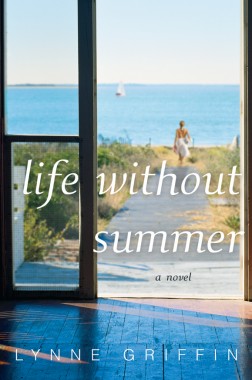
When I left the Inn, I didn't much think about whether the photos would be good enough to grace the cover of the French version of Life Without Summer. I had an experience of a lifetime. Photographed by Jerry Bauer, I was in the company of writers.

So here it is.

Wednesday, April 02, 2008

Slimming Down the Prose

by Hannah Roveto

For those accused of putting too much food in your scenes, this post is for you. For those of you who keep your characters thin, well, feel free to nibble as well. I have been accused, rightfully so, of overfeeding my readers. "Too much food." "They're eating again?" "He drinks too much coffee. Didn't he just have a cup?"

In real life, much happens around food, doesn't it? People who would never be caught together, for any reason, meet over food. Reunions and ruckuses ensue. Major issues are raised -- tentatively, forcefully -- as we are trapped between a salad and the main course. Our best sides and our worst arise as we gather with the ones we love, the ones we are trying to like, and the ones we, well, would rather never see again. And we show our best sides to the latter, the worst to the former. I read once that Sarah Jessica Parker said she and Matthew Broderick talk some evenings about how lovely their first cup of coffee will be in the morning. That one detail changed her from someone I knew existed to a soul sister.

Even my memories of funerals have food details. I remember only two things about my grandmother's funeral: it was open casket, and at the reception afterward, two women were talking about the lemon chiffon pie brought by my grandparents' housecleaner (and friend and possibly an earthly saint). The conversation quickly went from how wonderful the pie was, to the fact that it was made with fresh eggs, which made all the difference, to a comment on how its baker kept chickens, said in a tone of voice that implied a great deal about social status.

Oh, but am I talking too much about food? Apologies. You see, I discovered how to cut down on food, at least in my writing, at a funeral reception my protagonist had to attend. How to get him through socializing with a hundred people, moving through rooms with tables of food, drinking coffee and perhaps sneaking something stronger, without talking about food?

I pulled him aside, or rather, had him pull his sister and a friend aside for a key conversation. I kept the scene focused on what I needed to convey, and left the food literally in the background. He didn't even bring a cookie to munch. When he returned to the group, he shook hands, accepted sympathies, closed out the scene.

Plot above setting, action above food. Chew is not an action verb. I'd finally gotten it.

Scanning back through the manuscript, I was able to mark every sip, every bite, and decide whether it was necessary. At times, yes, I allowed them to indulge. After all, the fact that someone drinks a lot of coffee can be useful, as long as the reader doesn't get the jitters, too. I did allow my protagonist a sausage sub at a baseball game, and indeed, a juicy burger at a bar. But for a reason. This is a man whose peers eat lamb chops and drink Grey Goose vodka. That he would prefer a sausage sub and a burger with a draught beer means something, as long as the reader doesn't have to dab at the grease while listening to conversations and watching the events that are the real action.

So, yes, it is possible to move characters through the day without making sure they have every beverage and snack, every mouthful of their three squares recorded for posterity. I am living proof. Focus on the comment about keeping chickens; keep the pie to a single reference. Focus on the interaction between the man with sub and the woman with the diet soda, their relationship falling apart with each word, not each bite. Don't track every meal; the reader will assume they ate. Pull characters aside and let them act and react with something other than food. Even the heartiest of writers will find it is possible to trim down the prose and let the proof of a story be in the pudding. (Sorry!)

Tuesday, April 01, 2008

****NEWS****

By Amy MacKinnon

Some of you may recall a few weeks back that I had news to share.  I couldn't spill it then, not because of any embargo imposed by Random House/Shaye Areheart Books, but because I didn't quite trust my good fortune.  Both my editor and my agent assured me it was so, but it wasn't until my publisher said oh yes, it is at lunch last week (yes, I had lunch with my publisher, how exciting is that?) was I able to believe it.

TETHERED will be the lead title in the fall catalog.

Every bit of my Dream Big scenario is so far coming true: selling to SAB, wonderful editors, foreign sales, and now lead title.  It is magical.

Speaking of foreign sales, I also heard from my UK editor at Orion last week.  They are positioning TETHERED as one of their big books for winter 2009.  I became a bit numb when she told me they're going to print copies of my book for every employee at Orion.  I can't wait to share the cover.

It is all too much to process at times, too fantastic to accept as true, but there it is.  Dream big, people, dream big.

Unplugged

Missing Amy?
She couldn't post.
Blame her ISP;
very bad host.

Meanwhile, for anyone who might not have explored all her Messages To A Younger Self: Read This

Monday, March 31, 2008

Explode the Code

Posted by Lisa Marnell

Secret Life of Bees by Sue Monk Kidd

Memoirs of a Geisha by Arthur Golden

The Black Stallion by Walter Farley

Little House on the Prairie Series Laura Ingalls Wilder

Night of the Red Horse by Patricia Leitch

Narnia books by CS Lewis

Backwater by Joan Bauer

Upper Fourth at Mallory Towers by Enid Blighton

The Beach Club by Elin Hilderbrand

Star Girl by Jerry Spinelli

A Kiss from Maddelena by Christopher Castellani

Wicked by Gregory Maguire

Twilight by Stephenie Meyer

Avoidance by Michael Lowenthal

Friday, March 28, 2008

Making a Literary Life Friday: Breakthroughs

There comes a moment in your writing when something happens, an event you hadn't planned, a thread you never expected, but it's somehow woven itself onto the page and into your story. It transforms everything. It usually happens more than once, but the first or second time is so utterly unexpected, it may even make us gasp. What's been your most striking revelation on the page-- and off.

Lisa Marnell
I find lately, I discover revelations in a character's backstory. I know, for instance, my MC's mom is gruff, direct, to the point to a fault; she's not a cool parent, but she's got reason to be that way. In my young adult work in progress, she got pregnant young and poof! up in smoke went her dreams for a life larger than the small town existence that lay before her. In making the decision to keep this baby (Rose, my MC), and marry the father, the mom shows a strength of character tinged with sad regret that things should have been different.

Amy MacKinnon
When I first started writing TETHERED, my protagonist Clara buried each body with a candle. She lit the candle before she prepared each body and when she finished, blew it out and tucked it against her client's thigh. While I liked the basic imagery, it somehow lacked enough umph. It was months later while still revising that first chapter that revelation struck: undertakers are surrounded by flowers and wouldn't Clara make each gesture unique? From then on, Clara buried the dead with a flower to represent the life lived, say for the man who beat his wife, marigolds (cruelty in love) or for the outspoken sales clerk, white violets (unabashed candor). It added an entirely new layer to my protagonist and the story. And it was a delight to research.

I have news: TETHERED sold this week in Poland! Karin Schulze, the foreign rights director at Crown, has made an extraordinary effort on behalf of this book. So far, she's sold it to eight countries. Thanks, Karin.

Hannah Roveto
My protagonist loves baseball, as did his great-aunt, and it's a strong theme running throughout the book. In early drafts, the character had some basic tics and habits -- rubbing his chin, that sort of thing. Finally I realized that his restlessness is best symbolized by the constant picking up of items near him, rolling them in his hands, tilting them into position for a curveball, a fast ball, a slider. As Amy said, it was such a natural fit, that it was no surprise once I'd found it, it was fun to research, and fun to write as he plays with different items in different circumstances throughout.

Lynne Griffin
I love this topic, since I do enjoy revelations when I write. And like Amy, I gasp. There is nothing more exhilarating than the joy of discovery, when a character says or does something unexpected, so utterly spot on.

In LIFE WITHOUT SUMMER, my earliest revelation came with the seed for my novel. I read a beautiful essay musing about all the people who would be grieving the loss of a loved one who died during the tragic events of September 11, 2001; how even with similarities in the grief process, each person’s grief experience would echo in a different key. Right then the idea for my novel found its way to me. What if two women, not alike at all, handled tragedy in her life in a completely different way? How would the choices each made while grieving, strengthen relationships that were already strong or deepen the cracks in relationships long broken?

Nature is the revelation of God—Art is the revelation of man.
--Henry Wadsworth Longfellow

Thursday, March 27, 2008

Perspective

Posted by Lynne Griffin

Without a doubt, life as a writer is unpredictable. Compared to riding a rollercoaster or pushing a boulder up a large mountain, suffice it to say, it's hard work. Yet there are days when if I could only store the exhilaration up in a bottle and wedge the cork in tight, I could sell it for more than any book deal posted on Publishers Marketplace.

The trick is to manage the ups and downs, to get a handle on my point of view. So here's a little exercise I use when I need a little perspective.

One month from now: I will be a panelist and a moderator for two workshops at this year's Muse and the Marketplace conference.
One month ago: I was struggling to embrace my multifaceted writing identity. (Funny, my solution was to change my outlook.)

Two months from now: I will have completed a first draft of my second novel.
Two months ago: I worried my editor wouldn't procure any blurbs for my first novel. (This just in, Margot Livesey, author of Eva Moves the Furniture and Banishing Verona says, "Life Without Summer is a sparkling debut." I promise to share more in a future post.)

Three months from now: I will have Advance Review Copies of my novel out for review.
Three months ago: I was finishing the edits suggested to me by my insightful editor, hoping I would get the tone just right.

Four months from now: I will have met the team at St Martin's working to launch my novel.
Four months ago: I met my editor for the first time.

Five months from now: I will have a preliminary cover. (Pray it's one I love.)
Five months ago: St Martin's Press sold French rights to Life Without Summer to Belfond.

Six months from now: I hope to have a completed manuscript to my writers' group for feedback.
Six months ago: The wonderful Elisabeth Weed sells Life Without Summer to St Martin's Press.

Seven months from now: I will be proudly standing next to debut novelist, Amy MacKinnon on publication day for Tethered.
Seven months ago: I was preparing for publication of Negotiation Generation, yet secretly consumed with worry because Life Without Summer was weeks from going out on submission.

Eight months from now: I will be planning publicity for Life Without Summer.
Eight months ago: I was reluctant to take a vacation because I was convinced I hadn't done enough to round out my publicity plan for Negotiation Generation.

Nine months from now: I will be ringing in the new year--the year I become a published novelist.
Nine months ago: I went to New York to meet with my publicity team for Negotiation Generation.

Ten months from now: I will be reading reviews of my novel. (Yes, Amy, I will read them.)
Ten months ago: An editor expresses interest in Life Without Summer following the Manuscript Mart at the Muse and the Marketplace conference.

Eleven months from now: Life Without Summer will be published by St Martin's Press.
Eleven months ago: I took an amazing workshop with Michael Lowenthal. He challenged us to astonish readers by taking risks and dedicating ourselves to learning craft. I am forever grateful to you, Michael.

Twelve months from now: I will be a published novelist.
Twelve months ago: My agent finished reading my novel and suggested major revisions.

Perspective. Notice how time and distance allow for a more accurate view, one that shows how each step brings you closer to living the literary life. Like everything in life, the closer you are to things the harder it is to truly see. I invite you to take the perspective-taking challenge. See where you've been and imagine where you're going. You can do it.

Wednesday, March 26, 2008

Pondering Criticism

by Hannah Roveto

From a letter by Shelby Foote to Walker Percy:

"I think a writer's mistakes are infinitely more interesting than any editor's "corrections" (and mind you, a critic is only an editor-once-removed) -- I think no one can have the view of the book the writer himself has, the CREATIVE view... It sometimes happens that certain scenes have no evident function; the critic says, Take this out. But these very scenes work in some way to bring out the total effect, heighten the contiguous scenes, and give the whole book its peculiar individuality. Yet any smart editor would have cut them -- I'm not talking about a dummy, I mean really smart: the speed of the book would have been picked up, the reading would go better... but don't you see? It wouldn't be the same book. A man must learn from his mistakes (even granting he was wrong) -- from MAKING them, not from being saved from them."

Foote goes on to say each book has its own problems, but still, "A man must write for himself, and then he must accept the penalties -- including the possibility of damnation."

I've reread this letter several times in the past two days, thinking of it in light of our last group meeting. The first chunk of my revisions were read (positive reaction!) and we also discussed reviews. (Three votes to "read once," one vote to ignore altogether.)

Shelby Foote is onto something. The weight criticism is given must come from the writer, and nowhere else. Commentary must be screened in light of how much we trust and respect the reviewer (so pick people you trust on your journey!), and its usefulness in identifying mistakes. If in our heart of hearts what lies on the page is something we have to go forward with, then we've made our choice; no matter the reaction, it was the right choice.

My mother is an artist, a jeweler, and even pieces made as recently as a year ago are sometimes melted down. She has learned a new technique. She has changed, improved, and those pieces reflect a lesser benchmark. Some pieces she believed in, that others said weren't right for their shows, have gone on to be in museums and in gorgeous coffee table books. Some pieces she has "outgrown" but saved get rave reviews. She doesn't agree with them, either, any longer. What I see in her is that she is never her review, and she is not even her work. The work reflects a side of her at one particular point in time. She knows this, deep in her heart, and continues to learn and to evolve. As Shelby Foote notes, "Life is long and the individual facets of Art are fleeting, except of course in the long view: which no writer ever takes, being a peculiar sort of fool, and therefore wise."